

Bespoke Large Industrial Ceiling Fans for Tailored Airflow Solutions
2026-10-06
Standard ceiling fans might whisper, but industrial spaces demand a roar. If your facility needs more than a generic breeze, it's time to explore bespoke large industrial ceiling fans. At VINDUSFAN, we know that no two spaces are alike — and your airflow shouldn't be either. In this post, we'll break down what makes tailored airflow solutions a game-changer.
Airflow Patterns That Follow Your Facility’s Uneven Spaces
Most ventilation layouts assume a rectangular box, but your floor plan rarely cooperates. Columns, recessed loading docks, mezzanine overhangs, and angled conveyor runs create pockets where standard diffuser placement leaves air stagnant or blasting. Instead of forcing a grid, the system reads the actual geometry and shapes airflow to slip around obstacles—pulling air through narrow aisles with lower velocity, then letting it expand into open staging areas where heat and fumes collect.
The result is less about uniform coverage and more about matching pressure to purpose. A corner used for chemical storage might receive a gentle negative draw so vapors don’t wander into worker paths. A high-bay section with intermittent welding gets a shifting plume that follows activity rather than a fixed curtain. By treating each irregular zone as its own microclimate, the airflow map begins to resemble the facility itself—uneven, but intentional.
Blade Profiles Matched to Ceiling Height and Column Placement
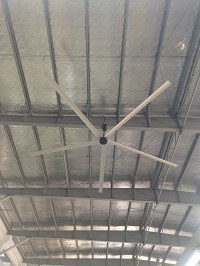
Choosing the right blade profile goes beyond visual appeal—it directly shapes how air moves through a space. A ceiling fan with blades that don't match the room's vertical dimensions can create dead zones where air stagnates, or force the motor to work harder against turbulent flow. The geometry of each blade, from its curvature to its tip shape, must be tuned to the distance between floor and ceiling for clean, efficient circulation.
Low ceilings demand blades with a flatter pitch and shorter span, often featuring a wider chord to push more air per rotation without risking contact with light fixtures or exposed beams. This profile keeps the airflow close to the ceiling plane, preventing uncomfortable downdrafts. High ceilings, on the other hand, benefit from longer, narrower blades with a steeper angle—they can reach down into the living zone and pull warm air upward in winter or drive cool air downward in summer, leveraging the full height of the room.
Column placement introduces another layer of constraint. If a structural column sits near the fan's sweep area, blade tips need enough clearance to avoid creating rhythmic pressure pulses or audible buffeting. A swept-back or tapered tip profile can reduce this interference, smoothing the air as it passes the obstruction. In some layouts, adjusting the blade's planform to mirror the column's offset actually improves overall airflow symmetry, making the fan feel less like an add-on and more like a deliberate part of the architecture.
Seasonal Adjustments Without Manual Rework
Seasonal planning still eats too much time because it starts from last year's spreadsheet and a guess. Teams take last year’s numbers, add ten or fifteen percent, and then spend the next month correcting the miss. That approach crumbles when a late frost keeps coats moving into April or an early heatwave shifts demand overnight. Instead of static overrides, inventory and pricing systems can track live sell-through against historical patterns and recalculate in the background. The workload shrinks from a quarterly fire drill to a few exception alerts.
What makes the difference is feeding those systems more than raw sales history. Weather, school terms, regional holidays, and local events all shape what people buy. When those inputs are weighted automatically, a sudden cold snap lifts soup and antifreeze without a planner touching a single forecast cell. An extended heatwave pulls fans and cooling units forward while the system trims orders for jackets. The adjustment happens in hours, not after the weekend sales report lands.
Manual work then gets reserved for real curveballs: a supplier shortfall, a product going viral, a one-time promotion. Those still need judgment. The ordinary seasonal rhythm, though, no longer requires someone to rebuild weekly forecasts. Planners can focus on assortment choices, margin trade-offs, and supplier conversations while the underlying numbers rebalance themselves.
Keeping Wide-Open Production Floors Comfortable at Every Level
Large production bays often struggle with a simple reality: heat rises while the people and processes that generate it stay near the floor. Without careful air handling, a 30-foot-high space can easily end up with a 15-degree difference between the occupied zone and the ceiling, leaving workers cold in the morning and overheated by mid-shift.
The more practical approach starts by treating the occupied zone as the primary target, rather than trying to condition the entire volume. Adjustable supply nozzles, ceiling fans that run slowly in reverse, and return points placed near heat sources all help pull warm air away from where people actually stand. This keeps the first eight to ten feet above the floor stable without wasting energy on the empty space above.
What really changes performance, though, is tying those devices to real-time conditions. A handful of sensors at different heights can drive automatic damper and fan-speed adjustments, so a busy welding line near one column doesn't create a hot pocket while the other side of the floor stays comfortable. Done right, the system rarely needs manual intervention, and the comfort level feels consistent from the raw material staging area to the final assembly stations.
Custom Controls That Don’t Burden Your Maintenance Team
Plenty of custom controls look great in the demo and then quietly turn into a full-time job for whoever has to keep them working. These ones don't. They follow the same structural rules across the board, so when someone joins the team or revisits the code months later, they can trace the logic without digging through scattered one-off patterns. Documentation is built in where it matters, not bolted on as an afterthought.
The real difference shows up when things change. A platform update, a revised business rule, a new design requirement — these controls adapt through centralized configuration instead of forcing developers to hunt down every instance and hand-edit it. Rollback points are clear, and the test coverage is honest enough that you can make changes without holding your breath.
That means the maintenance team isn't stuck babysitting fragile components. They can spend their time on actual feature work, knowing that the controls will handle routine updates and edge cases without constant intervention. Upgrades stay backward-compatible, and the codebase remains approachable even as the project grows.
Standing Up to Dust, Heat, and Constant Use
Fine grit and airborne particles are the silent killers of most equipment, but this unit seals every seam and joint with precision-molded gaskets that keep contamination out even after years of exposure. The internal airflow path is filtered, not just shielded, so dust that does find its way in gets trapped before reaching sensitive components.
High ambient temperatures cause ordinary materials to soften and warp, yet the chassis here uses a reinforced polymer blend rated for continuous operation at 60°C without losing structural integrity. Heat sinks and venting are positioned to draw warmth away from critical electronics, preventing thermal throttling during long sessions.
Constant use means thousands of actuations, repeated thermal cycles, and vibration. The controls are built on industrial-grade switches tested to over a million presses, and the power supply uses capacitors specified for 10,000 hours at full load. That translates to years of daily operation without the flakiness that plagues consumer-grade alternatives.
FAQ
They're engineered around your building's footprint and airflow needs instead of being pulled off a shelf. We adjust blade count, diameter, pitch, and motor placement after studying ceiling height, obstructions, and heat sources.
Diameters typically run from 8 feet up to 24 feet, with some custom builds reaching 30 feet for cavernous spaces. The goal is to move a large volume of air at low speed, so bigger isn't automatically better—we'll right-size the fan for the zone.
Warehouses, manufacturing plants, aircraft hangars, and large retail spaces see the biggest difference. Anywhere with high ceilings or uneven temperatures, a custom fan can push warm air down in winter and create a cooling breeze in summer.
Usually yes. We work with the existing beams or trusses and design mounting systems that spread the load. For older buildings, we may recommend a lighter blade material or a smaller diameter to avoid overstressing the roof.
We start with a site survey and often use computational fluid dynamics modeling. It shows where dead zones and heat pockets are, so the fan's placement, tilt, and speed range can be tuned before installation.
They complement HVAC rather than replacing it. The slow rotation moves a lot of air with minimal power—often under 1kW for a large fan. By improving air circulation, many facilities can raise thermostat setpoints by 5-10°F and cut cooling costs.
Quiet operation is a priority. We choose low-RPM motors and balanced blades, so the sound is mostly a soft whoosh. Most employees stop noticing it within a day, and measured levels typically stay below normal conversation.
Depending on complexity, 6 to 10 weeks is common. Design and engineering take 2-3 weeks, manufacturing another 3-4, and installation usually one to two days with minimal disruption.
Conclusion
Most industrial ceiling fans treat a production floor as one big empty box, but real facilities are full of irregular bays, loading docks, mezzanine shadows, and columns that break up airflow. A bespoke large ceiling fan starts with the actual footprint of your building. We map the uneven spaces where air tends to stall, then adjust blade pitch, diameter, and mounting height to match ceiling structure and column placement. The result is not just more air, but air that moves where people actually work. Seasonal changes are handled without touching the fan or sending someone up a ladder. The fan learns the rhythm of your facility and shifts between summer cooling and winter destratification on its own, so you don't have to rework settings when the weather turns.
Wide-open production floors often end up with hot spots near ovens, cold drafts at loading doors, and dead air around tall racks. Custom controls solve that without becoming a headache for your maintenance team. Simple, hard-wearing wall panels or legacy-friendly signal options let facility staff adjust only the essential variables, while the fan handles the complex sequencing. Build quality is equally deliberate. Dust, heat, and continuous use are not afterthoughts but part of the design spec, from sealed motor housings to blade profiles that resist buildup and fatigue. Rather than forcing your building to adapt to a stock fan, the fan adapts to your building, keeping every level comfortable while standing up to the daily grind.
Contact Us
Contact Person: Michael Danielsson
Email: [email protected]
Tel/WhatsApp: +1 951 565 7769
Website: https://www.vindusfans.com