

Box-Type Transformer Factory: A Practical Guide to Quality and Performance
2026-09-09
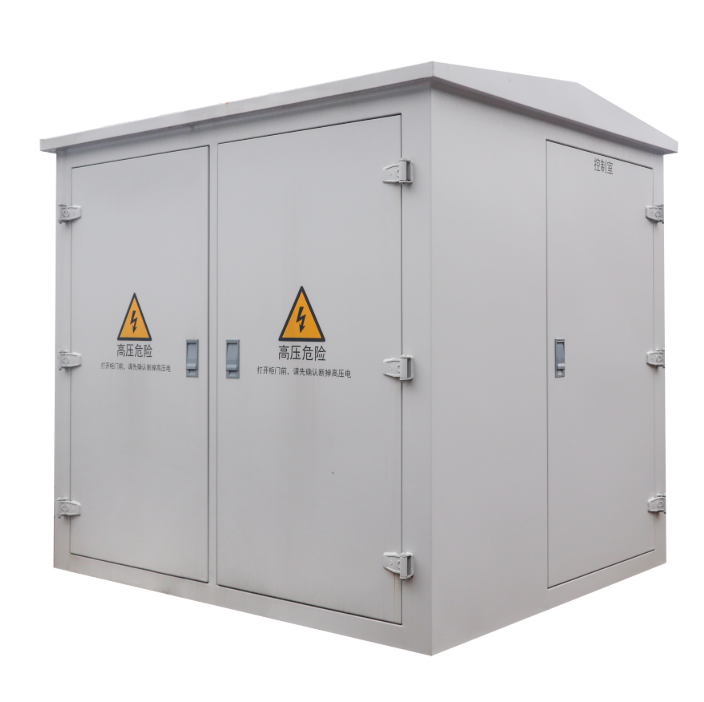
Walk into any box-type transformer factory and the real story isn't on the spec sheet. It's in the winding tension, the weld beads, the gasket fit, and the load-test numbers that never make it into a brochure. This practical guide cuts through jargon to focus on the details that separate a transformer built to last from one that fails early. You'll learn what to inspect on a factory tour, which tolerances actually matter, and how to spot shortcuts before they cost you. At Chang Song, these aren't afterthoughts—they're the foundation. Here's what a quality-driven transformer factory should look like.
Reading Between the Lines of Transformer Nameplate Data
A nameplate offers more than a list of ratings once you start comparing values that rarely appear together in catalogs. For instance, the impedance voltage isn't just a percent figure—it quietly sets the prospective short-circuit current and hints at how much the secondary voltage will sag under load. Pair that with the vector group symbol, and you can often anticipate how the transformer will behave during unbalanced faults or when serving single-phase loads.
Cooling codes like ONAN or ONAF look technical, but they spell out a practical operating envelope. A unit rated for ONAF may show a higher kVA figure, yet that extra capacity depends on fans working and ambient temperature staying within certain limits. The temperature rise class printed next to it (for example, 65°C over 40°C ambient) tells you how much thermal headroom the insulation actually has—and whether that 'overloadable' label is realistic or just wishful thinking.
Loss data deserves the same scrutiny. No-load and load losses are sometimes given at different reference temperatures, so two transformers with identical nameplate efficiency can perform differently in the field. Even physical details like oil volume and total weight can be reverse-engineered: a heavier tank for the same kVA usually means more steel, more surface area, and potentially lower operating temperatures—but also higher initial cost and a different foundation requirement.
Core and Winding Choices That Shape Everyday Performance
The magnetic core isn’t just a chunk of metal—it dictates how much energy gets stored or transferred before saturation becomes a problem. Ferrite cores, for instance, keep high-frequency losses low but saturate at modest flux densities, so they suit compact adapters where space is tight. Powdered iron and amorphous alloys trade some of that high-frequency finesse for higher saturation limits, which matters in automotive DC-DC converters that see nasty load dumps.
Winding geometry quietly shapes behavior too. A loosely wound bobbin with uneven layers creates leakage inductance that wastes energy as heat and can make a power supply sing at audible frequencies. Interleaving primary and secondary windings cuts that leakage dramatically, while Litz wire reduces skin-effect losses in high-current, high-frequency designs. Even the choice between round wire and copper foil changes how hot the part runs under continuous load—details that never show up on a datasheet but show up in your electricity bill.
Factory Floor Habits That Separate Reliable Units from the Rest
Walk onto any factory floor and you can spot the reliable units within minutes. They're not the ones rushing around or yelling about deadlines. They move with a quiet rhythm, checking the gauge on a machine before it reaches the red zone, clearing a stray bolt from a walkway even if it isn't their area, and never assuming the next shift will catch what they missed. These habits look small, but they compound into machines that keep running and teams that don't have to babysit each other.
One habit that sets them apart is how they treat the first fifteen minutes of a shift. Instead of grabbing coffee and waiting for instructions, reliable workers walk their line, run a quick visual on the equipment, and note anything that feels off—a new vibration, a slightly different sound, a puddle where there shouldn't be one. They also repeat this at the end of the day, leaving clear notes not just about what happened, but about what the next person should watch. This habit of front-loading attention prevents most breakdowns before they become emergencies.
Another distinction is their reaction to mistakes. Unreliable units hide a scratched part or a missed step, hoping it blends in. Reliable units flag it immediately, even if it costs them a few minutes of rework or a tough conversation. They understand that a ten-minute fix now is cheaper than a ten-hour teardown later. Over time, this builds a reputation for honesty that makes supervisors trust them with the trickiest jobs—and that trust is what keeps them at the core of the operation while others cycle through.
Testing Routines Worth More Than a Glance at the Spec Sheet
Spec sheets tell you a processor has eight cores and a 5.2 GHz boost clock, but they won't mention that it throttles to half that speed after three minutes of sustained load. A quick benchmark run on a warm afternoon tells you more about real performance than any marketing table. I've seen laptops with identical specs on paper where one stayed cool and quiet while the other sounded like a jet engine and dropped frames in the same render test.
Beyond raw numbers, testing routines capture the quirks that only emerge over time. How does the trackpad feel after an hour of use? Does the fan noise pitch change under partial load? Does the battery percentage jump from 15% to 5% with no warning? These are the details you can't list in a bullet point, but they shape daily experience far more than a 0.2 GHz difference in turbo frequency.
A good test routine isn't just running the same benchmark five times. It means using the device the way a normal person would: opening too many browser tabs, editing photos while music plays, leaving it unplugged overnight, tossing it into a backpack. Spec sheets are a starting point, not a verdict. The real evaluation happens in the messy, imperfect conditions where most of us actually live.
Installation Mistakes That Quietly Shorten Service Life
Overtightening fasteners is one of those mistakes that feels like diligence but quietly destroys components. A bolt stretched past its yield point loses preload, so the joint actually ends up looser than if it had been snugged to spec. Flanges, bearing housings, and mounting feet all suffer from this false sense of security.
Shaft misalignment rarely announces itself at startup. A coupling can tolerate a little offset for a while, but the resulting cyclic load feeds into bearings and seals long before anyone notices a vibration. The real damage is cumulative: every revolution adds a tiny fatigue cycle, and service life bleeds away without a single dramatic failure.
Cleanliness during assembly matters more than most installers admit. Dust, metal shavings, or even a fingerprint of moisture trapped in a bearing housing becomes an abrasive paste once the shaft starts turning. Pair that with the wrong grease or a half-filled cavity, and you have a machine that eats itself from the inside out.
Field Checks That Catch Problems Before They Escalate
On most job sites, the earliest signs of trouble rarely show up in reports or dashboards. They appear as a loose fitting, a small crack in a conduit run, or a material batch stored too close to a heat source. A field check is the habit of walking those spaces with a short checklist and a camera, comparing what's actually there against the plan before anyone needs to file an incident report.
The value comes from catching drift while it's still cheap to fix. A pressure gauge reading two or three psi below spec may not mean much on its own, but paired with a log entry from the previous shift it can point to a slow leak. Field checks create those paired observations. Instead of waiting for a shutdown or a quality hold, crews can tighten a connection, re-label a valve, or move a pallet before the problem becomes a schedule delay.
Good field checks also rely on clear thresholds. Not every reading needs to be perfect, but each one should have a range where it's acceptable and a narrow band where it triggers a follow-up. That way the check isn't just a box-ticking exercise; it gives people permission to act on small anomalies without waiting for a supervisor to arrive. That is what stops minor issues from turning into costly rework or safety events.
FAQ
Most factories struggle with inconsistent core stacking pressure, which leads to higher no-load losses and noise. Another frequent issue is poor impregnation of windings, leaving voids that invite partial discharge. A practical fix is to implement a checklist-driven assembly process with torque verification on core clamps and a vacuum pressure impregnation cycle that is logged for every unit.
Instead of relying only on supplier certificates, sample each coil of core steel for specific loss at 1.5T and 1.7T, and check the insulation coating thickness on a few strips. For winding wire, measure elongation and resistivity on at least one sample per spool, and reject any batch with visible surface oxidation. This catches drift before it reaches the production floor.
Use a lower-loss core grade like laser-scribed or domain-refined silicon steel, and design the winding ducts for natural convection rather than forcing more airflow. Adding internal baffles to direct air over the hottest coil sections and using a matte black finish on internal surfaces can also drop hot-spot temperatures by several degrees.
Partial discharge activity is an early sign of insulation weakness, often from voids or contamination during winding. For dry-type box transformers, a factory should test every unit at 1.1 times rated voltage for at least 30 minutes; for oil-filled units, an annual check on a sample basis is enough. The key is trending the pico-coulomb readings, not just pass/fail.
Outdoor units need verification of the enclosure sealing against driving rain and dust, so a factory should perform a hose test on every fifth unit and check gasket compression. Indoor units are more sensitive to fire behavior, so the focus shifts to limiting smoke and toxic gas from coatings. Temperature rise limits are also tighter for indoor installations.
Avoid shortening the drying curve just to meet a shipping date. Instead, use a two-stage vacuum drying process with a controlled ramp-up and a moisture sensor inside the oven. Once the dew point stabilizes below a set threshold, you can safely reduce the hold time without risking under-cured resin.
Final load testing should simulate the worst-case ambient and load profile, not just a nameplate load. Watch impedance voltage, load loss at 75°C, and the top-oil or winding hot-spot temperature rise. If the factory cannot run a full load test, at least perform a short-circuit test and a zero-sequence impedance check on three-phase units.
Conclusion
A box-type transformer’s long-term behavior rarely hinges on a single grand decision. More often, it reflects how carefully the factory read the nameplate data—tolerances, impedance, temperature rise—and translated those numbers into actual material choices. Core steel grade, winding geometry, and insulation margins are not interchangeable boxes on a checklist; they shape noise, losses, and thermal headroom day after day. On the shop floor, the difference between a dependable unit and an average one shows up in small, unglamorous habits: controlled tension during coil winding, clean joints, consistent varnish curing, and torque verification on every bolted connection. Testing should go beyond a quick glance at the spec sheet. Routine resistance, ratio, polarity, insulation, and applied-potential checks catch deviations that a visual inspection cannot, especially when test values are recorded against ambient conditions instead of being accepted at face value.
Even a well-built unit can have its service life quietly shortened by installation errors that never trigger an immediate failure. Poor lifting practices, uneven pad placement, insufficient clearance for ventilation, or careless cable terminations create stress points that accumulate over years. Field checks then become the last practical line of defense. Thermal imaging under load, periodic oil or insulation resistance readings, and listening for abnormal hum or vibration often reveal problems long before a fault escalates. Together, these practices form a practical chain from nameplate interpretation to in-service monitoring, where each link either preserves or erodes the transformer’s intended performance.
Contact Us
Contact Person: Tonglun Chen
Email: [email protected]
Tel/WhatsApp: 8618906642555
Website: https://www.cncsele.com