

Bulk UV Resistant Engraving Plastic Solutions for Durable Custom Signage
2026-11-24
Signage that fades, cracks, or yellows under harsh lighting sends the wrong message before anyone reads a word. Bulk UV resistant engraving plastic flips that script, offering crisp, long-lasting results for workshops, studios, and sign shops that refuse to compromise. Whether you're producing wayfinding panels, industrial labels, or layered custom displays, the right material keeps your work looking sharp through years of sun and abrasion. That’s where LYSHIRE comes in—pairing dependable stock with the consistency high-volume projects demand. In this post, we’ll break down what makes UV resistant engraving plastic worth the investment, how to choose the right grade, and why durability often hides in the details most suppliers overlook.
Sun, Rain, and Scratches: What Outdoor Signage Actually Faces
Outdoor signs never get a quiet day. Sunlight works on the pigments hour after hour, pulling the reds toward pink and the blacks toward gray. A year of direct exposure can make a once-sharp logo look like a faded memory, especially if the printer skimped on UV-resistant inks or laminate.
Then there's the water. Rain finds every microscopic gap in an edge seal, seeps into the substrate, and starts lifting the vinyl from the back. If the sign board itself is a cheap composite, one good soaking can swell the corners and leave permanent ripples under the surface. Scratches are quieter but just as relentless; a stray branch, a shopping cart, or even routine cleaning with the wrong cloth can etch fine lines that catch dirt and make the whole face look dirty.
The real trouble is how these forces team up. A scratch breaks the protective layer, then rain gets inside, then sun bakes the moisture and widens the crack. Before long, what started as a small nick becomes a peeling patch. Signs that survive are the ones designed for this exact pile-on, not just for a single sunny afternoon.
UV Resistance Is Not Just a Data Sheet Claim
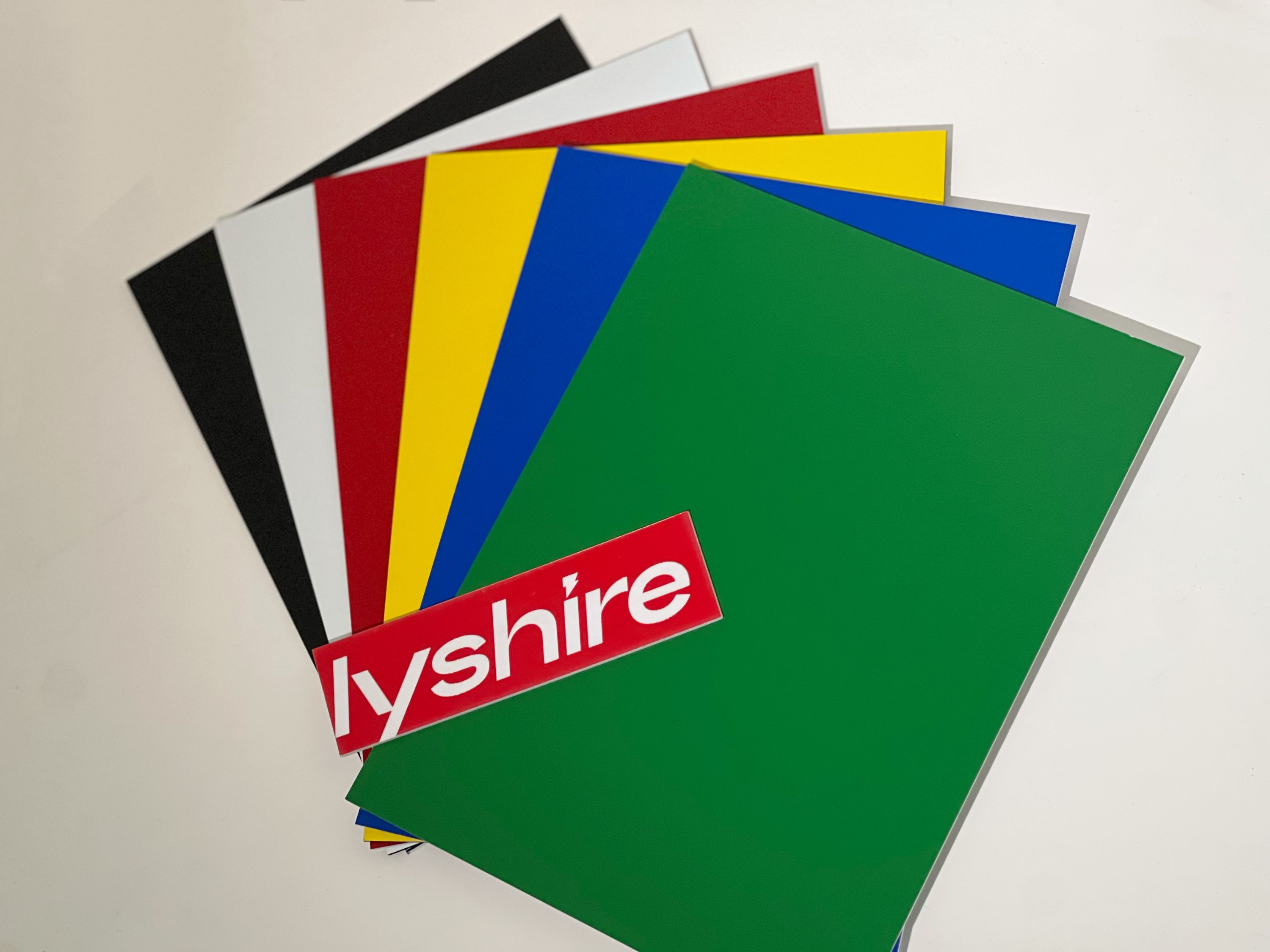
UV resistance gets tossed around in product descriptions like it's a checkbox on a spec sheet, but anyone who has watched outdoor gear fade, crack, or turn brittle after one season knows there's a gap between the claim and the reality. The laboratory test numbers often measure a material's performance under a narrow band of ultraviolet light, in a controlled temperature, and for a set number of hours. That doesn't account for the way sunlight, moisture, and abrasion team up on a surface over years of real use. When you see a polymer or fabric labeled as UV resistant, it's worth asking whether that means it survived a 200-hour artificial weathering cycle or whether it was designed with stabilizers that actually slow down the slow chemical unraveling that outdoor exposure triggers.
The real story of UV resistance often lies in what happens after the warranty period ends. Instead of trusting the printed number, look for materials that have accumulated field data across different latitudes and elevations. A roof coating tested in Arizona is not automatically going to perform the same way on a coastal deck in Maine, where reflected light and salt spray alter the degradation path. The most honest UV resistance is the kind that shows up in the details: no chalky residue on your fingers after touching a surface, no visible fiber bloom on a woven shade cloth, no sudden loss of tensile strength that sends a strap snapping when you need it most.
There's also a tendency to treat UV resistance as a standalone property, but it rarely works that way in practice. A material can be loaded with ultraviolet absorbers and still fail early if the additive migrates out, gets washed away, or reacts with other components in the compound. That's why the data sheet claim can feel hollow: it captures a snapshot, not the full arc of aging. When you evaluate a product for long sun exposure, pay attention to how the manufacturer talks about weathering as a system, not a single metric. If the only evidence is a bold bullet point, you're probably looking at a hope, not a performance.
Bulk Sheet Stock Without the Color and Thickness Inconsistencies
When you order sheet stock in bulk, small differences become big problems fast. A half-shade drift in color doesn't show up on a sample card, but line up ten sheets from the same crate and it's obvious. We sort and hold every run to a tight spectral tolerance, so the sheet you unwrap today matches the one you unwrap three pallets later.
Thickness gets even less attention until it's too late. Board that varies by a few thousandths can jam cutters, throw off registration, or leave finished pieces with uneven edges. Our bulk sheet stock is checked at multiple points across the sheet, not just along the edges, so you get consistent caliper from corner to corner and batch to batch.
That consistency means less sorting on your end, fewer rejected parts, and no need to over-order just to cover the odd off-color or off-gauge sheets. It's a straightforward change that makes the whole job run quieter.
Custom Outdoor Signs That Keep Their Contrast Season After Season
The real test of a custom outdoor sign isn't the day it goes up; it's the second summer, the third winter, and the morning after a heavy storm. Keeping contrast year after year starts with materials chosen for how they age, not just how they look on a sample table. UV-resistant inks, colorfast pigments, and substrates that don't warp or chalk under direct sun all play a role before the first drop of ink is laid down.
High-contrast color pairings give the design some built-in forgiveness. A deep charcoal background with warm white lettering, or bright yellow on black, can lose a small amount of richness over time and still remain readable from the street. Custom production also allows for adjustments to line weight and letter spacing, so the message doesn't blur together when viewed from a moving car or across a parking lot.
The topcoat matters more than most people expect. A clear protective layer keeps moisture, pollen, and road film from settling into the surface, which means the dark areas stay dark and the light areas don't turn muddy. With that shield in place, the sign handles freeze-thaw cycles and long days of exposure without needing constant repainting or early replacement.
Engraving Depth, Paint Fill, and Edge Wear: Details That Extend Sign Life
Shallow engraving often looks crisp on day one, but it is the first thing to disappear once weather and cleaning crews start working against the surface. A depth of at least 0.5 mm to 1 mm gives paint enough recess to sit below the face, which keeps it from being scrubbed away. Deeper cuts also create shadow lines that remain readable after the top layer of paint has faded.
Paint fill behaves differently depending on the substrate and how the sign is mounted. On exterior metal, a two-part epoxy or urethane fill tends to outlast standard enamel, especially where ultraviolet exposure is constant. The fill should be applied after the engraved area has been cleaned and lightly abraded, otherwise adhesion fails long before the paint itself wears out.
Edge wear gets overlooked because it happens gradually. Rounded corners, scratched returns, or chipped paint along the border make an otherwise solid sign look neglected. A slight bevel or eased edge, paired with touch-up on high-contact zones, reduces the kind of damage that starts small and spreads into the lettering.
High-Volume Projects That Outlast Their First Summer
There is a quiet difference between a project that launches loudly and one that still has people showing up in October. High-volume work tends to attract attention quickly, but the ones that survive past the first warm months are rarely the flashiest. They are built around routines rather than novelty, with maintainers who treat the rush of early interest as a stress test instead of a victory lap. The initial flood of contributions or users often feels like proof of success, yet it can just as easily hide weak onboarding, unclear ownership, or a codebase nobody fully understands after the first wave of excitement fades.
What keeps these projects alive is a shift from answering every request to building a structure that can say no without alienating people. Clear documentation, predictable release cycles, and a small set of trusted reviewers do more than any feature sprint. The high volume becomes manageable only when the project stops trying to please everyone and starts defining what it will not do. Otherwise, the same energy that made it popular in June turns into burnout by September.
Many of the long-lasting ones also lower the cost of returning. A contributor who steps away for two months should be able to find their way back without guilt or confusion. Archived discussions, labeled issues, and honest changelogs act as a kind of memory. That way, the project does not depend on a single heroic maintainer or a permanently excited community. It becomes a place with enough friction removed that people can drift in and out, while the core keeps moving forward season after season.
FAQ
The main difference comes down to the additives and cap layers that block ultraviolet light. Standard acrylic can yellow, turn brittle, or develop micro-cracks after a couple of seasons outside. UV resistant engraving stock is formulated to keep its color and surface integrity even with constant sun exposure, which makes it a practical option for signage that has to stay legible for years without frequent replacement.
Yes, most suppliers will work with custom widths, lengths, and thicknesses when volume is high enough. Bulk ordering usually opens up more flexibility on sizing and color matching instead of being limited to stock sheets. The main thing to confirm is whether the supplier cuts before or after engraving, because that affects waste, handling, and how quickly your production line can move.
Coastal areas, high-altitude sites, industrial yards, and anywhere with intense year-round sunlight tend to see the biggest payoff. Salt air and temperature swings also punish weaker plastics, so the UV resistance combined with impact resistance helps signs, machine tags, and safety panels stay readable where standard materials would fade or crack.
The engraving side is often more forgiving because the surface layer is designed to be removed cleanly without melting or leaving rough edges. It produces a crisp contrast between the cap layer and the core, which is what gives routed text and graphics their readability. With standard acrylic, you may need additional paint filling or surface finishing to get the same visual clarity.
Commonly you will see 1/16 inch to 1/8 inch sheets used for indoor/outdoor tags and smaller signs, while thicker options around 1/4 inch work for larger panels that need more rigidity. The most useful combinations are usually a dark core with a light cap layer or the reverse, because that gives high contrast for text. Some projects also use non-glare or matte finishes to improve legibility under harsh sunlight.
A quality UV resistant engraving plastic can usually go several years outdoors with only minor color shift, depending on the pigment and exposure level. It is not truly fade-proof, but the degradation is much slower than standard acrylic or printed overlays. For critical signage, it is smart to request accelerated weathering data from the supplier instead of relying on general claims.
Ask for a physical sample from the current production run, not just a color chart. Check the consistency of the cap layer thickness, the flatness of the sheets, and whether the material engraves cleanly at your usual router speeds. Also confirm packaging and palletizing if the order is large enough, because scratches or warping in transit can waste time long before the material reaches the engraver.
Conclusion
Outdoor signage rarely fails from a single cause; it fails from the slow accumulation of UV exposure, rain cycles, and routine cleaning abrasion. A sheet that looks uniform on a spec sheet can still fade unevenly or lose paint adhesion once it has spent a season in direct sun. Bulk UV resistant engraving plastic changes that calculation only when the stock itself is consistent across the full run. If the core and cap layers vary in color or thickness from sheet to sheet, fabrication settings shift, paint fills sit differently, and the finished sign reads as patchy even before it weathers. Selecting full sheets with tight thickness tolerance and matched color across batches means the engraving depth stays predictable, the paint fill holds in the groove, and the edge stays clean instead of exposing a ragged wear line.
The difference becomes most visible on high-volume outdoor projects. Several dozen signs cut from the same material should look identical, not subtly different under storefront lighting or after a summer of heat. A UV resistant cap layer has to earn that claim through actual contrast retention and surface integrity, not just a test result printed in a brochure. For that, the engraving depth matters as much as the plastic itself: a shallow cut may look sharp at first, but it gives paint fill less mechanical grip and leaves fine details vulnerable to edge wear. Cutting deep enough to seat the fill, then deburring edges and using paint matched to the plastic, extends the readable life of text and graphics. With the right sheet stock and tooling habits, a large signage order can hold its contrast through repeated weather and cleaning cycles without fading, cracking, or turning brittle.
Contact Us
Contact Person: Tina Hou
Email: [email protected]
Tel/WhatsApp: +86 17816238685
Website: https://www.lyshire.com