

China Forged Steel Check Valve How to Choose the Right One for Your System
2026-11-19
Choosing a forged steel check valve from China isn’t just about picking the first option with a decent pressure rating. The wrong choice can quietly undermine your system’s reliability, causing reverse flow damage or maintenance headaches you won’t notice until it’s too late. Whether you’re dealing with high-temperature steam, corrosive media, or rapid cycling, the material, seat design, and closure mechanism all shift the equation. CRXV has spent years refining these valves for real-world conditions, and in this guide we’ll break down the factors that actually matter—so your next selection holds up long after installation.
Starting with the Pressure and Temperature Your Valve Will Actually See
Most valve sizing starts with the manufacturer's catalog or a generic rating table, but real systems rarely match those clean numbers. The pressure drop you assumed at the design stage can shift once pumps throttle, filters load up, or other branches open and close. Instead of relying on nominal conditions, pull the actual pressure profile from your operating data, commissioning reports, or even a temporary gauge before you commit to a valve type.
Temperature is just as easy to misread. A line that normally runs at 180°F might see 240°F during a steam-out or a cold start that drops well below the rated minimum for certain elastomers. Check the full transient range, not just the steady-state value. If you're replacing an existing valve, note any signs of seal damage, stem leakage, or body discoloration—those are clues that the old unit was already living outside its comfort zone.
Using real pressure and temperature extremes early keeps you from over-specifying an expensive high-alloy body you don't need, or worse, under-specifying something that becomes a maintenance headache. Gather the numbers from the worst normal operating case, add a reasonable margin for upset conditions, and only then start comparing materials, trims, and connection styles. This order of work feels slower at first, but it prevents the classic trap of choosing a valve from a datasheet and finding out later that the field conditions never matched the assumption.
Forged Steel Grades That Hold Up in Real Service
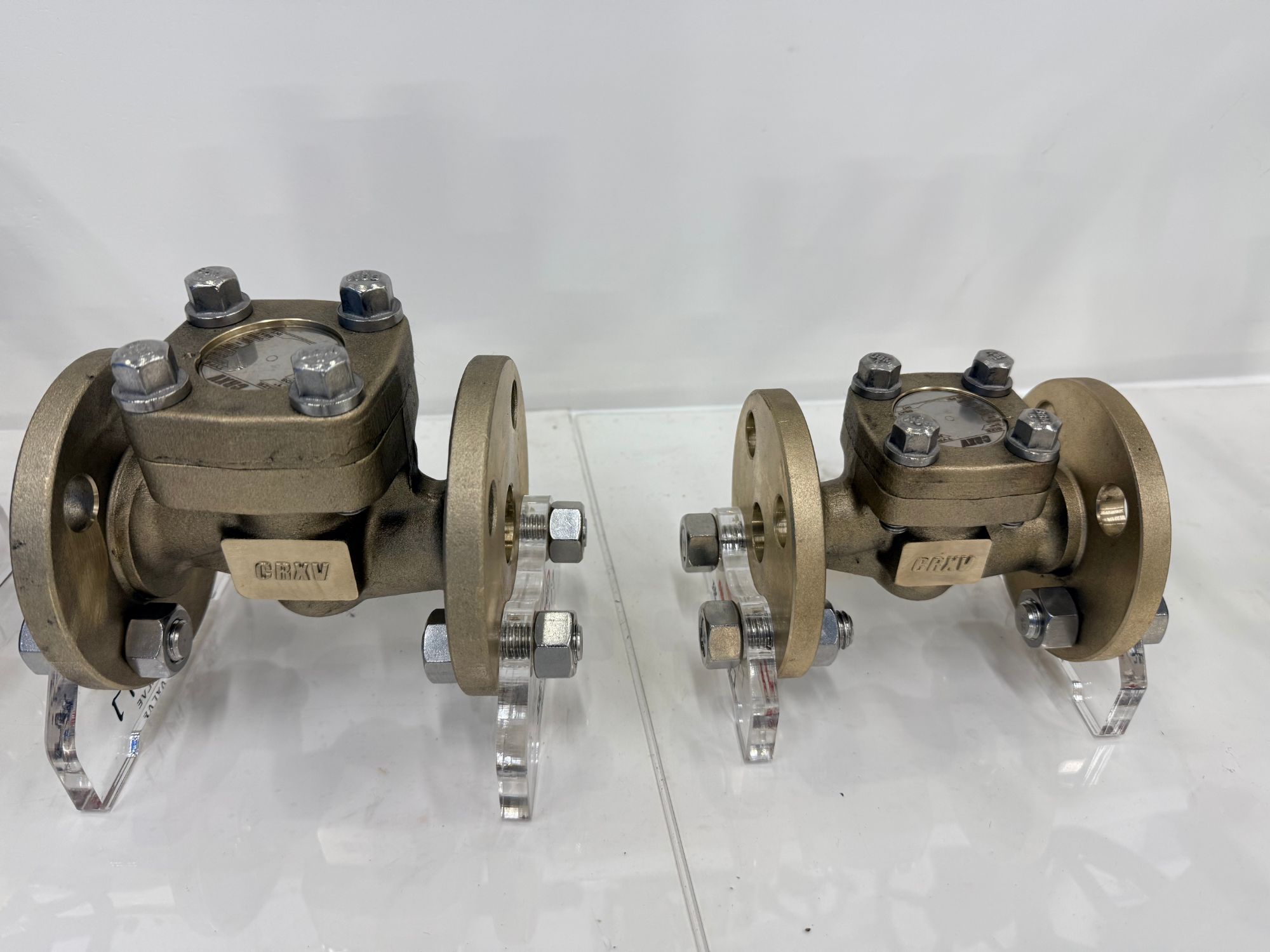
Forged steel grades rarely get the same attention as cast or machined alternatives, but they earn their place through repeated impact, thermal cycling, and abrasive wear. The real test isn't a datasheet number — it's whether a part survives the third shift after a bearing runs hot or a loader bucket catches a hidden rock. Grades like 4340 and 4140 show up again and again in these situations because their grain flow follows the contour of the part. That directional toughness means a forged pin can bend slightly under overload instead of snapping clean.
What separates dependable alloys from mediocre ones usually comes down to inclusion control and hardenability. Cleaner steel with fewer non-metallic inclusions holds up better around stress risers, while deeper hardenability lets a thick section develop uniform strength through the middle rather than just at the surface. Field failures often trace back to choosing a grade that looked fine on hardness alone but lacked the fatigue resistance for off-axis loads or cold starts.
Service records from mining, oilfield, and heavy transport point to a handful of workhorse grades: 4140 for shafts and couplings, 4340 for high-stress structural forgings, 8620 for case-hardened gears, and occasionally 300M where weight matters as much as toughness. The common thread is not exotic chemistry but balance — enough carbon for strength, enough alloying for depth of hardening, and a clean forge practice that keeps small defects from becoming crack initiation points.
Sizing and Flow Direction Mistakes That Are Easy to Miss
Most sizing mistakes do not announce themselves with a dramatic failure. They appear as a pump that cycles a little too often, a room that never quite reaches setpoint, or a duct that starts to whistle only when the system ramps up. The real issue is rarely a gross math error. It is more often an assumption that went unchecked: using one friction rate for every run, ignoring the longest equivalent length, or letting a manual damper hide an undersized branch instead of correcting the branch itself. Those small compromises collect over time, and by the time an energy bill or comfort complaint reveals the problem, the original decision is long forgotten.
Flow direction mistakes are even easier to miss because they tend to look correct on a flat drawing. A check valve can be installed with the arrow pointing exactly as shown, yet still be wrong if seasonal pressure changes or an unplanned bypass line creates reverse flow at part load. Coil connections, strainers, and balancing valves carry the same risk: the component is physically installed, but if the entering and leaving sides are reversed, it will operate just well enough to escape suspicion while quietly eating into capacity.
A better field check is to stop asking whether the installation matches the drawing and start asking whether the drawing matches the system at full load and part load. Run conditions that force the lowest expected flow, then trace direction with a reliable method. Watch for clues that the original assumptions have drifted: an unexpected temperature split, noise at a transition, or dirt collecting on only one side of a strainer. Those signs usually appear long before the component fails.
Installation Details That Decide How Long the Valve Lasts
Most early failures never start inside the valve body. They begin in the gap between the flange face and the pipe, where uneven bolt torque slowly bends the shell into a shape it was never designed to hold. A competent installer checks flatness, cleans the sealing surfaces, and tightens in a crossing pattern with a calibrated wrench. Skipping any of those steps often leaves stress concentrated at the bolt holes, and once the housing flexes under pressure, the seat loses its grip long before the internals show wear.
Support and alignment matter just as much as the torque sequence. A valve that carries the weight of sagging pipe or fights a misaligned companion flange will wear out its stem packing and bearings in a fraction of the expected service life. Lifting the valve into a neutral position, leaving slight room for thermal movement, and verifying that the mating flanges close without force are cheap details during installation but expensive to correct later.
Cleanliness is the final detail that separates a long service run from an early rebuild. Weld slag, thread tape, and grit left inside the line tend to collect at the seat and score the sealing surfaces during the first few cycles. Flushing the line before the valve is installed, protecting the open ends until final fit-up, and cycling the valve once after pressure testing help remove debris before it becomes embedded in the trim. Those small habits rarely appear in a spec sheet, but they show up clearly in the maintenance log over time.
What to Look for When Comparing Suppliers in China
A supplier’s paperwork can look flawless, but the real test usually happens when you push past the sales pitch. Ask for recent export records, not just a list of clients. If they hesitate to share partial shipment details, red flags should go up. A quick video walkthrough of the production floor often reveals more than a polished brochure—look at material storage, how workers handle components, and whether quality checks happen at more than one stage.
Response time and clarity matter more than most buyers expect. Compare how quickly each factory answers technical questions, not just pricing requests. If one supplier gives vague answers about tolerances, raw material sources, or lead time buffers, that usually carries over into production. The best partners tend to confirm details in writing and flag potential delays before you have to chase them.
Finally, watch how they handle small complications early on. Ask for a minor change to packaging or a slight adjustment to a sample. A factory that treats that as a normal part of business is far easier to work with than one that pushes back or adds surprise fees. Those early interactions are a pretty reliable preview of how the relationship will hold up once orders get larger.
Matching the Valve Type to the Way Your System Operates
Valve selection gets easier when you stop thinking in terms of pipe size alone and start looking at what the system actually asks the valve to do. A ball valve can isolate a line perfectly well, but it becomes a poor choice if it has to sit in a partly open position for hours and throttle flow against a high pressure drop. Identify whether the duty is mostly open/closed, continuous modulation, or emergency isolation before comparing body styles. Tight shutoff and fast operation often favor ball or butterfly valves, while sustained throttling usually points toward globe valves, eccentric rotary plugs, or characterized ball valves that can handle the wear and flow forces without chattering.
Actuation and fail behavior deserve just as much attention as the trim. A spring-return pneumatic actuator makes sense when the valve must move to a safe position on loss of air or power, while a motorized actuator may be better where movement should be gradual and chatter is a concern. High-cycle applications call for hardened trim, reinforced seats, and sometimes cage-guided internals because repeated impacts quickly expose soft-seated or lightly built designs. If the pressure drop is steep enough to cause cavitation or flashing, a multi-stage trim or an eccentric rotary design can help keep damage localized away from seating surfaces.
Another layer is matching the valve's installed characteristic to the loop rather than relying on catalog flow coefficients alone. An oversized valve may spend most of its travel near the seat, amplifying small signal changes into large flow swings. A V-port ball or a properly sized globe valve with a positioner can improve low-flow turndown and reduce hunting. In batch, sanitary, or clean-in-place systems, drainage, dead space, and body geometry become part of the selection decision because a valve that controls well but traps product or cleaning solution creates more problems downstream.
FAQ
Start with the actual flow rate, pipe bore, and the maximum pressure and temperature the valve will see, not just the nominal pipe size. A tight-bore check valve can choke flow if the disc travel is limited, so confirm the valve's flow coefficient against your required minimum flow and normal operating velocity.
Forged steel is worked into shape, which gives it a more uniform grain structure and fewer internal voids. In practice that usually means it holds up better under thermal cycling, high pressure, and vibration, especially on smaller bore lines where wall thickness and material soundness matter more.
Match the valve class to the worst-case combination of pressure and temperature, not just the pump deadhead pressure. For many industrial systems, ASME Class 800 or Class 1500 forged steel check valves are common starting points, but you need to check the pressure-temperature chart for the exact body and trim material.
A piston check usually gives smoother response and can handle higher temperatures and more frequent cycling without slamming as hard. A ball check is simpler and often cheaper, but it is best for lower flow variation and cleaner media where the ball can seat reliably.
A105 carbon steel is the default for many non-corrosive services. If the line carries chlorides, acids, or high-purity fluids, look at F316 stainless or an appropriate alloy for the body and trim, and make sure the seat material is compatible with both the fluid and cleaning or steam-out procedures.
Ask for the material test certificates tied to the heat number on the valve body, request a documented pressure test report, and check the body marking against the certificate. A genuine forged valve will usually have a smooth, uniform surface and may show slightly different dimensional tolerance than a cast equivalent.
It depends on the internal design. Spring-loaded piston or ball checks often work vertically with upward flow, while a simple swing check usually relies on gravity or backflow to close and should follow the manufacturer's allowed installation angles. Always confirm the flow arrow and any position restrictions before welding or threading it in.
Conclusion
Choosing a forged steel check valve starts with the pressure and temperature your line will actually experience, not just the nominal design figures. Transient spikes, thermal cycling, and startup conditions often push components harder than standard ratings suggest, so the material grade needs to match those real service conditions instead of a generic A105 default. For higher temperature or corrosive exposure, grades like F11, F22, F316, or F51 make a measurable difference in seat life and body integrity. Sizing is equally easy to get wrong: a valve that is too large may chatter or fail to seat, while an undersized unit adds pressure drop and accelerates wear. Flow direction markings, disc travel, and minimum backpressure all deserve attention before the order is placed.
Once the operating conditions and size are clear, the valve type should fit how the system actually runs. A swing check suits steady, low-velocity flow; a piston or lift check handles frequent reversals and higher pressure differentials; a ball check can work in viscous or solids-laden service. Installation details then decide longevity. Keep enough straight run, support the pipe properly, and avoid mounting positions that trap debris or restrict the disc. Vertical flow requires a spring-assisted design unless backpressure is reliable. When comparing suppliers in China, look past surface-level pricing. Ask for material test reports, pressure test documentation, traceability of forgings, and real examples of similar service. A supplier that asks about your operating conditions is usually a better signal than one that quotes only on size and class.
Contact Us
Contact Person: TIM
Email: [email protected]
Tel/WhatsApp: 8615857807381
Website: https://www.crxv.com/en/