

China Isopropylated Triphenyl Phosphate: Comprehensive Guide to Its Properties and Industrial Uses
2026-09-14
Flame-retardant plastics, hydraulic fluids, and high-performance coatings all rely on a class of additives that rarely makes headlines. Isopropylated triphenyl phosphate, or IPPP, is one of them—and China has become its most significant production hub. For engineers and procurement teams, knowing how this compound behaves under heat and stress is not just technical curiosity; it is a competitive advantage. In this article, we explore the properties that make IPPP a go-to choice across industries, look at real-world use cases, and explain why partnering with an established Chinese supplier such as Fortune can make a measurable difference in product consistency and supply security.
What Exactly Is Isopropylated Triphenyl Phosphate?
Isopropylated triphenyl phosphate, often abbreviated as IPTPP, is a synthetic organophosphate compound derived from triphenyl phosphate by introducing isopropyl groups onto the aromatic rings. It belongs to a broader family of aryl phosphate esters widely used as flame retardants and plasticizers. The isopropylation process alters the physical properties of the base molecule, typically lowering its melting point and enhancing compatibility with various polymer matrices. This modification makes IPTPP particularly attractive for applications where a balance between flexibility and fire resistance is needed.
Chemically, IPTPP is not a single isomer but a mixture of compounds with varying degrees and positions of isopropyl substitution. This structural diversity contributes to its effectiveness across different formulations. Unlike some other flame retardants, IPTPP acts primarily in the condensed phase, promoting char formation and reducing the release of flammable gases. Its relatively high thermal stability allows it to withstand processing temperatures common in manufacturing polyurethane foams, engineering thermoplastics, and certain rubber products.
The compound has gained attention as a replacement for more controversial additives, though its own environmental and toxicological profile continues to be studied. Because it is less volatile than its non-isopropylated counterpart, IPTPP tends to stay within the material matrix longer, which can reduce immediate emission. However, this same property raises questions about long-term persistence and bioaccumulation potential. Understanding its exact chemical behavior—how the isopropyl groups influence hydrolysis, photodegradation, and metabolic pathways—remains an active area of research for those assessing exposure risks in indoor environments and ecological systems.
Inside China's Production Landscape for IPTPP
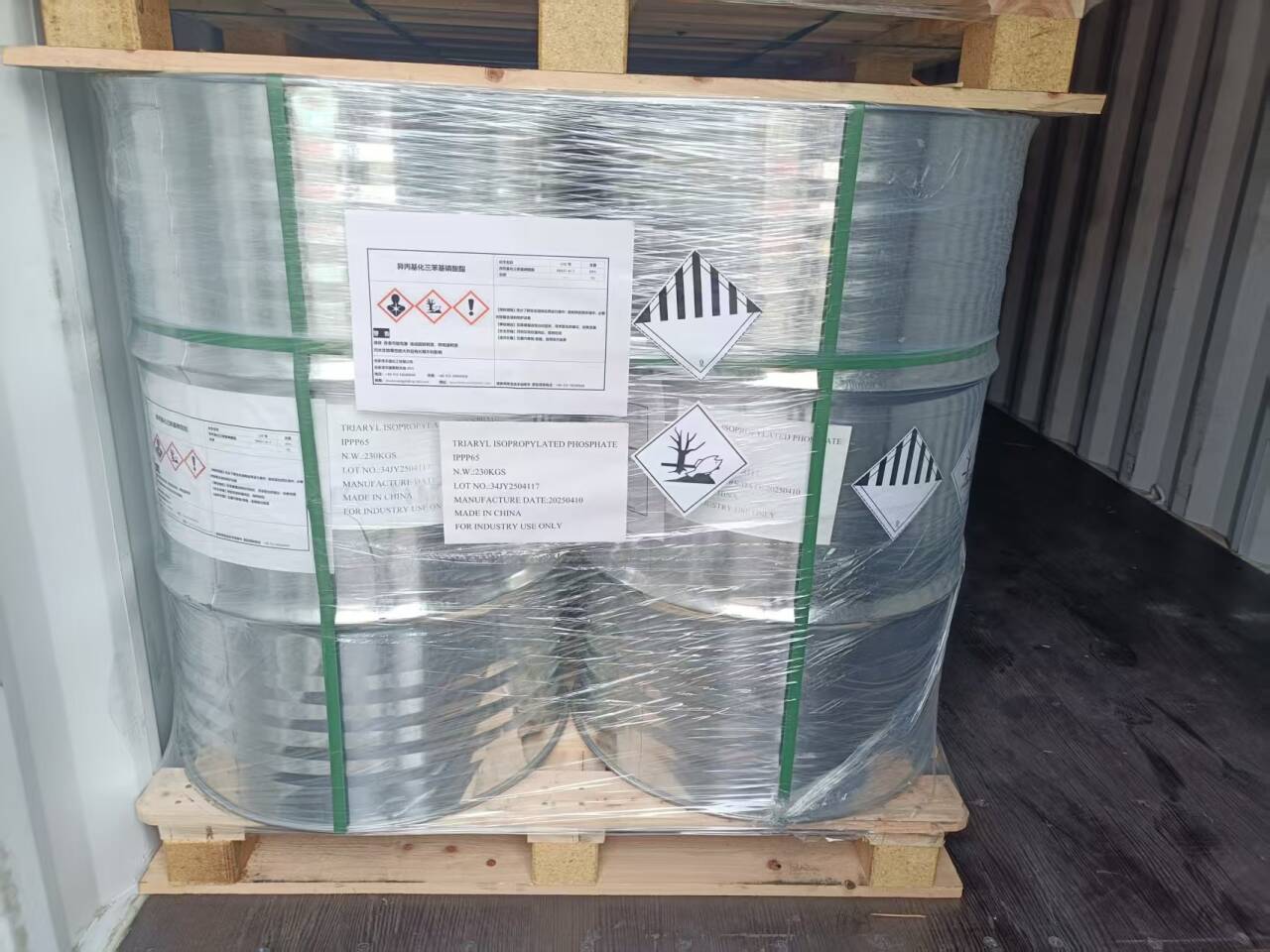
The production base for IPTPP components in China is far from uniform. The Pearl River Delta remains the go-to region for fast turnarounds and small-batch custom runs, with hundreds of small workshops able to reconfigure lines within days. Further north, clusters around Shanghai and Suzhou lean toward higher-volume orders where tighter tolerances and cleaner surface finishes are expected.
Cost structures have shifted noticeably over the past five years. Rising wages in coastal provinces no longer make low-complexity parts automatically cheaper than alternatives in Vietnam or Mexico. Instead, many Chinese suppliers now compete on process control and vertical integration—owning their own CNC machining, heat treatment, and passivation steps rather than outsourcing them. This can shorten lead times but also means a buyer's audit has to look beyond the final assembly floor.
Environmental enforcement has redrawn the map for finishing processes. Electroplating and chemical milling operations have been pushed into licensed industrial parks, which raised compliance costs and squeezed out smaller operators. Meanwhile, some low-margin assembly work is drifting outward, but the dense network of material suppliers and tooling shops around Shenzhen and Dongguan keeps high-precision IPTPP production anchored in China for now.
Key Physical and Chemical Properties That Matter in Formulation
Formulators often start with solubility and permeability, but the real work begins when you dig into the less obvious parameters. pKa dictates ionisation state across physiological pH ranges, which in turn shifts both aqueous solubility and passive diffusion. LogP is equally decisive: a compound that looks highly soluble in a buffer may still refuse to cross a lipid bilayer, or worse, partition straight into off-target tissues. We routinely map these two values against each other before touching a single excipient, because they set the ceiling for what any formulation can achieve.
Solid-state properties are where silent failures hide. A single molecule can exist as multiple polymorphs, each with its own dissolution rate, melting point, and stability profile. Then there is the amorphous form—often faster to dissolve but thermodynamically restless, prone to recrystallise under humidity or thermal stress. Particle size distribution and specific surface area trip up wet granulation and dry blending if ignored. Even simple hygroscopicity matters: a powder that clumps at 40% relative humidity will jam a tablet press regardless of how elegant the recipe looks on paper.
Chemical degradation pathways deserve equal weight. Hydrolysis in acidic microenvironments, oxidation catalysed by trace metals, photolytic cleavage under ICH light conditions—each can quietly erase potency during storage. Excipient compatibility screens should run early, because common fillers like lactose can accelerate Maillard reactions with primary amines. By the time a formulation reaches stability studies, the only acceptable surprises are none; the goal is to have already measured the pKa, identified the stable polymorph, and confirmed that the API tolerates its intended matrix for the full shelf life.
Where IPTPP Shows Up Across Industrial Applications
IPTPP has quietly woven itself into a surprising range of manufacturing processes, often acting as a stabilizer or catalyst enhancer where thermal stress and chemical exposure are daily realities. In polymer production, for instance, it finds its way into polyolefin lines that demand consistent melt flow without sacrificing long-term color retention. Operators don't always name it on spec sheets, but they notice the difference in extrusion runs when the additive package shifts—fewer gel particles, smoother barrel pressure, and less frequent die cleanings.
Beyond plastics, the compound appears in specialty lubricant blends used in high-load metal forming. Here its role tilts toward boundary lubrication, helping reduce scuffing on tool steel without leaving the heavy residue that mineral-based packages often do. Maintenance teams in automotive stamping plants have come to rely on formulations containing IPTPP because they extend die life between regrinds and keep wash systems from clogging with waxy buildup.
Coatings and adhesives represent another quiet but growing niche. Formulators working on low-VOC, fast-cure epoxy systems sometimes turn to IPTPP as a co-accelerator that tames exotherm spikes during thick-section cures. That means fewer stress cracks in cast electrical components and more predictable pot life on humid shop floors. It’s rarely the headline ingredient, yet pulling it out of a formula often reveals just how much heavy lifting it was doing behind the scenes.
Safety Profiles and Handling Practices Worth Knowing
A material's safety profile rarely tells the whole story in one glance. Many substances that appear benign at room temperature can release hazardous vapors once heated, or react with moisture in the air to form corrosive byproducts. It pays to read past the first page of the safety data sheet, particularly the sections on stability and incompatibility. Some chemicals also carry delayed health effects—lung irritation that shows up hours after exposure is a classic example—so a clean initial response does not always mean the risk has passed.
Handling practices need to match the actual task, not just the general chemical class. For flammable liquids, grounding and bonding containers prevents static discharge that can ignite vapors even in a well-ventilated room. Secondary containment trays are worth using for more than just acids and bases; a cracked bottle of solvent turns into a slip hazard and a fire risk within minutes. When it comes to personal protective equipment, glove compatibility charts matter more than glove thickness. A thick nitrile glove can degrade faster than a thin laminate one if the solvent mix is wrong.
Storage decisions often create the biggest hidden risks. Keeping oxidizers away from flammables is standard, but fewer people check whether their acid cabinet is venting into the same area where metal powders are stored. Labeling should include the date a container was opened, since some peroxidizable compounds become shock-sensitive over time. Finally, emergency plans work best when they are specific: a spill kit with the right neutralizer, a designated person for each zone, and a clear rule for when to evacuate instead of attempting cleanup. These quiet, routine choices usually prevent more incidents than any single piece of equipment.
How the Chinese IPTPP Market Is Evolving Beyond Traditional Uses
For a long time, intellectual property services in China were largely confined to filing patents, registering trademarks, and handling basic legal disputes. These functions remain important, but they no longer define the market. The real shift is happening in how IP assets are being used as financial tools, strategic bargaining chips, and even standalone products.
Companies now routinely pledge patents as collateral for bank loans, a practice that was nearly unheard of a decade ago. Technology transfer offices in universities act more like venture scouts than administrators, spinning out startups around specific IP portfolios. Meanwhile, specialized exchanges in cities like Shenzhen and Shanghai let firms trade patent rights, license bundles, and even royalty streams. The market has moved from protection to monetization.
FAQ
It is an aryl phosphate ester produced by introducing isopropyl groups onto the triphenyl phosphate backbone. This modification keeps the molecule liquid at room temperature, lowers its viscosity, and improves compatibility with a broader range of polymers. China has become the dominant manufacturing hub because the key raw materials—phenol, phosphorus oxychloride, and propylene derivatives—are produced domestically at scale, and many plants are integrated with downstream chlor-alkali and phosphorus chemical operations.
Flexible and rigid PVC compounds, polyurethane foams for furniture and automotive seating, engineering thermoplastics like PC/ABS blends, and rubber conveyor belts account for most of the demand. It also appears in cable jacketing, artificial leather, and some construction adhesives where both flame retardancy and plasticization are needed without adding solid fillers.
When the polymer heats up, the phosphate ester decomposes to release phosphorus-containing radicals that interrupt the free-radical chain reactions in the gas phase. At the same time, it promotes charring on the solid surface, which forms a barrier that slows heat transfer and reduces the release of flammable gases. This dual action is why relatively low loadings can still pass vertical burn tests.
It remains a stable, low-viscosity liquid across a wide temperature range, which simplifies bulk handling and dosing. Its vapor pressure is low, so it does not migrate rapidly out of finished parts. The isopropyl groups improve solubility in polyols and plasticized PVC while still contributing enough phosphorus content to meet common flammability standards. Many formulators also value its low odor and light color.
Like other aryl phosphates, it is not completely inert, and occupational exposure limits should be checked against the latest safety data sheets. While it is generally regarded as less hazardous than some halogenated flame retardants, regulatory frameworks such as EU REACH and US TSCA may impose specific reporting or handling requirements. Buyers should request full toxicological summaries and confirm that their applications do not fall under restricted use categories.
Even though the basic chemistry is straightforward, acid value, moisture content, color (APHA), isopropyl substitution pattern, and residual phenol levels can vary widely between producers. Higher acidity can accelerate polymer degradation, while excess moisture may cause foaming during processing. Reputable suppliers control these parameters through continuous esterification and vacuum stripping, whereas lower-cost sources may skip post-treatment steps.
Yes, it is often blended with halogenated additives, antimony trioxide, or nitrogen-based synergists like melamine polyphosphate. In polyurethane foam, pairing it with a small amount of halogenated phosphate can lower total additive loading while still achieving UL 94 V-0 or similar ratings. In PVC, it works alongside metal hydrates, although the balance between plasticization and smoke suppression needs careful optimization.
Conclusion
Isopropylated triphenyl phosphate, often abbreviated IPTPP, is a flame-retardant plasticizer synthesized from phenol and isopropylated phenol feedstocks. In China, the compound has become a core product of phosphorus chemical clusters in Jiangsu and Shandong, where integrated producers use domestic phosphorus resources and specialized esterification lines to keep costs competitive while meeting export-grade purity. Formulators value IPTPP for its low volatility, good thermal stability, and compatibility with polyurethane foams, PVC, and engineering resins. These traits allow it to work effectively as a secondary plasticizer and flame retardant, especially when migration resistance and low smoke generation matter. The liquid viscosity and moderate phosphorus content also make it easy to add to existing compounding processes without major equipment changes.
Industrial uses of Chinese IPTPP span flexible and rigid foam systems, wire and cable insulation, automotive interiors, and construction materials. Its growing presence in electronics housings and synthetic leather reflects a shift toward halogen-free flame retardant packages that still deliver reliable ignition resistance. Handling practices follow standard organophosphate hygiene: avoid prolonged skin contact, use local exhaust ventilation during bulk transfer, and store in stainless steel or lined carbon steel tanks to prevent moisture uptake. Meanwhile, the domestic market is moving beyond simple volume supply, with producers investing in higher-purity grades, custom blends, and REACH-compliant documentation for European and North American buyers. This evolution is turning Chinese IPTPP from a commodity intermediate into a formulated performance additive with tighter batch consistency and traceability.
Contact Us
Contact Person: WANG SIHAI
Email: [email protected]
Tel/WhatsApp: +86-13815295628
Website: https://www.fortunechemtech.com/index_en.html