

China Micronized Dipentaerythritol Sourcing and Quality Control Guide
2026-10-28
Sourcing micronized dipentaerythritol from China can feel like navigating a minefield—batch inconsistencies, vague specs, and suppliers who promise more than they deliver. Yet this fine white powder quietly underpins high-performance flame retardants, alkyd resins, and even specialty lubricants. Get the quality wrong, and your downstream formulation fails; get it right, and your product stands out. This guide cuts through the noise, outlining exactly what to check before you commit—and why partnering with a supplier like X.X.F.R changes the sourcing game entirely.
Mapping the Real Cost Drivers of Micronized Dipentaerythritol from Chinese Producers
The price of micronized dipentaerythritol out of China rarely moves in a straight line with a single input. Instead, the largest share traces back to the two core feedstocks—formaldehyde and acetaldehyde—whose contract levels swing with methanol and ethylene markets. On top of that, the conversion process is energy-hungry, and most Chinese producers run on coal-fired power, so regional electricity tariffs and even seasonal coal supply tightness can push production costs up or down by a few percentage points. The micronization step itself adds another layer: jet milling or air classification consumes considerable electricity, and the wear on grinding equipment gets baked into maintenance budgets that smaller plants often underestimate.
Beyond the processing floor, environmental compliance now acts as a quiet but persistent cost driver. Stricter wastewater discharge rules in Jiangsu and Shandong have forced many operators to install expensive treatment systems, and those that lag behind face shutdowns or fines that ripple through spot prices. Logistics add a final twist—export containers from Shanghai or Ningbo are still subject to rate swings, and inland trucking from plants in Henan or Hubei can erode margins further. Producers with larger-scale continuous lines tend to smooth out these shocks better than batch workshops, which is why buyers often see a widening spread between top-tier suppliers and smaller players during periods of high demand.
How to Verify Particle Size Claims Before You Commit to a Container
Before signing off on a container shipment, ask the supplier for the actual particle size distribution report—not just a typical range on a brochure. The report should list the instrument used, the dispersing medium, and the date of the test. If they hesitate to share raw data, that's a signal the numbers may have been cherry-picked.
Pay attention to the method as much as the numbers. Laser diffraction, dynamic light scattering, and sieve analysis don't always agree, especially for irregular or agglomerating powders. Make sure the technique matches your application: a D50 from a sieve stack can be misleading if your process relies on sub-micron fines. Ask for repeat measurements on the same batch to see how stable the claim really is.
Finally, test a sample yourself before the full order ships. Request a few grams or a small pilot container, run it through your own particle size analyzer or send it to an independent lab. Even a quick check under a microscope can reveal whether the claimed narrow distribution holds up. If the numbers drift between their report and your results, negotiate a revised spec or walk away.
Regional Production Clusters That Affect Batch Consistency
When manufacturing networks concentrate in a single geographic area, upstream suppliers often share the same municipal water chemistry, seasonal humidity swings, and local workforce training pipelines. These shared conditions create subtle but repeatable fingerprints in the final product. A surface treatment step, for example, may react slightly faster during the same month every year because the regional air moisture shifts viscosity or drying behavior. Batch records rarely flag these influences, so they become embedded in the baseline and only surface when a customer notices a periodic drift in color, hardness, or dissolution time.
Different production clusters also evolve their own house rules around equipment maintenance, cleaning solvents, and calibration intervals. A cluster in one valley might adopt a recycled solvent because of local wastewater costs, while a coastal cluster could favor a corrosion-resistant coating due to salt exposure. These choices are not written into the official specification, but they migrate into standard operating procedures over time. As a result, the same formulation leaving two regional hubs can carry slightly different residual traces or particle surface energies, and that gap widens with every localized process tweak.
Logistics radius adds another layer. A tight cluster shortens raw material transit time but also concentrates supplier risk. If several contract manufacturers draw from the same handful of regional refiners, a change in one refinery's oxidation level or milling parameters propagates quickly across multiple lines. Procurement teams that never cross-check materials outside the cluster often misread this as random batch noise, when in fact it is a geographic bias that could be corrected by rotating in a secondary source from a different region.
Red Flags in Quality Documentation and How to Read Past Them
Quality documentation often hides more than it reveals. One obvious red flag is the endless repetition of phrases like “robust,” “state-of-the-art,” or “best-in-class” without a single concrete example to back them up. When you see these, you're not reading a proof of quality; you're reading a marketing echo. Another warning sign is the suspicious absence of numbers—no rejection rates, no cycle times, no audit findings. Real quality records are rarely spotless, and a document that claims zero deviations over twelve months is either lying or measuring nothing useful.
To read past these flags, start by asking what the document does not say. If a procedure cites a standard but never shows how it maps to daily work, the gap between paper and shop floor is probably wide. Look for revision histories that are too clean—every change marked “minor update” usually means nobody is really reviewing anything. More importantly, cross-check the claims against raw data, witness a process live, or pull a random record yourself. Documentation that tries to impress you with polish often crumbles under the weight of a single “show me.”
The real skill is learning to treat quality documentation as a tentative map, not the territory. When you spot the red flags, don't just reject the document—use them as entry points for deeper conversation. Ask the author why a metric was excluded, what happened during that unexplained three-month gap, or who actually signed off on the unverified calibration log. Genuine quality systems welcome that kind of scrutiny; paper-only systems fear it. Reading past the flags means trusting what you can verify, and knowing that the most honest documentation often has a few visible scars.
Packing, Storage, and Handling Rules That Preserve Micronized Performance
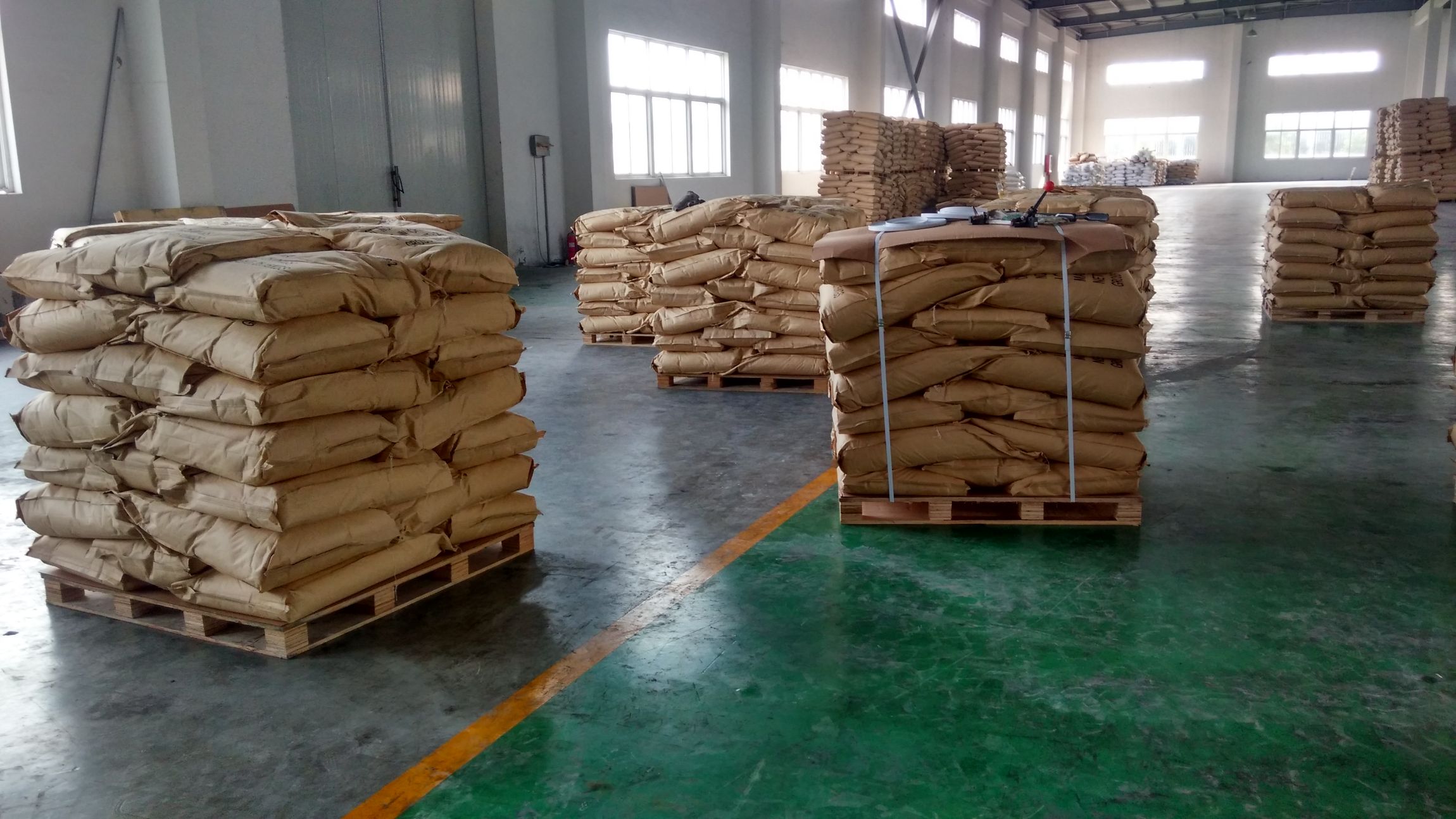
Micronized materials demand packaging that treats surface area as a liability, not an afterthought. A nitrogen-flushed, foil-lined pouch prevents moisture ingress far better than a standard polyethylene sack, and adding a desiccant sachet gives you a second line of defense. Skip cardboard boxes unless the inner liner is hermetically sealed—dust and humidity will find a way in.
Storage conditions are just as unforgiving. Keep the powder between 15°C and 25°C with relative humidity below 40 percent, but pay more attention to fluctuations than to any single reading. Rapid temperature swings cause condensation inside the container, which leads to agglomeration and a loss of the very particle separation you paid for. Store pallets off concrete floors and away from exterior walls, and never stack more than two high unless the product spec explicitly allows it.
Handling is where most micronized performance dies. Use low-shear transfer methods—vacuum conveyors, gentle screw feeders, or simple scoop-and-pour with grounded metal tools. Avoid dumping from height or shaking containers to loosen clumps; that only builds static charge and makes the powder cling to everything except your process. When in doubt, move slower and keep all equipment bonded to earth.
Negotiating with Factories Without Sacrificing Traceability
Production managers often feel pressured to cut corners on traceability when a factory pushes back on documentation requirements. The usual advice is to hold firm, but that ignores how negotiations actually happen on a workshop floor. A more workable approach is to link traceability requests to the factory's own operational frustrations, like fewer rework hours from clearer batch records or faster resolution of customer complaints.
Instead of presenting traceability as an external compliance burden, frame it as a shared tool for reducing disputes over raw material quality. Ask the factory to walk through a recent defect incident and point out where missing data forced them to accept liability. Once they see the connection, you can negotiate the scope of record-keeping, not its existence. Offer to simplify reporting formats or consolidate duplicate logs to lower their administrative load.
The goal is not to win an argument about standards, but to build a system that survives staff turnover and rush orders. Agree on a phased rollout that starts with high-risk materials and expands based on measured error rates, not an arbitrary deadline. That way, traceability becomes a working arrangement rather than a set of promises that evaporate after the contract is signed.
FAQ
Start with the supplier's production license and environmental compliance records. Many smaller plants operate without full permits, which can lead to sudden shutdowns and shipment delays. Ask for copies of ISO 9001 and REACH-related documentation, but do not treat certificates alone as proof; request batch-level test reports from the last three shipments.
Micronized grades typically target D50 values between 10 and 20 microns, but the real issue is the tail of the distribution. If D90 exceeds 30 microns, dispersibility in UV-curable resins and alkyd coatings suffers, causing surface defects. Ask for a full laser diffraction report, not just a single D50 number.
Residual sodium formate and unreacted formaldehyde are the two most common impurities. Sodium formate above 0.05% can affect electrical properties in powder coatings, while residual formaldehyde creates odor and regulatory problems in consumer goods. Insist on ion chromatography and HPLC results for every batch.
Purity tests often ignore trace iron and acetaldehyde-derived chromophores. Chinese plants using recycled process water or older distillation columns tend to have higher iron pickup, which lowers whiteness. A product may pass 98% purity but still appear off-white. Specify a whiteness index of at least 90 and request an iron content below 10 ppm.
Do not rely only on the certificate of analysis at the factory gate. Micronized dipentaerythritol is hygroscopic, and moisture can rise during warehouse storage in humid coastal cities like Ningbo or Shanghai. Ask for a third-party inspection at the loading port, with moisture measured by Karl Fischer titration right before container sealing.
Require the supplier to draw samples from the actual production lots destined for your order, not from a retained sample jar. A practical approach is to use a mutually agreed third-party inspector who seals and photographs the sampling process at the factory. Then compare the sealed sample with the landed cargo before you accept the shipment.
Domestic demand for dipentaerythritol in polyurethane and lubricant additives has grown sharply, so some suppliers prioritize local buyers during tight periods. Export buyers should negotiate a quarterly allocation model rather than spot purchases. This helps secure output even when spot prices spike domestically.
Beyond the commercial invoice and packing list, insist on a full certificate of analysis that includes particle size distribution, moisture, purity, sodium formate, formaldehyde, iron, and whiteness. Also request the SDS in both Chinese and English, a REACH conformance statement if shipping to Europe, and a certificate of origin. These documents should be traceable to the exact batch numbers printed on the bags.
Conclusion
Sourcing micronized dipentaerythritol from Chinese producers rarely comes down to a single price per kilogram. The real cost drivers sit behind the invoice: purity of the base pentaerythritol, electricity and milling time needed to hit tight particle size targets, moisture control during final classification, and the reject rate a factory is willing to absorb. A low quote often hides wider size distribution or higher fines, which downstream cause caking, poor dispersion, or inconsistent thickening. Before committing to a container, request the actual laser diffraction report—not just a typical range—and ask which instrument and dispersing pressure were used. Batch consistency also depends on regional production clusters. Plants in Shandong and Jiangsu tend to run larger continuous mills with better feedstock access, while some inland Henan operations offer lower labor costs but may vary more in moisture and particle shape between runs. Checking a factory's last three production lots against the certificate of analysis is more useful than any marketing claim.
Quality documentation from Chinese suppliers often looks complete at first glance, but red flags hide in the details. Watch for COAs that repeat the same lot number across different shipments, missing test dates, or particle size distributions that exactly match the theoretical specification with no actual deviation. Request the raw lab notebook or a live video of the QC test instead of accepting a scanned PDF. Packing and storage rules are equally decisive: micronized dipentaerythritol is hygroscopic and prone to caking if exposed to moisture. Specify sealed multi-layer paper bags with an inner PE liner, palletized and shrink-wrapped, and reject any shipment where bags show condensation or torn liners. During negotiation, avoid pushing only on price. Tie payment terms to documented traceability—such as batch-level production records, retained samples, and the right to audit the mill—so that a lower price does not come at the cost of losing the audit trail.
Contact Us
Contact Person: Guohua Wang
Email: [email protected]
Tel/WhatsApp: 8613003442895
Website: https://www.xxflameretard.com