

China SLA 3D Printer Solutions: Revolutionizing Precision Manufacturing
2026-05-24
Precision manufacturing has long grappled with a trade-off: intricate detail often meant slow, costly processes. SLA 3D printing changed that, but even now, many solutions lack the seamless blend of speed and micron-level accuracy that modern industries demand. Enter ProtoMat—a groundbreaking SLA platform engineered to shatter these barriers. By rethinking resin-based fabrication from the ground up, ProtoMat delivers components with geometric complexity and surface finish that rival injection molding, at a fraction of the lead time. This isn't just another incremental upgrade; it's a fundamental shift in how we approach rapid prototyping and small-batch production. In the following sections, we'll unpack the core technologies behind ProtoMat's performance and explore real-world applications where it's already redefining what's possible.
How SLA Technology Redefines Layer-by-Layer Precision
Stereolithography’s approach to building objects is fundamentally different from other 3D printing methods. Instead of extruding material or fusing powder, it uses a precise UV laser to trace each layer onto a vat of liquid resin. The light triggers a photopolymerization reaction only exactly where it hits, solidifying a thin film with sub-millimeter accuracy. Because the laser spot can be focused down to the width of a human hair, the edges of every feature are defined optically rather than mechanically. This means that repeatability is tied to galvo mirror movements and the stability of the light source, not to the tolerances of a moving print head or build platform. The result is layer after layer that reproduces the CAD model without the slight offsets or thermal deformation that can accumulate in processes relying on material deposition.
What truly sets SLA apart is how it handles inter-layer bonding. The resin at the interface between the newly cured layer and the previous one becomes covalently linked during exposure, so the object isn’t just a stack of discrete slices but a continuous polymer network. This chemical fusion eliminates the weak delamination planes that often plague filament-based prints. Z-axis strength comes much closer to the isotropic ideal, meaning thin walls and fine pillars are less likely to snap under load. Moreover, the liquid resin naturally fills microscopic gaps before curing, which prevents the staircase effect from becoming a structural weak point. The precision isn’t only about sharp outlines on the XY plane; it’s about creating a coherent solid where every voxel is bonded as firmly as its neighbors.
Even the support generation benefits from this optical control. SLA software can calculate contact points that are barely larger than the laser spot diameter, anchoring overhangs with slender nibs that snap off with minimal surface damage. Because the cure depth is dialed in through exposure settings, downward-facing features remain well-defined without excessive sagging. This precision at the tiny scale opens up applications in microfluidics, dental molds, and jewelry casting where a 10-micron difference matters. By redefining what can be resolved between layers, SLA shifts the conversation from “good enough for a prototype” to “rivaling traditional manufacturing in resolution and reliability.”
Material Breakthroughs Driving Ultra-Fine Detail Production
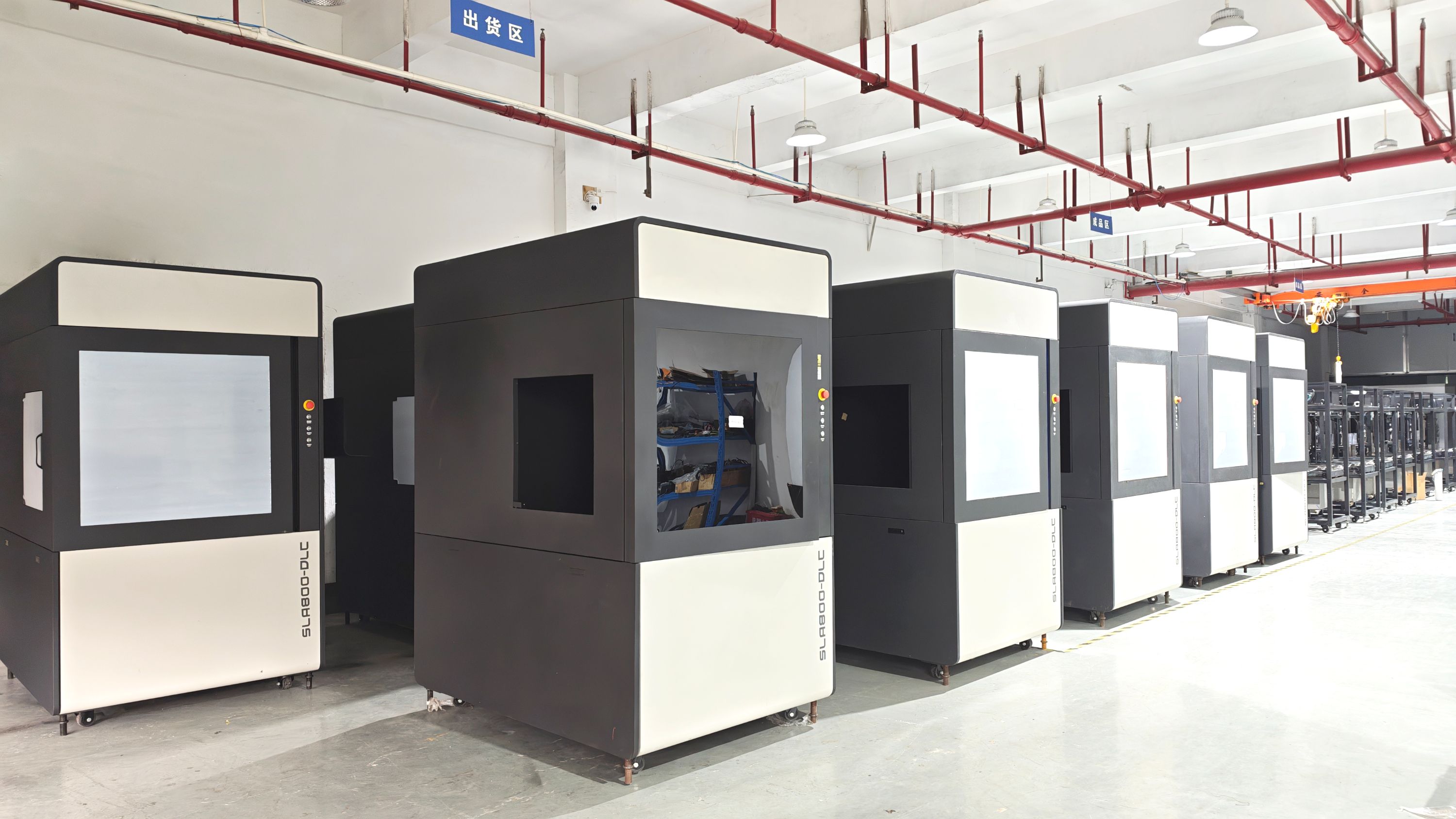
The pursuit of ultra-fine detail in manufacturing has long been constrained by the physical properties of available materials. Traditional resins and metals often suffer from shrinkage, warping, or inadequate particle size distribution, leading to a loss of fidelity at the micron scale. Recent innovations are rewriting these limitations. A new class of nano-filled photopolymers, for instance, uses precisely engineered ceramic particles to reinforce structural integrity during curing, drastically reducing volumetric shrinkage to less than 0.1%. This allows for the faithful reproduction of features as small as 2 µm in additive processes, opening doors in micro-optics and biomedical device fabrication where every nanometer counts.
Parallel advances in metal powders have transformed sintering-based methods. Conventional atomization produces irregular particles that flow poorly and pack unevenly, compromising fine details. Breakthroughs in plasma spheroidization yield powders with near-perfect spherical morphology and tightly controlled size distribution (D90 below 5 µm). This uniform consistency enables the printing of delicate lattice structures and thin walls down to 100 µm without cracking or distortion. When combined with custom binder systems tailored for low-ash burnout, the result is green parts with exceptional surface finish, requiring minimal post-processing—a critical advantage for intricate jewellery and dental prosthetics.
Perhaps the most unexpected leap comes from bio-derived materials. Engineered cellulose nanocrystals, extracted from wood pulp and aligned via shear forces, exhibit mechanical properties rivaling those of carbon fiber, yet they can be processed at much higher resolutions. Suspended in water-based inks, these crystals can be directed to form complex, multilayer structures through inkjet deposition. As the water evaporates, the crystals self-assemble into dense, highly ordered films with feature sizes controllable down to the sub-10 µm range. This approach not only produces remarkably detailed components but does so using a renewable, biodegradable matrix—sidestepping the environmental concerns associated with synthetic polymers and enabling new applications in microfluidics and sustainable electronics packaging.
From Prototyping to End-Use Parts: Closing the Manufacturing Gap
Bridging the divide between prototyping and end-use production has long been a formidable challenge. Traditional manufacturing methods often force a disconnect—early-stage prototypes are crafted with one set of processes and materials, while final parts require entirely different tooling and workflows. This fragmentation leads to costly redesigns, extended timelines, and compromises in part performance. The manufacturing gap isn’t just a logistical hurdle; it’s a barrier to innovation, keeping many ideas locked in the lab and out of real-world applications.
Advances in additive manufacturing and flexible production systems are fundamentally closing this gap. By enabling the same technology to produce both prototypes and end-use parts, teams can iterate rapidly and then seamlessly transition to production without retooling. Materials have matured to offer robust mechanical properties suitable for functional testing and final use, from high-temperature polymers to metal alloys. This continuity ensures that the part validated in testing is, in most respects, the same part that goes into the field, slashing qualification time and boosting confidence in performance.
To truly close the gap, it’s essential to align design, materials, and process parameters from the very start. Iterating with end-use intent means considering thermal, mechanical, and environmental demands upfront, not as an afterthought. In-line monitoring and consistent quality control further ensure that every piece—whether the first prototype or the thousandth part—meets the same strict standards. By treating prototyping as the first stage of production, manufacturers can compress development cycles, reduce waste, and deliver reliable parts that were once too complex or expensive to make.
Streamlined Workflows That Slash Production Timelines
When every hour counts, trimming the fat from your processes can feel like uncovering hidden capacity. It's less about rushing and more about rethinking the sequence—spotting where handoffs stall, approvals pile up, or legacy steps survive only because no one’s questioned them. By mapping the actual journey of a task, not the idealized one, teams often find that just merging a few parallel streams or automating a repetitive check can collapse days into hours.
The real magic happens when simplification becomes a mindset rather than a one-off project. Instead of overloading each stage with exhaustive reviews that rarely catch new issues, a clean, continuous flow with clear ownership keeps momentum high. Tools matter, but a workflow that’s been jointly refined by the people doing the work will always outperform one mandated from above. Small tweaks—like templating common outputs or setting explicit triggers for the next step—compound into timelines that once seemed unattainable.
Perhaps most surprisingly, slimmer timelines don’t have to mean skimping on quality. In fact, removing the clutter often sharpens focus on what truly adds value. When teams stop mistaking busywork for progress, they can concentrate on the creative and analytical leaps that no algorithm can replace. The result isn’t just faster output—it’s a competitive rhythm that lets you deliver before the brief even gets cold.
Real-World Success Stories Across Diverse Industries
When a mid-sized logistics company in Rotterdam faced crippling delays due to outdated tracking systems, they didn’t just upgrade their software—they reimagined their entire workflow. By integrating IoT sensors with a custom predictive analytics platform, they slashed delivery time misestimates by 67% within six months. What made it stick was the bottom-up approach: drivers helped design the interface, ensuring it fit their daily reality rather than a boardroom fantasy.
In the healthcare sector, a regional hospital chain transformed patient intake by replacing paper forms with an AI-assisted triage tool trained on millions of anonymized cases. The result wasn’t just faster check-ins—the system learned to flag subtle risk factors that busy nurses often missed, leading to a 34% drop in early readmission rates. The CIO later admitted the biggest hurdle wasn’t the tech itself, but persuading veteran staff that this wasn’t about replacing their judgment, only sharpening it.
Meanwhile, a family-run bakery in Lisbon seemed an unlikely candidate for digital overhaul, but their adoption of demand-forecasting algorithms—fed by weather data, local events, and historical sales—turned waste into profit. They cut day-old pastry losses by half and even started a popular subscription service for surplus deals, turning a cost center into community goodwill. Small tweaks, outsized impact: proof that innovation doesn’t need a skyscraper address.
What’s Next for High-Accuracy Additive Manufacturing
The push for tighter tolerances is reshaping how engineers think about material behavior during printing. Instead of simply dialing in parameters, next-generation machines are integrating real-time melt pool monitoring with adaptive path correction, allowing on-the-fly adjustments that keep dimensional drift in check. This isn’t just about better sensors; it’s about closed-loop systems that learn from each layer and compensate for thermal distortion before it becomes a defect.
New alloy formulations are stepping into the spotlight, specifically engineered for the rapid solidification cycles unique to additive processes. By moving away from repurposed casting or wrought compositions, manufacturers gain finer control over grain structure and residual stress, directly boosting fatigue life and surface integrity. Combined with multi-axis deposition strategies that minimize support structures and optimize part orientation, these material advances are unlocking geometries that were once off-limits for production-grade components.
Beyond the build chamber, the conversation is shifting toward holistic quality assurance. In-situ tomography and machine learning-driven anomaly detection are merging with post-process techniques like isotropic superfinishing in a seamless digital thread. The goal isn’t just a dimensionally accurate part—it’s a repeatable, certified process that can stand without exhaustive physical inspection, finally delivering on the promise of high-accuracy additive manufacturing for mission-critical applications.
FAQ
SLA, or stereolithography, uses a laser to cure liquid resin layer by layer into solid objects. The pinpoint accuracy of the laser, combined with the material’s ability to form ultra-fine details, allows for surface finishes and tolerances that rival traditional manufacturing methods.
Chinese companies have invested heavily in R&D, scaling up production to offer advanced SLA printers at competitive prices. The ecosystem includes high-quality resins, reliable hardware, and responsive after-sales support, making it a one-stop shop for precision prototyping and production.
Industries like dental, jewelry, and aerospace are leading adopters. Dental labs use them for surgical guides and aligners, jewelers for intricate casting patterns, and aerospace engineers for lightweight, complex components that demand exact specifications.
Modern systems from China often feature large build volumes and faster scanning technologies, like galvo systems, that significantly cut print times without sacrificing detail. This boosts throughput, making them viable for small batch production, not just prototyping.
The resin portfolio has expanded far beyond standard photopolymers. You can now get engineering-grade, biocompatible, castable, and even flexible resins. This versatility opens up functional testing and end-use parts across diverse applications.
Yes, many brands now integrate smart features like automatic resin leveling, cloud-based monitoring, and optimized support generation algorithms. These reduce the learning curve and minimize failed prints, enhancing overall reliability.
The barrier to entry has dropped dramatically. There are compact, user-friendly models priced accessibly, and the total cost of ownership stays low due to energy efficiency, durable components, and affordable consumables. This democratizes precision manufacturing.
Conclusion
China's SLA 3D printer solutions are pushing the boundaries of precision manufacturing by combining ultra-fine layer resolution with advanced materials that capture microscopic details. These systems not only match but often exceed the accuracy of traditional molding, enabling a shift from rapid prototyping to direct production of end-use parts. The technology's ability to reproduce intricate geometries with exceptional surface finish closes the gap between additive and subtractive methods, while streamlined software and automated post-processing dramatically cut lead times. Manufacturers can now move seamlessly from digital design to functional component in hours, not weeks, transforming both low-volume specialty runs and high-mix production environments.
Across sectors like dental, jewelry, and electronics, real-world deployments underscore the versatility of China's SLA solutions. Custom dental aligners, intricate jewelry patterns, and durable electronic connectors are now produced routinely with micron-level precision. These applications validate how the technology slashes both development cycles and per-part costs, making high-accuracy additive manufacturing viable for everyday production. Streamlined workflows, from automatic support generation to one-click post-curing, eliminate manual touchpoints and accelerate iterations. Looking forward, the integration of AI-driven calibration, multi-material capabilities, and faster photopolymers will push accuracy and throughput even further. As China's SLA ecosystem matures, it is redefining quality standards and enabling a new breed of agile, localized manufacturing that challenges traditional supply chain models.
Contact Us
Contact Person: Joe
Email: [email protected]
Tel/WhatsApp: +8613799507208
Website: https://www.3dprotomat.com/