

China Steel Plate Shot Blasting Machine Supplier: Exploring Advanced Surface Preparation Solutions
2026-07-03
In the world of industrial surface preparation, steel plate shot blasting machines are the unsung heroes that ensure coatings adhere flawlessly and structures stand the test of time. But with so many suppliers claiming excellence, how do you identify a partner that truly delivers advanced solutions? Enter PuHua, a trusted China-based manufacturer redefining efficiency and precision in shot blasting technology. Whether you're tackling heavy-duty descaling or delicate profiling, the right equipment makes all the difference—and this guide takes you straight to the heart of innovation.
Inside the Evolution of Steel Plate Surface Prep
The journey of steel plate surface preparation began with simple, labor-intensive methods. Early fabricators relied on wire brushes and chipping hammers to remove mill scale and rust, but these manual techniques often left behind uneven surfaces and microscopic contaminants. As industrial demands grew, the shift toward pneumatic tools brought some relief, yet consistency remained elusive. Each strike and scrape was a reminder that better solutions were needed to ensure coating adhesion and long-term structural integrity.
The mid-20th century introduced a transformative leap with the advent of centrifugal blast cleaning. Wheelabrating, as it came to be known, hurled abrasive media against steel plates at high velocity, stripping away imperfections with remarkable speed and uniformity. This mechanized process not only slashed preparation time but also created an angular profile that paints and coatings could cling to with confidence. Shipyards and bridge builders quickly embraced the technology, recognizing that the controlled roughness it produced was pivotal in extending service life in corrosive environments.
Today, the evolution continues as automation and smart monitoring redefine surface prep standards. Robotic blasting systems, equipped with sensors and real-time feedback loops, adjust pressure and abrasive flow on the fly, ensuring every square inch meets exact specifications. Meanwhile, eco-friendly abrasives and dust-suppression methods address environmental concerns without compromising performance. From manual scraping to AI-driven precision, the arc of progress in steel surface preparation mirrors the industry’s relentless push for efficiency, durability, and a cleaner planet.
How Advanced Blasting Tech Boosts Durability
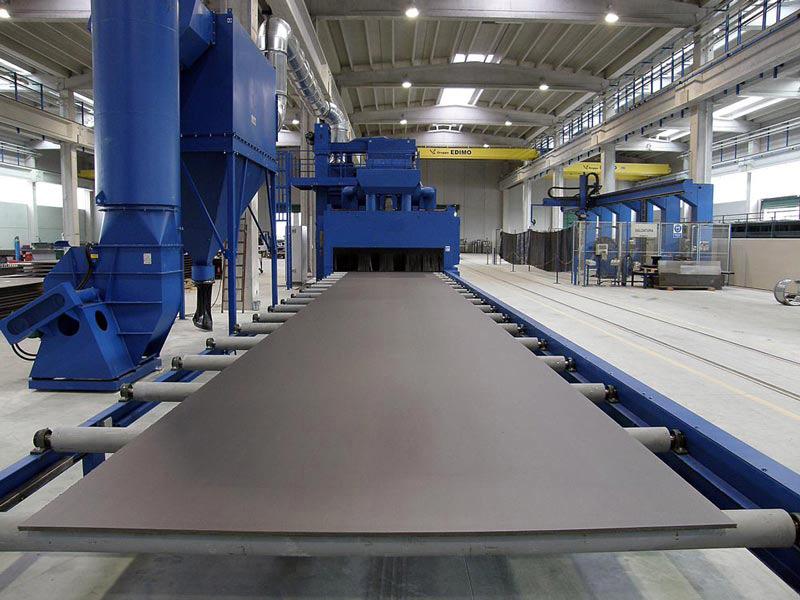
The link between blasting techniques and long-term structural integrity is often overlooked. Advanced blasting methods, particularly those using precise timing and controlled energy distribution, reduce micro-fracturing in the surrounding rock mass. This preservation of the rock's natural strength means fewer weak points that can develop into cracks or erosion over time. Instead of brute force, modern approaches treat the rock more like a surgical procedure, targeting only the necessary areas and leaving the remaining material as undisturbed as possible.
Vibration control plays a central role here. By carefully sequencing detonations and using electronic detonators, engineers can keep ground vibrations well below damaging thresholds. This prevents hidden damage that might otherwise compromise the stability of slopes, tunnels, or foundations years down the line. The result is a structure or excavation that ages gracefully, requiring less maintenance and offering a longer service life.
Another often-missed benefit is improved fragmentation quality. When rock breaks along its natural joints and grain instead of being shattered randomly, the final surface is more compact and less permeable. Water infiltration—one of the main culprits behind weathering and freeze-thaw damage—is dramatically reduced. Over time, this translates into durability gains that are both measurable and significant, keeping infrastructure safe and functional with minimal intervention.
Unpacking the Real-World Impact on Heavy Industries
Behind every bridge, skyscraper, and factory floor lies a less visible story of how heavy industries continuously reshape our daily surroundings. Steel production alone sets the rhythm for construction timelines, while cement availability can stall or accelerate entire urban development plans. When these industries face raw material shortages or energy price fluctuations, the effects ripple outward in tangible ways—delayed infrastructure projects, cost overruns on public works, and even unexpected shifts in local employment patterns.
The physical footprint of heavy industry extends far beyond the factory fence line. Communities near mining sites or refineries experience direct environmental and social consequences that rarely make headlines. Air quality monitoring data from industrial corridors tells a consistent story of elevated particulate matter, influencing regional health outcomes and property values. Yet these same operations often anchor regional economies, creating a complex push-and-pull between economic necessity and local well-being that urban planners and policymakers grapple with daily.
Technology adoption in traditional sectors like steel and chemicals often follows a different logic than digital-native industries. Real-world constraints—legacy equipment, safety regulations, and the sheer scale of operations—shape how automation and efficiency measures actually get implemented. A cement plant may take years to fully integrate a new emission control system, not because the technology is immature, but because retrofitting continuous production lines without extended downtime demands intricate choreography. These practical hurdles define the actual pace of industrial transformation far more than any laboratory breakthrough.
Smart Automation in Shot Blasting Operations
Smart automation reshapes shot blasting by integrating adaptive control systems that adjust blast intensity and media flow in real time. Sensors placed throughout the machinery monitor surface conditions, part geometry, and abrasive consumption, feeding data to a central controller. This constant feedback loop not only maintains uniform treatment across complex workpieces but also prevents over-processing, reducing material waste and energy draw. Operators can oversee entire lines from a single interface, with alerts flagging any deviations before they affect output quality.
Another leap comes from robotic handling and vision-guided positioning. Instead of relying on fixed fixtures, automated arms with 3D cameras recognize each component's orientation and shape, dynamically altering blast angles and travel speed. This flexibility eliminates the need for manual reconfiguration between batches, slashing changeover times. Combined with predictive maintenance algorithms that track wear on turbines, hoses, and separator screens, the system schedules service only when needed—no unnecessary downtime, no unexpected failures.
Data logging ties everything together, capturing cycle times, consumption rates, and final surface profiles for every run. Analytics engines mine this information to optimize recipes for future jobs, learn typical wear patterns, and suggest parameter tweaks. The result is a self-improving blast cell that grows more efficient and consistent over weeks of operation. These intelligent systems shift the role of the workforce from repetitive monitoring to higher-level process tuning, making shot blasting safer, faster, and far less wasteful.
Green Solutions Reshaping Surface Treatment
Across factories and workshops, a quiet transformation is taking root. Surface treatment—long synonymous with harsh chemicals and energy-intensive processes—is being reimagined through greener alternatives. Water-based coatings, bio-derived solvents, and physical vapor deposition are replacing traditional methods, slashing volatile organic compound emissions and toxic waste.
The shift isn't only about regulation compliance; it's reshaping supply chains and product lifecycles. Manufacturers are discovering that cleaner pretreatment and curing techniques can also improve adhesion and durability, while reducing water and energy use. Electrocoating with low-temperature curing, laser cleaning instead of sandblasting, and closed-loop rinse systems exemplify how sustainability and performance are no longer at odds—but deeply intertwined.
A Practical Guide to Matching Equipment with Project Scale
The most expensive gear won't save a project that's too ambitious for its toolset, just as entry-level equipment can't magically punch above its weight class indefinitely. Start by mapping out your project's specific demands: resolution requirements, shooting environments, post-production complexity, and delivery deadlines. These factors create a clear boundary between what's necessary and what's merely nice to have, preventing both underspending on critical components and overspending on gear that gathers dust.
A helpful exercise is to sketch out a "stress test" scenario—imagine the most technically challenging moment in your project. Will your selected camera sensor hold up in that low-light alleyway scene? Can your audio setup reject the background drone of a generator farm? Does your storage solution handle sustained 6K RAW bursts without choking? Answering these questions honestly reveals gaps that spec sheets alone might hide.
Finally, consider the multiplier effect of accessories and support systems. A modest camera on a proper fluid head and solid sticks often outperforms a high-end handheld rig. Lighting and modifiers frequently matter more than sensor size. Proxy workflows and efficient media management can make a mid-range editing workstation feel far more capable. The art lies in distributing your budget where it changes the actual outcome, not where it merely impresses on paper.
FAQ
It's an industrial system that propels abrasive media at high velocity onto steel surfaces. The impact removes rust, scale, and contaminants, while also creating a uniform profile for better coating adhesion. The process relies on centrifugal wheels or compressed air to accelerate the media, and the machine typically includes a recovery system to recycle the abrasive.
Chinese manufacturers have combined heavy-duty engineering with cost efficiency. They offer machines that meet international standards, often with quicker customization and integrated dust collection systems. The close link between steel production and machinery building in China also means practical design improvements based on real-world fabrication demands.
It's about precision control—adjusting blast intensity, media type, and coverage to achieve specific surface profiles. Advanced solutions often incorporate automated parameter monitoring, air-cleaning systems that exceed environmental norms, and pre-treatment modules like preheating or chemical passivation integrated into the blast line.
Shot blasting delivers a consistent anchor profile without chemical residue or manual fatigue. It's faster for large areas, reduces hazardous waste, and creates an immediate surface ready for painting or coating. Chemical stripping can be uneven, and manual grinding risks inconsistent roughness, so blasting gives engineers predictable coating performance.
Look beyond the spec sheet: ask about their installed base in heavy industries, the availability of local technical support, and whether they design their own blast wheels. A supplier that also provides process trials with your specific steel grade shows confidence. Warranty terms and the ability to upgrade components later are also strong indicators of a long-term partner.
Commonly found in shipyards, bridge fabrication, and pipeline coating plants. Beyond that, they're used in wind tower production where flawless profile is critical, in overhauling railcar bodies, and even in preparing steel for high-end architectural cladding where aesthetics matter as much as corrosion resistance.
Smart controls that adjust abrasive flow based on plate width and speed minimize media consumption. Efficient reclamation systems cut waste by over 90%. Vibration monitoring on blast wheels prevents catastrophic failures, and modular designs let operators replace wear parts quickly, slashing downtime. All these add up to a lower cost per square meter over the machine's life.
Daily checks on blast wheel liners and abrasive levels are essential. Weekly, you should inspect the separator to ensure fines are being removed properly, and monitor dust collector pressure differentials. The real secret is training operators to listen—changes in blast noise often signal wear before a gauge does. Scheduled rebuilds of wheel assemblies according to operating hours prevent unexpected shutdowns.
Conclusion
The landscape of steel plate surface preparation has shifted dramatically from manual grit blasting to fully integrated, automated systems. A China steel plate shot blasting machine supplier today delivers far more than equipment—it provides a pathway to consistent, high-quality finishes that directly extend the service life of structural components. By harnessing centrifugal wheel technology and precisely controlled abrasive flow, modern machines remove mill scale, rust, and contaminants with a uniformity that hand methods could never achieve. This evolution didn’t happen overnight; it grew from a demand in heavy industries like shipbuilding, bridge fabrication, and energy infrastructure for repeatable, cost-efficient pretreatment. As a result, the conversation has moved from simply cleaning steel to engineering surface profiles that enhance coating adhesion and fatigue resistance, effectively embedding durability into the steel before it ever leaves the shop floor.
Meanwhile, the day-to-day reality of operating these machines has been transformed by smart automation and a strong push toward greener processes. Dust collection systems now reclaim and filter abrasives in a closed loop, cutting waste and airborne particulate levels dramatically, while variable frequency drives adjust blast intensity to the required profile without overspending on energy. For project managers, matching a machine to the production scale—whether a compact roller conveyor unit for small plates or a massive gantry system for oversized sections—hinges on understanding not only throughput but also the total cost of ownership. Chinese manufacturers have responded with modular designs that scale from light fabrication shops to heavy industrial lines, often integrating real-time monitoring to flag maintenance needs before they interrupt work. These practical shifts mean that today’s surface preparation is as much about data and sustainability as it is about steel and abrasive.
Contact Us
Contact Person: Bruce
Email: [email protected]
Tel/WhatsApp: +86 15166629468
Website: https://www.povalchina.com/