

Cleanroom Equipment Contractor: What to Look for Before You Hire
2026-09-02
Choosing the right cleanroom equipment contractor can make or break your project — and it's rarely a decision you get to redo without paying a steep price. From HVAC precision to particle control, the details are invisible until they fail. Before you sign a contract, know which questions separate seasoned specialists from general contractors. At GENO Pharmatech, we've seen firsthand what works and what doesn't. This guide walks you through the must-check factors, so you can hire with confidence the first time.
Before You Talk Numbers, Ask for Proof of Cleanroom Experience
Price comparisons fall apart the moment you realize not all cleanrooms are built to the same standard. A vendor can quote a low number because they've never handled ISO 14644-1 compliance for semiconductor work, never dealt with particle counts under 0.1 micron, or never managed airflow patterns that prevent cross-contamination in a live pharmaceutical suite. Before you even open a spreadsheet, pull up their project list and look for a cleanroom that mirrors your own use case — not just square footage, but the actual classification, pressure cascade, and material finish requirements.
Ask for more than a brochure. Request a walkthrough of a recent installation, preferably one that's been operational for at least twelve months. Watch how their team talks about unplanned events: a fan filter unit failure on a Saturday, a batch rejection traced to a gowning protocol lapse, a validation run that had to be repeated because the recovery time missed the spec. If they can't name the exact particle counter model they used or the certification body that signed off, that's not experience — that's borrowed language.
The real test is whether they can answer the uncomfortable questions before you ask them. How do they handle pass-through chamber sealing at negative pressure? What's their correction action plan when an ISO 5 zone drifts to ISO 6 during a shift change? If the conversation stays at "we've done cleanrooms for years," you're not talking to the person who solved the problem. You're talking to the person who sold the contract.
The Documentation Question That Separates Real Cleanroom Contractors from the Rest
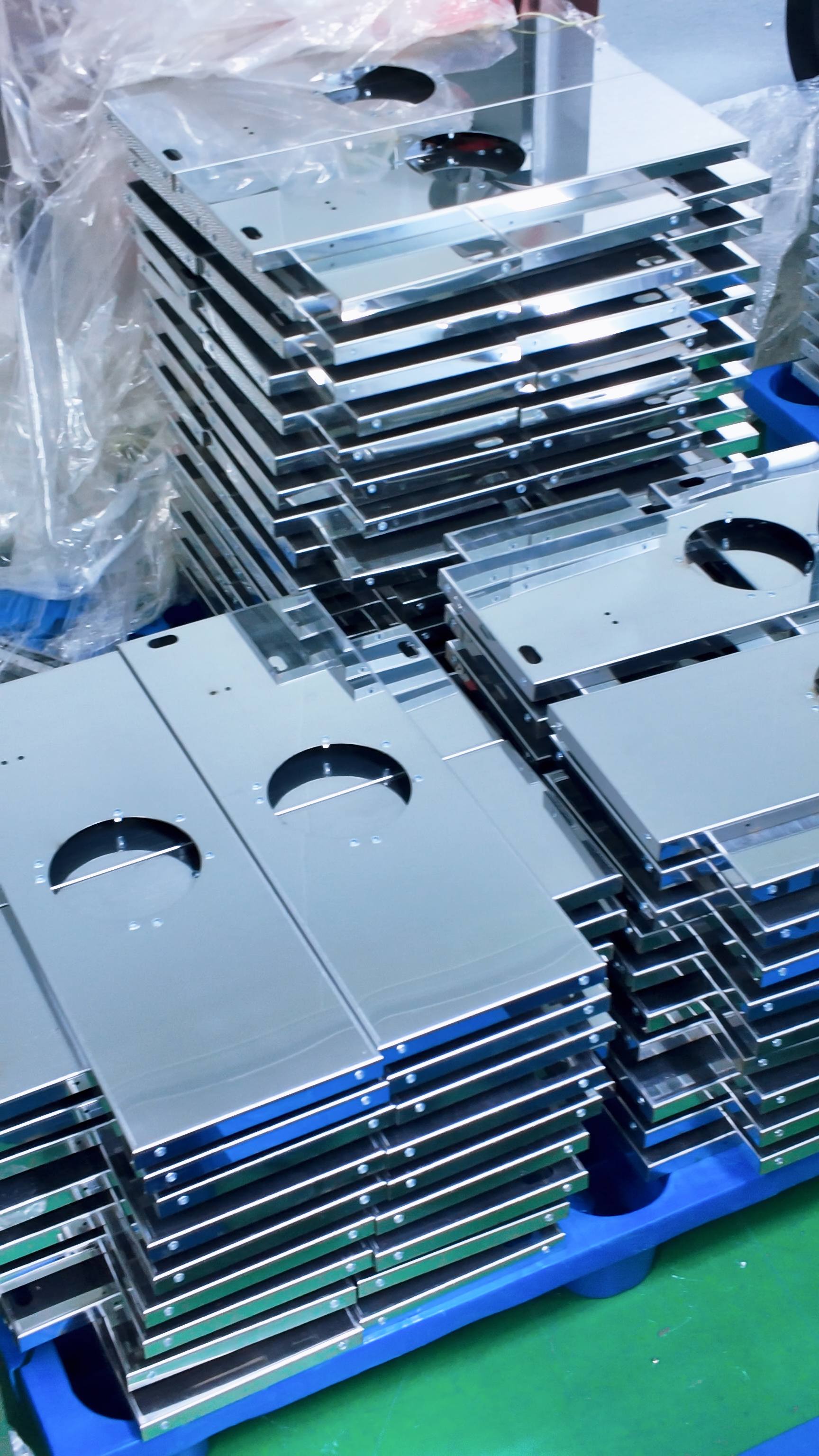
When a contractor hands you a stack of binders with every ISO certificate and a 40-page quality manual, that’s not documentation—that’s theater. Real cleanroom contractors don’t rely on paper weight to prove competence. They show up with job-specific protocols: pressure differential logs, particle count trends, material compatibility sheets, and heat load calculations that match the actual fan filter units on site. The question to ask isn’t ‘Do you have documentation?’ but ‘Show me the record for the last room you built and walk me through what changed from design to final certification.’
That level of detail separates contractors who build cleanrooms from those who simply assemble them. The former can produce as-built drawings that reflect field deviations, not just the architect’s original PDF. They can point to commissioning checklists with actual signatures, dates, and retest results after a failed particle count. Most telling: when you ask for the smoke study report, they don’t blink. If the documentation reads like a template downloaded once and never updated, the cleanroom will likely perform the same way.
Their Last Three Cleanroom Projects Will Tell You Everything
Most companies hand you a brochure. We'd rather you look at the last three cleanrooms we built. Each one started with a different constraint—one had a ceiling height that made laminar flow almost impossible, another needed ISO 5 conditions inside a space originally designed as a warehouse, and the third had to be delivered while the adjacent production line never stopped running.
What those projects reveal isn't a standardized process. It's an approach: we map out the actual particle sources in your operation before touching a single panel, then design the filtration and pressure cascade around the way people and materials actually move. The result is a room that holds its classification without being over-engineered into something you'll hate to maintain.
If you want to know whether we can handle your cleanroom, ask for the closeout photos and the test reports from the last three. Look at where the returns are placed, how the joints are sealed, and how the documentation reads. That's the whole pitch.
Gowning Rules Aren't Suggestions—Test Their Willingness to Follow Them
The real test of gowning discipline isn't whether someone can recite the steps; it's what they do when no one is watching. Too many training programs treat gowning as a checklist to memorize, then assume compliance because the quiz score was high. But a cleanroom or sterile compounding area doesn't care about quiz scores. It cares about every snap, every tuck, every glove-to-glove contact. If you want to know whether someone will actually follow the rules, you need to put them in a realistic situation and observe. Not a one-time demo, but repeated, unannounced checks that mimic the pressure and pace of a real shift.
One effective approach is to introduce a deliberate contamination event during a practice session—something subtle, like a misplaced sleeve or an unzipped coverall—and see if the person catches it before entering the critical zone. You're not trying to trick them; you're testing whether the gowning sequence has become instinct. People who are merely going through the motions will miss it. Those who have internalized the 'why' behind the rules will pause, correct, and reset. That pause is what you're looking for.
Finally, tie the test to consequences that matter. If a gowning breach means the batch gets quarantined or the line stops, say so plainly. Then watch how they respond under that weight. Willingness to follow gowning rules isn't about compliance for compliance's sake; it's about protecting the product and the patient. If someone argues that a small deviation 'doesn't really matter,' that's your red flag. Training can teach the steps, but only testing under real stakes reveals whether the person will honor them when it counts.
When Equipment Fails, Cleanroom Downtime Gets Expensive Fast
In a cleanroom, every minute of unexpected downtime carries a price tag that goes far beyond the cost of a replacement part. When a fan filter unit seizes up or a chiller trips offline, the entire controlled environment can drift out of spec within minutes. That means production batches get scrapped, validation runs have to be redone, and your team is suddenly burning overtime just to get back to baseline. The real expense isn't the broken equipment—it's the cascade of lost output and rework that follows.
Consider what happens when relative humidity spikes because a dehumidifier fails on a Tuesday afternoon. Airborne particle counts climb, surfaces start to sweat, and sensitive processes that were running perfectly an hour ago are now generating defects you won't even see until final inspection days later. You're not just paying for an emergency service call; you're paying for the silent loss of yield, the extra cleaning and monitoring, and the agonizing wait while your cleanroom recertifies. None of that shows up on the initial repair invoice.
Over time, repeated equipment failures also chip away at something harder to quantify: your facility's reputation for reliability. Clients in pharma, biotech, and semiconductor manufacturing don't just buy products—they buy confidence that your cleanroom won't let them down mid-batch. Every unplanned shutdown becomes a data point in their vendor risk assessment. So while a $2,000 motor replacement might seem like the headline cost, the real figure includes scrapped inventory, delayed shipments, and the quiet erosion of trust that's far more expensive to rebuild than any machine.
A Cleanroom Is Not a Standard Lab—Make Sure They Know the Difference
A cleanroom isn't just a lab with extra filters. The entire operating philosophy changes once you step through the gowning area. Air flows, pressure differentials, particle counts, and even the way people move are controlled to protect the product, not the person. If someone treats it like a regular lab bench, they can ruin hours of work in seconds.
Standard labs tolerate open benches, shared equipment, casual clothing, and occasional leaning on counters. None of that works here. A single uncovered cough or a quick swipe of a gloved hand across a face can release enough contamination to fail a batch. The difference is not visual, it is procedural and it has to be taught, repeated, and enforced until it becomes second nature.
When new staff or visitors enter, do not assume they understand. Walk them through the "why" behind each rule. Show them the particle counter readings before and after a normal lab movement. Once they see the numbers spike, the difference stops being abstract and starts being real.
FAQ
Look for a track record in your exact field, whether it is semiconductor fabrication, pharmaceutical filling, or biotech research. A contractor who has handled similar contamination control challenges will ask sharper questions about your process and airflow needs instead of pushing a generic solution.
Ask them to walk you through how ISO 14644-1 or GMP grades affect equipment selection and placement. A knowledgeable contractor will inquire about particle generation points, air change rates, and recovery times before recommending anything.
Find out if they have in-house engineering to modify designs, produce 3D models, or run airflow simulations. Off-the-shelf units rarely fit perfectly, and you do not want expensive field modifications after installation begins.
It can make or break an audit. You need material certificates, weld logs, cleanliness test reports, and installation verification records. Contractors who treat documentation as an afterthought usually cause delays during qualification.
Be cautious if they provide a quote before understanding your process flow or if they cannot share concrete performance data from past projects, such as particle counts or pressure differential stability. Vague promises about compliance often signal trouble.
Ask about response times, spare parts availability, and whether their field technicians follow cleanroom behavior protocols. Preventive maintenance contracts should include regular HEPA filter checks, gasket inspections, and airflow verification, not just emergency callouts.
The installation phase can introduce serious contamination if workers do not follow proper gowning, tool cleaning, and material handling procedures. A contractor with disciplined on-site practices will leave your cleanroom ready for validation rather than needing a deep clean.
Materials like 316L stainless steel, non-shedding seals, and chemical-resistant coatings directly affect cleanability and equipment lifespan. A good contractor will explain why specific surfaces suit your cleaning agents and process chemicals instead of using whatever is cheapest.
Conclusion
Hiring a cleanroom equipment contractor is not the same as picking a general lab vendor. The first thing worth checking is their direct experience with controlled environments—ask for names, dates, and specifics of past cleanroom work, not just a portfolio of standard lab installs. Their documentation habits matter too: a contractor who cannot produce current ISO classifications, pressure differential logs, or filter change records from prior projects is a red flag. When you talk to their last three cleanroom clients, listen for how they handled gowning protocols and whether they respected the stricter rules without needing reminders. That one habit alone often reveals whether they truly understand contamination control.
Equipment failure inside a cleanroom carries costs that go far beyond the replacement part, so you need a contractor who plans for rapid response and keeps critical spares available. Beyond that, make sure they recognize that a cleanroom is not simply a tidy lab. The materials, finishes, airflow patterns, and even the way tools are brought inside all differ. A candidate who treats your cleanroom like a standard facility will eventually introduce risks you cannot see until it is too late. Go with someone who asks questions about your processes, follows gowning rules without complaint, and can point to specific cleanroom projects where they solved problems rather than created them.
Contact Us
Contact Person: Amy Yang
Email: [email protected]
Tel/WhatsApp: 008619330882686
Website: https://www.genopharmatech.com/