

CNC Press Brake Vendor: How to Choose the Right Partner for Precision Bending
2026-09-23
Choosing the right CNC press brake vendor can make or break your precision bending operations. With countless suppliers claiming top-tier accuracy, how do you separate the experts from the pretenders? At HUNSONE, we believe the answer lies in more than just machine specs—it's about partnership, innovation, and consistent results. In this guide, we'll walk you through the essential factors to evaluate, so you can invest with confidence.
Test the Vendor with Your Own Toughest Bend
Bring the part that keeps you up at night. Not the simple 90-degree sample they hand out at trade shows, but the real geometry—tight radii, complex flanges, springback-prone material. A capable vendor will welcome the challenge because it reveals their true grasp of tooling design, tonnage calculations, and grain direction. If they hesitate or try to steer you toward a gentler profile, that tells you something about their comfort zone.
Watch how they approach the bend deduction and bend allowance. Do they ask about your press brake’s exact die opening, punch radius, and material certs? Or do they quote a generic number and assume it will work? The right partner will likely suggest a trial run on your actual tooling before committing to production, and they will discuss how variations in material thickness from coil to coil might affect the final angle.
Finally, pay attention to follow-through. After the sample bends are made, a thorough vendor will measure the springback, adjust the stroke depth, and verify the profile against your CAD model—perhaps even with a coordinate measuring machine or a digital protractor. If they simply hand you a bent piece and say “looks close,” you are not testing a vendor. You are testing your own patience.
Repeatability: The Number That Separates Good from Great
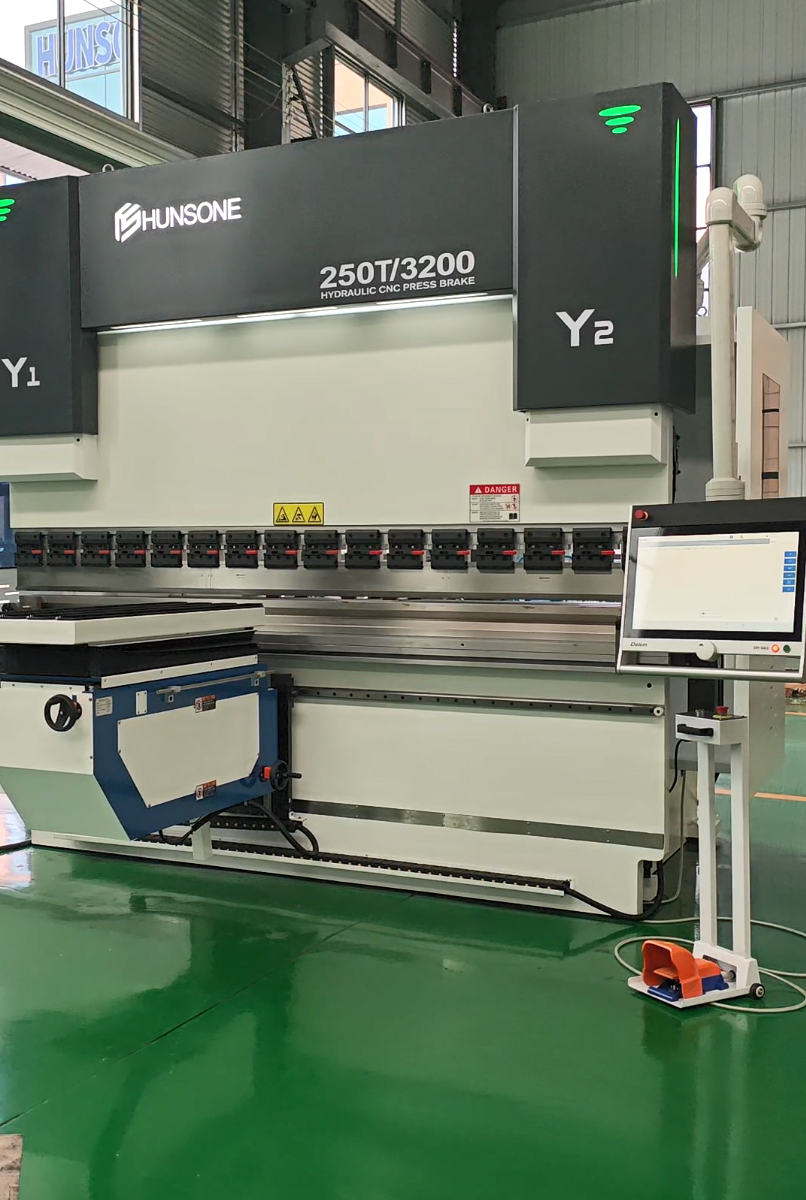
Every craftsman knows that a single perfect piece is not mastery—it's luck. Mastery lives in the quiet discipline of doing it again, and again, until the result becomes predictable. That's repeatability: the unglamorous backbone of excellence. When a chef plates the same dish fifty times a night and each plate tells the same honest story, that's not monotony—it's trust made visible. The gap between a fluke and a reputation is measured in repetitions that refuse to waver.
Think of the musician who doesn't just nail one take in the studio but delivers the same emotional precision on a tired Tuesday in a half-empty club. The audience may not consciously notice the consistency, but they feel it as reliability, as a reason to return. Repeatability transforms a talent from a spark into a steady flame. It's the difference between a brilliant idea and a dependable product, between a viral moment and a lasting career.
In business, art, or athletics, the great ones don't chase the outlier performance—they engineer the ordinary to be extraordinary every single time. A hitter who bats .300 for a decade matters more than one who hits .400 for a month. The number that separates good from great isn't a peak; it's the baseline you can stand on, day after day, without apologies or asterisks.
Can Their Controller Compensate for Springback Automatically?
Not all controllers handle springback on their own. The capability depends on how the control system is built and whether it has access to real-time feedback from the bend angle or material thickness sensors. Basic PLC-driven press brakes often rely on preset correction tables or manual tweaks, so they won't automatically sense and fix the deviation after the first part is bent. More advanced CNC systems, however, can use adaptive algorithms that measure the actual angle right after the bend and adjust the punch depth for the next piece without operator input.
Even with automatic compensation, the quality of the result depends on the consistency of the material. If the sheet metal supplier changes, or if there's a noticeable variation in hardness within the same batch, the controller can only compensate as well as its feedback loop allows. Some systems include a learning mode that tracks historical correction data and predicts springback for similar profiles, but it still needs a few test pieces to establish a baseline.
In practice, you'll often find a hybrid approach: the controller handles routine springback correction once the parameters are dialed in, but an experienced operator still watches the first few bends and may override the values when the material behaves unexpectedly. So the short answer is yes—many modern controllers can compensate automatically, but not always without some initial setup and occasional intervention.
Ask for Proof from a Shop Like Yours
Most shops can talk a good game, but the ones worth dealing with will gladly show you evidence. Ask for recent work orders or production photos that match the type of item you need, especially if you run a similar operation. Real proof beats a polished sales pitch every time.
Request a sample from a job that had comparable size, material, or finishing requirements. Even better, ask if they can put you in touch with a current client who runs a shop like yours. References from someone facing the same day-to-day challenges carry far more weight than generic testimonials.
When you receive the proof, don't just file it away. Look for details that matter in your own workflow, like how they handle edge cases, packaging, or tight deadlines. If the evidence feels rehearsed or too clean, trust that instinct and keep looking.
Service Response Time: The Cost You Don't See Upfront
When you evaluate a service provider, the quoted price rarely tells the whole story. The seconds your users spend waiting for a page to load or an API to respond quietly bleed into your operating costs and customer satisfaction. A slow service doesn't just test patience—it compounds into abandoned carts, lower engagement, and support tickets that drain your team's time. The real price tag hides in the gap between what you budget and what latency actually costs you.
Think of response time as an invisible tax. Every extra 100 milliseconds can shave a noticeable slice off conversion rates, yet it rarely shows up as a line item on an invoice. The upfront numbers might look clean, but the downstream effects—lost renewals, churned users, and the engineering hours spent on workarounds—are the bills that arrive later. Smart teams start measuring this cost before it becomes a full-blown emergency.
The good news is that this hidden cost can be tamed. By monitoring response times under realistic traffic and treating latency as a first-class metric, you shift from reactive firefighting to proactive tuning. The services that feel instantaneous aren't just nicer to use—they're cheaper to run and easier to scale. The cost you don't see upfront is exactly the one you should be watching most closely.
From Prototype to Full Production: Will They Scale with You?
A vendor that nails your prototype can still collapse when you ask for ten thousand units a month. The shift from bench work to line work exposes problems no one checked for at low volume: tolerance drift on fast tooling, untested secondary operations, and supply chains that only hold up when you're ordering a few hundred parts at a time. Small-run shops often rely on manual inspections and over-the-shoulder tweaks. Those habits don't survive a production schedule.
The partners who truly scale are the ones who treat the first production run as a separate engineering project, not just a bigger prototype order. They have documented process controls, real capacity planning that accounts for your forecast swings, and a clear escalation path when yields dip. Ask for a case study where they ramped a similar part from hundreds to tens of thousands. If they can't walk you through the specific bottlenecks they hit and how they fixed them, that's your answer.
Watch how they handle change orders during ramp-up. A scalable manufacturer will push back on a design tweak that looks cheap now but creates a downstream assembly nightmare. They'll flag fixture changes before they cost you a week of downtime. That kind of friction isn't a red flag. It's the difference between a shop that wants your next purchase order and one that wants your production line to survive its first year.
FAQ
Start with their track record on tight-tolerance jobs. Ask for part samples or inspection reports that show repeatability across runs, not just a single perfect demo piece. The way they talk about deflection, crowning, and tooling alignment tells you more than a brochure.
Check the frame design and how they handle thermal growth. A welded, stress-relieved frame with automatic crowning often outperforms a heavier machine without it. Also ask about their calibration schedule and whether they include laser or angle correction feedback in the controller.
Local support minimizes downtime when a sensor fails or a parameter drifts on a Friday afternoon. But a wider network helps if you run multiple plants. Weigh response time for critical spare parts against the variety of metal types and thicknesses they regularly bend.
Look for a vendor that asks about your material grades, grain direction, and bend radii before quoting. If they can predict springback on high-strength steel or advise on tooling for small flanges, they're likely more than just a machine seller.
It matters more than most people think. A control with simulation and automatic bend sequence generation reduces trial parts and setup scrap. Ask if their offline software imports your 3D models directly and flags collisions before you ever load a tool.
Check whether the vendor uses a common tooling standard or locks you into a proprietary system. Hydraulic or pneumatic clamping with quick-change tooling can cut setup time dramatically. Also check that replacement punches and dies are available from several sources if needed.
Request the phone number of a current customer who runs similar parts. Ask that customer about call-back time, parts availability, and whether their operator got real training. A vendor who hesitates to provide references usually has something to hide.
Installation and leveling can be done in a few days, but expect two to four weeks for operators to bend confidently without supervision. A vendor that offers on-site training with your actual tooling and materials, not just generic classroom sessions, speeds that up significantly.
Conclusion
Don't rely on glossy brochures or spec sheets. Bring your most difficult part—high-tensile material, tight radius, unusual flange length—and watch how the vendor's machine handles it. Repeatability is where many fail; ask for documented run-to-run consistency over hundreds of cycles, not just a single demo. A controller that automatically compensates for springback is not a luxury; without it, you'll burn time shimming and adjusting. Also insist on seeing proof from a shop that mirrors your own: similar material thickness, batch sizes, or tolerance demands. A vendor who only shows aerospace examples when you bend 12-gauge brackets hasn't proven anything for your floor.
Look beyond the signing day. Service response time matters when a press brake sits idle; ask about technician availability, spare parts stocked locally, and remote diagnostics. A vendor that can't get someone on-site within 48 hours might cost you more than the machine's discount. Scaling is equally crucial. A prototype shop might help with three bends, but will it hold tolerances on 5,000? Ask how the controller handles batch changes, offline programming, and tooling setup reduction. The right partner should demonstrate flexibility from one-off jobs to full production runs without sacrificing repeatability. Ultimately, choose a vendor who treats your toughest bend as the baseline, not an outlier.
Contact Us
Contact Person: James Chen
Email: [email protected]
Tel/WhatsApp: 86 13770803946
Website: https://www.hunsone.com/