

Commercial Window Shades Supplier Selection Tips for Facility Managers
2026-10-01
Choosing the right commercial window shades supplier is more than just a procurement task—it's a decision that affects building energy efficiency, occupant comfort, and your facility's bottom line. Yet with a crowded market, how do facility managers separate genuine expertise from empty promises? Before you sign a contract, consider these practical selection tips—and see why leading professionals turn to ROLLERGY for reliable solutions.
Commercial Project References Beat Generic Supplier Claims
A supplier can claim almost anything on a brochure, but a commercial project reference shows exactly how the product performed under real deadlines, budget constraints, and site conditions. Clients want to see the product already working in spaces similar to theirs, not just read a list of features that may have never been tested outside a lab.
Generic statements like high durability or proven performance mean nothing without context. A reference from a busy airport terminal or a coastal hotel tells you how the material held up against foot traffic and salt air. That kind of detail reassures buyers far more than any bullet point on a spec sheet.
When you present finished commercial projects, you shift the conversation from trust our word to look at what we have already done. The visual evidence, client names, and measurable results from those installations create a level of confidence that supplier claims simply cannot match.
Match Shade Materials to Your Facility's Light and Heat Control Needs
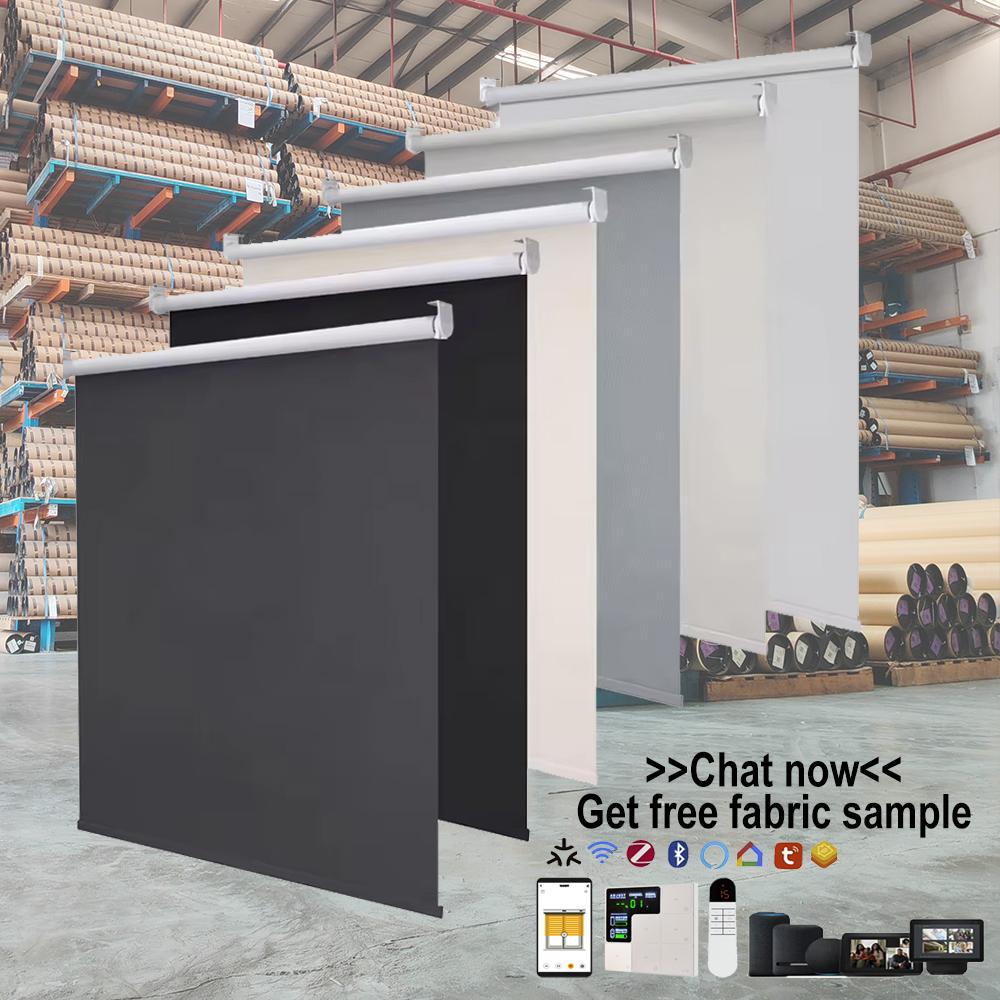
Choosing the right shade material isn't just about blocking sunlight—it's about fine-tuning how much light and heat enter each area of your building. A workshop with high ceilings and skylights might benefit from a woven polyethylene that diffuses light evenly, cutting glare without plunging the space into darkness. Meanwhile, a west-facing office lounge could call for a reflective aluminum-coated fabric that bounces back a significant portion of solar heat, keeping afternoon temperatures comfortable without constantly running the air conditioning.
Consider the daily rhythm of each room. Spaces used primarily in the morning may tolerate lighter, more translucent materials, while areas occupied through midday and late afternoon need stronger heat rejection. You'll also want to account for humidity and airflow—some fabrics trap warmth if they don't allow enough air movement, turning a shaded patio into a stuffy pocket. Look for materials labeled with specific percentages for light transmission and heat reduction, then match those numbers to how the space is actually used.
Facility managers often overlook the impact of color and weave density. Darker shades absorb more heat and can radiate it downward if installed too close to the occupied zone. Light-colored, tightly woven options tend to reflect heat away while still providing privacy. If you're dealing with large glass facades, layering a lighter interior shade with an exterior solar screen can give you adjustable control—letting in winter sun for passive warmth while blocking summer's intense rays.
Choose Installation Teams That Work Around Occupied Spaces
A renovation or installation project in an active office, hospital, or school presents a unique challenge: the work must proceed without halting daily life. The right installation team treats this as a core competency, not an afterthought. They map out foot traffic patterns, identify quiet hours, and sequence tasks so that loud or messy phases happen when spaces are least used. This isn't about working slower — it's about working smarter around real human activity.
Look for crews that bring their own containment systems: zip walls with negative air pressure, floor protection that won't trip anyone, and tool setups that dampen noise at the source. The best teams also communicate proactively. They post schedules, introduce themselves to facility managers, and adjust on the fly if a meeting suddenly gets booked next to the work zone. You can tell the difference within the first day — a good team moves with an awareness that the space already belongs to someone else.
Choosing a team that respects occupied environments saves more than just complaints. It prevents schedule blowouts caused by stop-work orders, reduces cleaning costs from dust migration, and keeps tenant or staff morale intact. In the long run, that quiet, careful installer is the one who finishes on time and gets invited back for the next project.
Fire Safety and Building Code Compliance, Verified Before Signing
Before any lease is signed, we walk the property with a focused eye on fire safety systems and structural code requirements. Sprinkler heads, extinguisher placement, exit signage, and alarm functionality are all physically checked against local ordinances. We don't rely on seller disclosures alone; our team pulls the building's permit history and any past fire marshal reports to spot unresolved violations that could later trigger costly retrofits.
This pre-signing verification also covers load-bearing elements, occupancy limits, and egress paths. If a discrepancy shows up, we document it, quantify the remediation cost, and negotiate either a fix before closing or a price adjustment that reflects the real risk. The result is a lease or purchase where code compliance is not an assumption but a confirmed baseline, protecting you from surprise enforcement actions down the road.
Warranty Terms and Service Responsiveness That Hold Up Over Time
A warranty only matters if it is easy to use when something goes wrong. We have seen too many brands bury their terms in fine print or make customers jump through hoops for a simple replacement. Our approach strips that away: the warranty covers structural and functional defects for the full stated period, with no hidden clauses about ‘normal wear’ that actually means everything. If a seam splits or a mechanism fails under normal use, you get a repaired or replaced product, not a discount code for your next purchase.
Service responsiveness is where most companies stumble after the sale. We answer warranty claims within one business day, not three weeks. You talk to a real person who has read your case, not a bot that asks you to repeat the issue three times. Our support team has the authority to approve a replacement on the spot, without routing you through three tiers of management. If we need the item back for inspection, we send a prepaid label immediately and process the decision within 48 hours of receipt.
Over time, this shows up in small ways: a hinge that still works smoothly after five years because we chose a thicker gauge steel, or a zipper that doesn’t catch because we tested it for 10,000 cycles. We design with the warranty in mind, not as an afterthought. When you buy something built to last, the warranty should simply be a promise you never need to use — and if you do, it should feel like a conversation, not a claim.
Calculate Total Cost, Including Energy Savings and Reduced Glare
When evaluating any lighting upgrade, the sticker price rarely tells the whole story. You need to weigh the upfront cost against what you'll save month after month on electricity, plus the less obvious value of cutting down on harsh glare. A cheaper fixture might seem like a win until you factor in the extra energy it draws and the headaches it causes for people spending hours under it.
Start by estimating your annual energy savings: take the wattage difference between the old and new systems, multiply by your usage hours and local utility rate. Then add the productivity angle—reduced glare means fewer squinting eyes, fewer complaints, and often better focus. Some companies even track a drop in reported eye strain after switching to diffused or indirect lighting, which can translate into measurable gains in output.
The exact weight you give to glare reduction depends on the space. A warehouse aisle might prioritize raw lumen output and energy cost, while a design studio or office will see far more benefit from softer, more even illumination. If you're unsure, pull a year's worth of utility bills and talk to a lighting auditor who can model both scenarios. The goal is a total-cost figure that reflects not just watts, but how well people can actually see and work.
FAQ
Look beyond glossy brochures. Ask for a list of completed projects similar in scale and building type to yours—preferably with references you can actually call. Visit one of their installations if possible. Check how they handled challenges like odd-shaped windows, high-traffic areas, or strict light control needs. A supplier who has already solved problems you're likely to face is worth far more than one with a long sales pitch.
Request drawings or CAD files from a recent custom job, not just samples. Ask about their in-house design and engineering capacity versus outsourcing. Have them walk you through how they would measure and fabricate for your most difficult window—like a sloped skylight or a curved curtain wall. If they can explain tolerances, material stress points, and installation sequencing without hesitation, that's a good sign.
The warranty's fine print and who actually honors it. Many quotes look identical until you ask what's excluded: motor failure after year two? Fraying edges? Color fading? Also check whether the supplier handles warranty claims directly or passes you to a third-party fabricator. A slightly higher quote with a five-year, no-fuss warranty often beats a cheaper one with a one-year limited guarantee.
Critical for anything beyond simple roller shades. Local crews can respond faster for adjustments, repairs, or emergency replacements. If the supplier is remote, ask who does the measuring, installation, and post-install service in your area—and whether those subcontractors are vetted and insured. A remote supplier with no local partners means you'll be stuck coordinating multiple vendors, which adds time and risk.
Ask for accelerated UV testing data or at least real-world examples from buildings with similar sun exposure. Inquire about the fabric's openness factor, heat reflection, and how it handles repeated raising/lowering. Don't accept vague claims like fade-resistant. Ask what the supplier will do if the shade material degrades within the expected lifespan. Also consider whether they offer sacrificial liners or replaceable panels to extend the shade's usable life.
Break down costs over a 7-10 year period: energy savings from better light control, reduced HVAC load, expected replacement cycle, and maintenance labor. Ask suppliers for case studies or calculations showing how their shades affect building energy use. Also factor in downtime during installation—if a supplier can install after hours without disrupting operations, that's a real cost saving even if the bid is higher.
If they push a one-size-fits-all solution without asking about your building's orientation, window dimensions, or occupancy patterns, leave. Other red flags: no written warranty, vague delivery dates, refusal to provide references, or a quote that's significantly lower than others without a clear reason. Also be wary of suppliers who won't let you speak directly to their installation team or who outsource everything without telling you.
Put post-installation expectations in writing before signing. Ask about average response time for service calls, who answers the phone, and whether they keep spare parts in stock for your specific shade models. Test them during the selection phase: send an email with a technical question and see how long they take to respond and how thorough the answer is. A supplier who is slow before the sale will likely be slower after.
Conclusion
Facility managers quickly learn that supplier portfolios carry more weight than polished sales pitches. Ask for commercial project references that mirror your building type—office towers, healthcare wings, school corridors—and follow up with those clients about fade resistance, hardware durability, and how the shades actually perform after thousands of up/down cycles. Material choice is equally practical: a west-facing conference room may need a dim-out fabric with high solar reflectance, while a north lobby can use a lighter weave that preserves views and cuts glare. Don’t settle for generic “light-filtering” labels; request measured openness percentages and visible light transmittance data before comparing options.
Installation logistics deserve the same scrutiny as the product itself. A supplier that can stage work before or after business hours, protect furniture, and coordinate around occupied zones will save your tenants real disruption. Before signing, verify fire certifications and local code compliance in writing—ask for test reports, not just verbal assurances—and confirm the exact shade model, not a similar one, passed the required tests. Then look past the initial quote: a slightly higher upfront cost often pays back through lower cooling loads, reduced glare complaints, and a warranty that includes on-site service and realistic response times. Track the total cost of ownership over five to seven years, and choose the supplier whose terms hold up after the install crew leaves.
Contact Us
Contact Person: Vivien Cheng
Email: [email protected]
Tel/WhatsApp: +86 13751758835
Website: https://www.rollergytech.com/