

Custom Heavy Duty Moving Pads: How to Choose the Right Thickness and Size for Your Move
2026-10-31
Most moving day disasters start quietly — a pad too thin to stop a sharp table corner, or one so stiff it slides off a curved chair. Custom heavy-duty moving pads eliminate that guesswork, but only if you match the thickness and size to what you’re actually hauling. Top Packaging has put this guide together to help you spot the difference between a pad that protects and one that just looks the part.
Why Half an Inch Changes Everything
Half an inch rarely registers on a ruler, yet it separates a door that clicks shut from one that binds against the frame. The difference lives in the way weight transfers through a shoe sole, how a chair meets the underside of a thigh, or where a thumb falls on a tool handle. Remove that slender margin and the body notices before the mind can name the problem.
Consider the bicycle saddle raised or lowered by just half an inch. Pedaling efficiency drops, knees drift out of alignment, and lower back pain arrives within a week. In woodworking, a drawer front cut short by the same amount leaves a shadow line that draws the eye every time the room is entered. These failures are not dramatic; they are persistent, low-grade irritations that quietly erode trust in an object.
What makes the half inch so potent is its invisibility. We measure doors, desks, and footwear in feet and meters, rounding to the nearest convenient unit. But comfort, balance, and closure happen at the scale of fingernail widths. Ignore that narrow band and everything still works—just badly enough to feel wrong without knowing why. Honor it, and the ordinary world fits.
Measure the Furniture, Not Just the Room
Before you fall for that sprawling sectional or the dining table that seats twelve, grab a tape measure and turn your attention to the pieces themselves. A room can feel generous until you realize the hallway is too narrow for the sofa’s depth or the doorway can’t clear the armoire’s height. Mapping out the footprint of each major item on the floor with painter’s tape gives you a true sense of how you’ll move around it daily—not just on paper, but in real life.
Think about the vertical plane too. A low-profile bed might make the ceiling feel taller, while a towering bookcase can swallow a small study whole. Measure the widest point of chairs, the swing radius of cabinet doors, and the clearance needed for drawers to open without hitting the opposite wall. These small details rarely show up in staged photos, yet they decide whether a room works or fights you every morning.
Finally, remember that furniture doesn’t live in isolation. A sofa that fits beautifully on its own might choke the pathway to the balcony once you add a coffee table and floor lamp. Leave breathing room—at least 18 inches between seating and tables, and 30 inches for main walkways. Measure the furniture, not just the room, because the pieces you love should fit your life, not just your floor plan.
Getting Real About Weight Limits
Weight limits are not arbitrary numbers printed on a sticker; they are the result of stress tests, material fatigue curves, and safety margins that engineers spend years refining. That said, most of us never push a structure to its breaking point, but we do notice sagging shelves, creaking floorboards, or a truck that feels sluggish on a hill. The real conversation starts when you stop treating the limit as a suggestion and start asking what happens at 90% of the rated load, not just 110%.
A common mistake is assuming a single weight limit applies to every scenario. A ladder rated for 300 pounds might hold a 280-pound person standing still, but add a heavy toolbox, a slight bounce, or an uneven surface, and the dynamic load can spike well beyond the static figure. Similarly, a vehicle's payload rating assumes properly distributed weight, not a single heavy item placed behind the rear axle. Understanding the difference between static and dynamic limits changes how you load a roof rack or pack a moving van.
Realism about weight limits also means respecting the aging of materials. Wood dries and splits, metal fatigues, plastic becomes brittle in cold weather. A shelf that safely held books for a decade might fail under the same load after a humid summer. Instead of searching for the absolute maximum, ask what load gives you a 20% safety buffer for real-world conditions. That approach feels less like a rule and more like honest engineering.
Stitching That Survives the Stairwell
Most thread gives up after a few hundred trips up and down. The friction of a stairwell railing, the constant pull at the inseam, the way a bag strap digs into your shoulder as you climb—these small stresses tear apart ordinary stitching without anyone noticing until a seam finally splits. The stitching that survives doesn’t rely on thicker thread alone. It comes from balancing thread tension, stitch length, and the direction of the weave so the seam flexes instead of fighting the movement.
I learned this after repairing the same canvas tote three times. Only when I switched to a lockstitch with a slightly longer stitch length and angled the seams to follow the grain of the fabric did the bag stop unraveling. Now it’s been up and down four flights daily for two years, and the stitching still holds. There’s no secret formula—just a willingness to watch how a material fails and adjust the basics until the thread becomes part of the structure rather than a weak point on top of it.
Custom Cuts for Awkward Angles
Odd corners rarely match the 45-degree assumptions printed on your miter saw. A quick bevel square pressed into the actual angle gives you a real number to work with, then halving that for the cut often gets closer than any chart ever will.
For stubborn spots where walls bow or corners drift, try scribing instead of forcing a miter. A simple compass or a scrap piece with a sharp pencil follows the profile, and cutting to that line with a jigsaw or coping saw makes the piece settle in like it grew there. Save the offcuts, too—those little wedges and slivers become test blocks for repeat cuts that actually fit.
Light Enough to Carry, Strong Enough to Trust
Carrying your gear shouldn’t feel like a workout before the workout. The whole point of this design is to disappear against your back—thin straps, balanced weight, no digging in. You forget it’s there until you need it, and that’s exactly the idea.
But light doesn’t mean flimsy. Every seam and buckle is overbuilt in the places that matter, so the bag handles being tossed in a trunk, caught in a downpour, or loaded past its rating without a single complaint. It’s the kind of quiet reliability you don’t notice until you look back years later and realize it’s still holding up.
Trust isn’t a spec sheet. It’s the moment you grab it without thinking, knowing your laptop, tools, or weekend clothes will arrive exactly as you packed them. This is carry gear that earns its place by staying out of the way—and never letting you down.
FAQ
For solid wood pieces like dressers and tables, a 1-inch thick pad gives enough cushion against vibration and minor bumps on the road. If the furniture has delicate legs or carved edges, look for a dense felt or quilted pad with a heavy-duty outer fabric rather than just adding more thickness.
Standard pads usually come in 72 x 80 inches, which leaves awkward gaps on tall armoires, long sofas, or narrow glass tops. Measure the item’s height, width, and depth, then add at least 12 inches to each dimension so the pad can wrap fully around and still tuck under. If a stock size leaves less than 6 inches of overlap on any side, custom is worth it.
Yes, but only if the pad has a multi-layer core and a non-abrasive inner surface. Heavy appliances need the pad to resist tearing and sliding, while antiques need softness against the finish. Choose a pad with a durable woven outer shell and soft fleece or felt inner layer, then secure it with rubber straps instead of tape to avoid adhesive residue.
A 1/2-inch pad is easier to fold around irregular shapes and takes up less space between stacked items, but it offers limited shock absorption for long hauls. A 1-inch pad gives better protection against floor vibrations and shifting, but it can be bulky in tight spaces. Use the thinner pad for lightweight boxes and the thicker one for furniture and glass.
Lay the item flat and measure the longest straight edge, then the widest point, including any protruding hardware. Add 8 to 12 inches to both numbers so you have enough material to fold over the corners and secure underneath. For curved or round pieces, wrap a flexible tape measure around the widest circumference and give the pad maker that number plus 10 inches.
Not always. Extra thickness adds weight, cost, and storage bulk, and it can make it harder to tie down tightly in a small truck. Reserve 1-inch or thicker pads for high-value, fragile, or very heavy items. For doors, lightweight chairs, and boxed items, a 1/2-inch pad with a good tear-resistant cover is usually enough.
Look for a non-woven or vinyl-coated backing that resists snagging and moisture. Concrete can quickly shred thin cotton backs, so a heavy-duty polyester or oxford weave outer layer with double-stitched edges will last longer. If the pad will sit on damp surfaces, make sure the core is synthetic rather than cotton so it doesn’t mildew.
For a typical two-bedroom move, 18 to 24 pads covers the main furniture, appliances, and a few fragile items without constant rearranging. Count one large pad per major piece like a bed, sofa, dresser, or table, and two for any glass or marble tops. Add four to six extra pads for wrapping boxes with sharp corners or filling gaps in the truck.
Conclusion
When choosing custom heavy duty moving pads, the difference between a smooth move and damaged furniture often comes down to details that get overlooked. Half an inch of extra padding might seem minor, but it changes how the pad absorbs shocks on tight corners and uneven stair treads. Instead of measuring the room, focus on the largest pieces you own—a long dresser, a bulky sofa, or a glass tabletop—because those dictate the pad dimensions you actually need. Weight limits matter more than most people assume; a pad rated for 200 pounds won't hold up under a fully loaded bookshelf, and the fabric will compress, leaving edges exposed. So start with honest numbers from your furniture tags or a quick bathroom scale test.
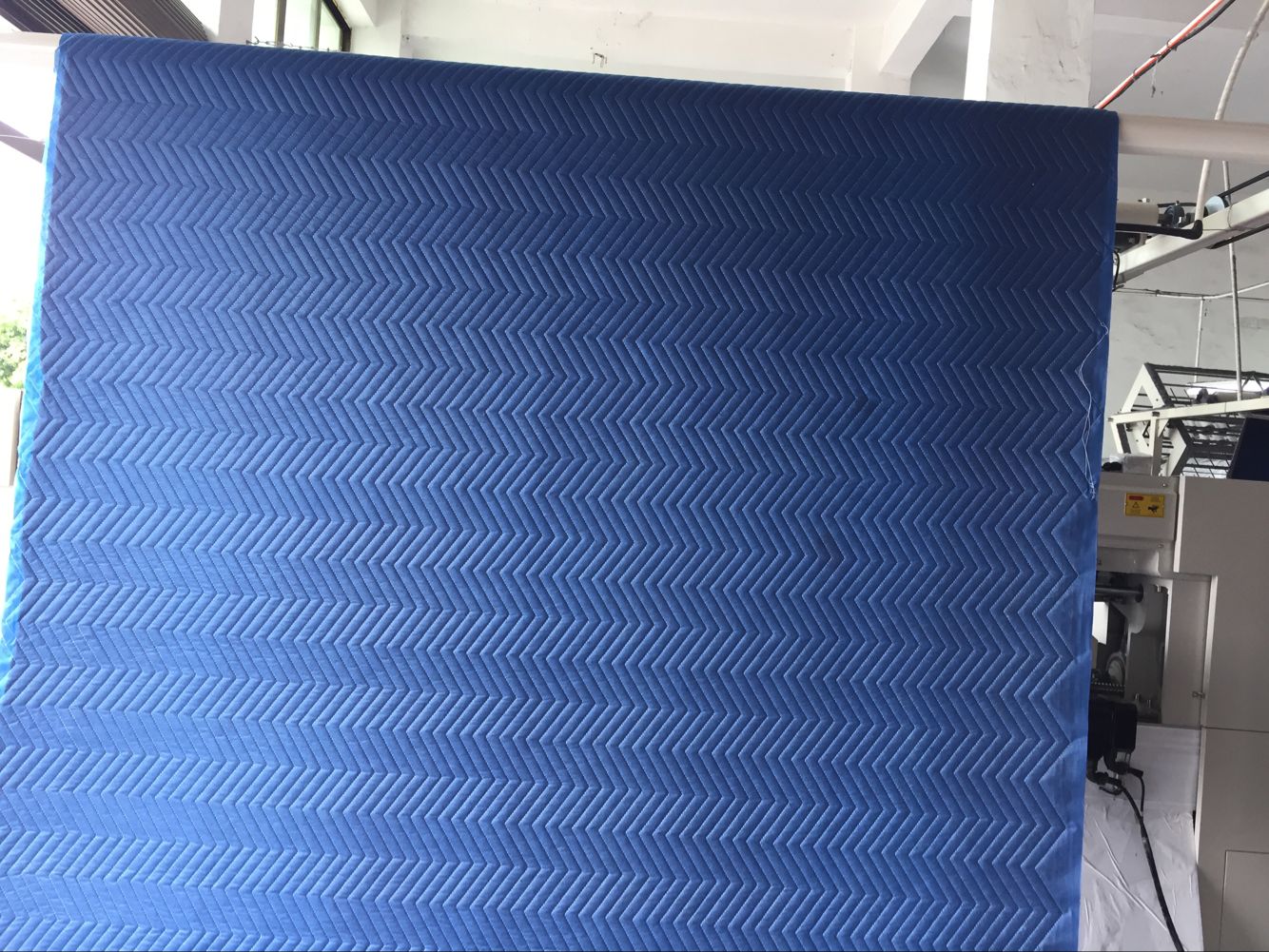
Durability isn't just about thickness; it's about stitching. Look for reinforced box or zigzag stitching along the edges, which survives the scrapes and pulls that happen when you wrestle a mattress around a stairwell corner. Custom cuts solve the problem of awkward angles—pads can be shaped to wrap around curved chair backs or split pedestal tables without excess bulk that trips you. And don't mistake light weight for weakness. A well-made pad with dense foam or polyester fill can stay under eight pounds while still protecting your load, making it easy for one person to carry and position. The goal is a pad that feels natural to handle on moving day, not a heavy tarp that fights you.
Contact Us
Contact Person: Shelly
Email: [email protected]
Tel/WhatsApp: 86-577-64286522
Website: https://www.topmovingpad.com/