

Custom Swiss-Type Precision Parts Machining Factory: Elevating Manufacturing Excellence
2026-06-18
Precision isn't just a goal—it's the foundation of every groundbreaking product. Yet finding a machining partner that consistently delivers at the highest level remains a challenge. Enter WINNRUI CNC, a specialist in Swiss-type precision parts that redefines what's possible in custom manufacturing. With a relentless focus on accuracy, complexity, and reliability, this factory doesn't just meet specifications—it elevates them, turning intricate designs into flawless realities. What makes their approach different? It's a blend of advanced technology, deep engineering expertise, and a culture that treats every component as a mission-critical piece of the puzzle. In this blog, we'll pull back the curtain on how WINNRUI CNC is shaping the future of high-stakes industries, one micron at a time.
Redefining Precision with Swiss-Type Mastery
In the world of high-precision manufacturing, Swiss-type lathes have long been the unsung heroes behind components that demand microscopic tolerances. These machines don't just cut metal—they dance with it, executing complex geometries in a single setup while the bar stock moves through a guide bushing. This fundamental design eliminates deflection, allowing for the production of long, slender parts with a consistency that traditional turning centers can only envy.
What truly sets Swiss mastery apart is its ability to handle challenging materials and intricate features simultaneously. From medical bone screws with complex threads to watch components no thicker than a hair, the process thrives where others fail. The synchronized movement of multiple axes, combined with live tooling and sub-spindle transfers, transforms raw stock into finished parts without operator intervention. It's a blend of mechanical symphony and thermal stability that redefines what's achievable on a shop floor.
But precision isn't just about the machinery—it's a mindset. Swiss-type mastery demands an intimate understanding of tooling strategies, coolant flow, and chip control. When a shop embraces this philosophy, scrap rates plummet, cycle times shrink, and surface finishes rival those from grinding. For industries pushing the limits of miniaturization, this redefined approach doesn't just meet specifications; it rewrites them, turning impossible prints into everyday realities.
Tailored Machining Solutions for Complex Components
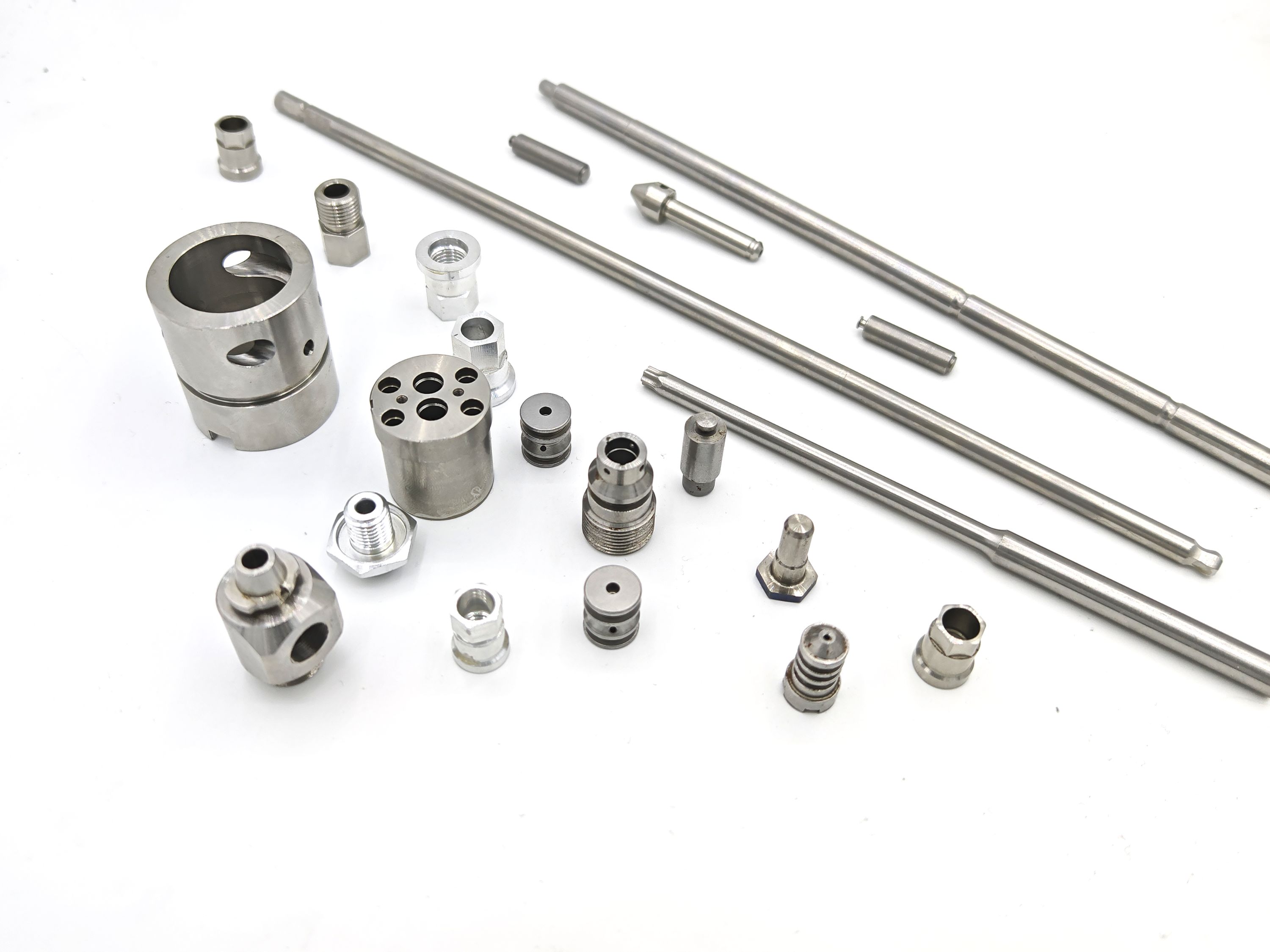
Every complex component brings its own set of challenges—tight tolerances, unusual geometries, or difficult materials. Off-the-shelf machining approaches rarely work. That’s why we start each project by understanding the part’s function and the demands it will face. From there, we shape a machining strategy that combines the right tooling, fixtures, and process sequence to deliver exactly what’s needed, without overcomplicating the work.
Our team has worked with everything from aerospace alloys to medical-grade stainless steels, often dealing with thin walls, deep cavities, or threaded features that demand precision. By building multi-axis setups and custom holding solutions, we keep the part stable during cutting, which cuts down on vibration and scrap. This close attention at the planning stage helps us hold tolerances many shops would walk away from.
The result isn’t just a machined part—it’s a solution that fits your assembly and timeline. We’ve taken projects from print to finished inspection in half the expected time because the process was tuned to the component from day one. When the work is truly tailored, quality stops being a gamble and becomes a given.
From Blueprint to Ultra-Fine Tolerances
Every precision component begins as a concept sketched on a blueprint, where dimensions and material choices set the initial boundaries. The journey from that two-dimensional plan to a tangible part involves a meticulous interplay of engineering intent and manufacturing reality. Early-stage decisions about datum points, surface finishes, and assembly sequences ripple through every subsequent operation, often narrowing the path to achieving tolerances measured in microns.
Modern machining environments push these boundaries further by integrating in-process measurement systems and thermal compensation. A slight temperature drift during a milling cycle can expand a workpiece enough to erase half the allowable tolerance band, so shops employ climate-controlled enclosures and coolant strategies that stabilize both tool and material. Operators learn to read minute vibrations and chip formations as live feedback, adjusting parameters long before a coordinate measuring machine reveals a deviation.
When ultra-fine tolerances become the target, the gap between nominal and reality demands more than capable equipment. Tool wear curves, spindle growth patterns, and even the clamping force of a fixture become critical variables. Success often hinges on iterative refinement—running a first article, scanning it under white light, tweaking the CNC code, and repeating until the part mirrors the blueprint with sub-thousandth fidelity. At this level, craftsmanship and digital precision converge, making the original drawing an aspiration rather than a mere instruction.
Agile Production for High-Mix, Low-Volume Orders
Handling a wide variety of products in small batches used to mean choosing between speed and cost—but modern agile production flips that trade-off on its head. By rethinking workflows to minimize changeover times and using flexible workstations that can switch tasks in minutes, manufacturers can now run dozens of different SKUs daily without the downtime that traditionally ate into margins. The key is designing processes that treat variety as the norm, not an exception, so operators move seamlessly from one job to the next with minimal retooling or recalibration.
What makes this approach truly effective is the tight integration of real-time data and cross-trained teams. Instead of relying on rigid schedules, production cells pull in order data dynamically and adjust priorities on the fly—making it possible to slot a last-minute custom order into the queue without disrupting the overall flow. Meanwhile, workers who can handle multiple stations bring a natural resilience to the line, stepping in wherever needed and often spotting small improvements that keep low-volume runs from becoming bottlenecks.
This isn't just about keeping machines busy; it's about creating a responsive system where inventory stays lean and lead times shrink. When a line can pivot from assembling a medical device to building an aerospace component in an afternoon, the need for large safety stocks disappears—freeing up cash and floor space. And because each batch gets full attention without the pressure to rush through high volumes, quality issues are caught earlier, reducing the costly rework that often haunts specialty manufacturing.
Engineering Support That Goes Beyond the Part
When a component lands on your desk, the data sheet tells only part of the story. Our team works alongside yours to interpret how that part will behave in your specific environment—accounting for edge conditions, thermal shifts, and mechanical loads that standard specs rarely capture. We’re not just handing over a drawing; we’re helping you avoid the blind spots that lead to rework down the line.
Support stretches from early-stage concept reviews through late-stage production troubleshooting. Our engineers often join your design reviews, bringing along rapid prototypes or custom test fixtures to validate assumptions on the spot. It’s the difference between a supplier who ships a box and one who stands with you at the test bench until the numbers look right.
After delivery, the relationship doesn’t idle. We track how our solutions perform in the field, proactively suggesting material upgrades or geometry tweaks as your product evolves. That ongoing dialogue means the part you receive tomorrow isn’t just a copy of the one you got today—it’s a refined answer shaped by what we’ve learned together.
Uncompromising Quality from a Purpose-Built Facility
Every square foot of our facility was conceived with one priority in mind: removing the friction that erodes quality. From the custom-configured assembly lines to the dust-free finishing zones, nothing here is an afterthought. The building itself works as a tool, maintaining precise humidity and temperature ranges so raw materials behave predictably, batch after batch.
Conventional setups retrofit quality checks into existing spaces, but our integrated inspection bays sit directly in the production flow. That means real-time measurements happen before a component moves to the next stage, catching variances when they’re still trivial to correct. Specialized rigs, built on-site to match our exact tolerances, eliminate the drift that comes with off-the-shelf machinery.
The result isn’t just a better product on paper. It’s the absence of the small compromises that accumulate over time—the subtle shifts in alignment, the material fatigue that creeps in when environments fluctuate. Here, quality isn’t a target we aim for; it’s the baseline the facility was designed to deliver.
FAQ
Swiss-type lathes use a sliding headstock that feeds the bar stock through a guide bushing, providing exceptional support right next to the cutting tool. This setup minimizes deflection, allowing tight tolerances and fine surface finishes even on long, slender components with diameters as small as a millimeter.
We take a collaborative approach from the start—reviewing technical drawings or samples, suggesting material or design tweaks for manufacturability, and providing rapid prototypes. Once approved, our engineering team programs the Swiss machines in-house, ensuring every detail matches the customer’s exact specifications before full production runs.
Our facility is equipped to machine a wide variety of metals and plastics, including stainless steel, titanium, brass, aluminum, PEEK, and medical-grade alloys. We also stock common materials in-house to speed up turnaround, and can source specialty grades for unique applications.
Quality is built into every stage: raw material inspection, in-process checks using laser micrometers and vision systems, and final CMM verification with detailed reports. We are ISO 9001 certified and regularly perform capability studies to maintain process stability and traceability.
Absolutely. Our Swiss-type machines are flexible enough to efficiently produce a single prototype or scale up to millions of pieces annually. We often start with a pilot batch to validate the process, then seamlessly transition to full-scale manufacturing without compromising precision.
Our components are found in medical devices, dental implants, watchmaking, aerospace connectors, and high-end electronics. Essentially, any field requiring miniature, high-accuracy parts with complex geometries gains significant value from our Swiss machining expertise.
Conclusion
In the world of precision manufacturing, Swiss-type machining stands apart for its ability to produce components with extraordinary accuracy and complexity. Our facility specializes in mastering this craft, delivering parts that redefine what's possible in terms of tight tolerances and intricate geometries. The process begins long before chips fly; we work closely with customers to translate blueprints into tailored solutions, optimizing every detail from material selection to toolpath strategy. Whether it's a micro-screw for a medical device or a multi-featured connector for aerospace, our engineers ensure each part meets the most demanding specifications, often holding tolerances to just a few microns. This dedication to ultra-fine precision is not an afterthought—it's built into every step of our workflow, from initial feasibility analysis to final inspection.
Beyond the machine tools, our strength lies in agility and comprehensive support. We routinely handle high-mix, low-volume orders, adjusting production schedules without sacrificing quality or lead time. This flexibility is paired with a deep engineering bench that collaborates beyond the part print: suggesting design improvements, materials alternatives, or process tweaks that enhance performance and manufacturability. Our purpose-built facility reinforces this commitment, housing advanced Swiss lathes in a controlled environment where temperature and cleanliness are meticulously managed. In-process monitoring and thorough documentation ensure that every batch meets the highest standards, so our clients receive not just components, but confidence. It's this holistic approach—combining technical mastery, adaptive manufacturing, and unwavering quality—that elevates manufacturing excellence to a new level.
Contact Us
Contact Person: Tim
Email: [email protected]
Tel/WhatsApp: +86 15522553731
Website: https://www.winnrui-cnc.com/