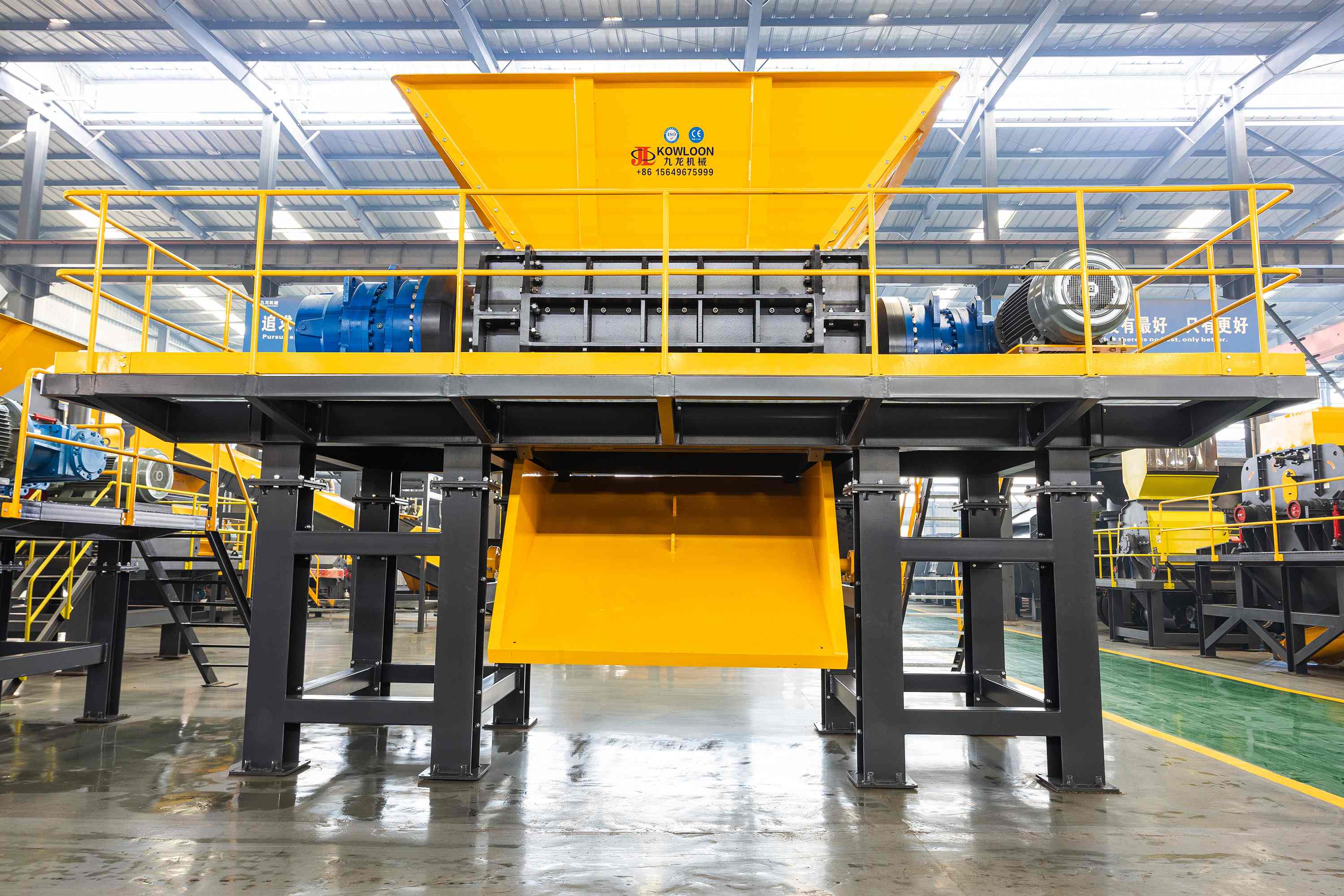

Double Shaft Shredder Factory: A Practical Guide to Choosing a Reliable Partner for Your Recycling Line
2026-08-29
Every recycling line lives or dies by the equipment at its core—and the double shaft shredder is often the first point of failure when corners are cut. While many factories promise heavy-duty performance, the gap between a spec sheet and a machine that survives years of abrasive waste is wide. This guide cuts through the noise, walking you through what actually matters when vetting a factory. As Kowloon Machinery has shown in countless installations, the right partner does more than sell you a shredder—they engineer it around your material stream. Here's what to look for before you sign.
What a Double Shaft Shredder Factory Should Show You Before You Commit
Most factories will hand you a glossy brochure and a spec sheet before you even ask. What they should be handing you instead is a video of the exact machine you are buying running under real load, not just spinning empty in a showroom. Ask for uncut footage of it chewing through material similar to yours, and watch the amperage draw. If the needle spikes and the motor trips every few minutes, that is not a shredder, it is a very expensive paperweight. A factory that is proud of its build quality will also let you see the teeth bite into the material, not skate over it, and will explain how the cutters are indexed to avoid them locking against each other when the load shifts.
Another thing worth demanding before you sign anything is proof of the metallurgy that actually goes into the shafts and blades. "Wear-resistant" is a marketing phrase; a Rockwell hardness number is not. A serious double shaft shredder factory should be able to show you heat treatment certificates, hardness test reports from a third-party lab, and ideally a sample blade that has been run for a few hundred hours so you can see the wear pattern yourself. Look closely at the frame welds too. A shredder that is not jig-welded and stress-relieved after fabrication will crack at the corners within a year, no matter how thick the steel plate looks in the photos.
Finally, make them commit to numbers on spare parts and response time before you make your own commitment. Ask for a written list of which wear items are kept in stock, how many sets of blades they have on the shelf right now, and exactly how many days it takes from your phone call to the parts leaving their dock. If they cannot give you a straight answer, or they say "it depends" without offering a range, that is your signal to walk away. A factory that has been running double shaft shredders for years knows their failure points and plans for them. The ones that do not are betting your downtime against their lack of preparation.
Reading Between the Lines of Factory Claims and Spec Sheets
Factory claims often highlight peak numbers under ideal lab conditions, but real-world performance hinges on variables that spec sheets bury in footnotes. For example, a motor's torque rating might assume a perfectly controlled temperature and a fresh power supply, while your workshop runs hot and shares a circuit with three other machines. Savvy buyers learn to treat headline figures as a starting point, then probe the test methodology.
Another gap lies in how tolerances and duty cycles are worded. A "continuous duty" label can mean very different things depending on the ambient temperature assumed during testing, and a "maximum speed" might be sustainable for only a few seconds before thermal protection kicks in. Instead of comparing numbers side by side, look for omissions: if a spec sheet doesn't state the standard used, or buries the run-time limit in a footnote, that silence often matters more than the bold print.
Finally, warranty language and recommended maintenance intervals reveal what the manufacturer actually trusts. A long warranty paired with an unusually short service interval suggests the company expects certain parts to fail early, while a spec sheet that omits rebuild costs or proprietary tool requirements may hide the true lifetime expense. Reading between the lines means treating every claim as a negotiation between marketing optimism and engineering caution, and asking what the sheet is not telling you.
The Questions That Separate Consistent Builders from Occasional Assemblers
Most people know how to put pieces together when the instructions are clear. But the moment a step is missing, a part doesn't fit, or the timeline shifts, the occasional assembler stalls. The consistent builder, however, reaches for a different set of questions. They don't ask, "What does the manual say?" They ask, "What outcome am I actually trying to create, and what's the simplest path there from what I have right now?"
The questions that matter rarely sound grand. They sound like, "If I skip this step today, does the whole thing collapse, or just get a little rougher?" or "Who has solved a version of this problem before, and what did they leave out of the summary?" These questions force you to stop treating assembly as a one-time event and start treating it as a cycle of small decisions. The consistent builder isn't more talented; they've just learned to interrogate their own work before the work interrogates them.
At the end of each session, the gap shows up in one final question: "What would make this easier to pick up again tomorrow?" The occasional assembler closes the box, assuming they'll remember. The consistent builder writes down the next three steps, leaves a note about the weird screw, and puts the tool where they'll find it. That single habit, more than any skill, is what separates a pile of half-finished projects from a body of work that actually holds together.
How Factory Layout and Workflow Reveal Long-Term Reliability
Walking a factory floor, the first thing that signals long-term reliability isn't the brand of the machines but the flow of materials from receiving to assembly to finished goods. A well-thought layout arranges each process in logical order, minimizing cross-traffic and backtracking. You see enough clearance around every workstation—not just for the operator but for a maintenance tech with a cart or a forklift replacing a heavy component. When equipment is squeezed against walls or access panels are blocked by storage, future repairs become expensive, slow, and often skipped.
Workflow rhythm tells an even clearer story. Spend a few hours observing and you'll notice whether work-in-process piles up before certain stations or whether workers frequently wait on upstream steps. Plants built for endurance don't hide bottlenecks with excessive buffer stock. They balance takt times so each cell moves at a steady pulse, and they use visual signals like andon boards or kanban cards to expose stoppages immediately instead of letting them fester. A line that stops briefly to fix a small issue today is far more reliable than one that pushes through defects for the sake of output.
Finally, floor markings, tool placement, and general tidiness reveal the maintenance culture underneath. Clear aisles, labeled tool shadows, and clean floors free of oil stains or metal shavings suggest preventive maintenance is part of the daily routine rather than an afterthought. Conversely, cluttered work areas, extension cords stretched across walkways, and spare parts stacked randomly all point to a management focused only on shipment numbers. Layout and workflow act as a mirror—they show whether the facility was designed for a decade of operation or just to survive the current quarter.
Matching Shredder Design to the Realities of Your Material Stream
Shredder selection fails most often when buyers optimize for a generic 'toughness' rating instead of the actual mix hitting the hopper. A line processing mostly aluminum turnings has very little in common with one chewing through ABS car bumpers and copper wire, yet both are often fed into machines built around the same rotor diameter and horsepower. Start with the material's bulk density, hardness, and shape, not the marketing spec sheet.
Thin, ductile metals tend to wrap around the rotor; brittle plastics shatter and create fines; mixed e-waste brings unpredictable contaminants like stainless steel bolts or small motors. Rotor geometry and cutter clearance need to reflect those failure modes. If the stream varies shift to shift, a fixed-knife design may look cheaper but cost more in downtime than an adjustable or cascading setup that handles the spread.
Feed method matters just as much as the cutting chamber. Ram-fed hoppers suit dense, tangled scrap, while gravity-fed metering works for clean, uniform regrind. Matching the shredder to real material flow also means planning for wear parts and access panels that can be reached without a teardown, because the machine that best fits your stream is the one your crew can actually keep running.
After-Sales Support Signals You Can Spot During the First Visit
Watch what happens toward the end of your first appointment. A place that plans to support you afterward will give you one specific name to call if something feels off, not just the main reception line. They might ask about the age of your equipment or note down a weird sound you mentioned, then repeat it back to you. That’s not small talk. It means your case already exists in their system before you’ve paid the bill, which makes a callback much less frustrating.
Listen for conditional instructions on the way out. A solid provider will often say something like, “If that rattle comes back in the first week, don’t wait—call me directly.” That kind of sentence tells you they’ve already thought through the most likely failure points after you leave. Vague farewells are easy to fake, but a specific, testable follow-up plan is hard to invent on the spot. If you hear one without asking for it, you’re probably dealing with a team that won’t disappear once the invoice clears.
FAQ
Walk the production floor before any meeting. Check whether they build gearboxes in-house or just assemble bought parts. Look at how they test rotors for balance and whether blade seats are machined after welding. If the factory cannot show you a recent stress test report for a similar sized unit, walk away.
Jamming is rarely about power alone. It comes down to cutter geometry, hook height, and the gap between counter blades. Many factories copy blade shapes without understanding how the cutting angle interacts with specific materials. Ask for a torque curve, not just a kW rating. A machine with a flat torque curve at low rpm will clear hard spots that a high-speed unit stalls on.
Ask for three references that run the same material you handle—not general shredder buyers. Request unedited videos of the shredder processing your material, including start-up and a jam clearing. Then call those references and ask what happened after six months, not after installation.
Get specific about response time in hours, not days. Ask whether replacement blades are stocked locally or have to ship from overseas. Find out if the factory offers a remote diagnostic port and who is authorized to open the gearbox without voiding warranty. If the salesperson cannot name the service engineer for your region, that is a red flag.
Yes, and it should be non-negotiable. Bring at least 200 kg of your most difficult material—not the clean sample that makes the demo easy. Watch what happens when a bulky item hits the rotor. A factory that refuses a customer-material test or asks for a large upfront fee before testing is probably hiding a cutting chamber design issue.
Freight and installation are obvious. Less obvious are foundation work if the frame is not self-supporting, spare blade sets you will need within the first year, and disposal of cutting fluid from the test runs. Ask for a five-year cost breakdown including wear parts and energy consumption at your actual duty cycle, not a single shift.
Ignore the headline price. Compare blade material and hardness, gearbox brand and overhung load rating, frame plate thickness, and whether the hydraulic pusher is standard or optional. Also check if the quoted throughput is based on a steady feed or peak bursts. A low quote often strips out the ram, reduces hopper volume, or uses induction-hardened blades instead of full-body tool steel.
Look for a factory that documents design changes clearly, keeps blade drawings for at least ten years, and has a stable supplier list for gearboxes and bearings. Partners that disappear after two years cost you more than the machine itself. Ask if they have ever re-engineered a customer's rotor after field feedback—if they proudly say yes and show the revision history, you have found a real engineering partner.
Conclusion
Choosing a double shaft shredder factory isn't about finding the flashiest brochure or the lowest quote—it's about verifying whether the people inside actually understand what your recycling line will face day after day. Before you commit, ask to see more than a polished showroom: watch a live cutting test with material similar to yours, inspect the rotor and blade geometry yourself, and check if they can explain why their shaft spacing, hook height, and drive torque make sense for your specific waste stream. A consistent builder will answer those questions without deflecting to "industry standard" or "patented design." Spec sheets often hide more than they reveal; compare stated throughput against real motor power and cutting chamber volume, and be wary of vague terms like "heavy duty" without actual steel grades or bearing numbers. The difference between a factory that builds shredders every week and one that assembles occasionally shows up in small details: welded frame tolerances, accessible maintenance points, and how many repeat customers they can name.
Layout matters more than most buyers expect. Walk the floor and notice whether raw steel, machining, painting, and assembly flow in a logical sequence or whether finished machines sit waiting for missing parts. A clean, organized workflow usually means consistent production and fewer hidden shortcuts. But even the best-built shredder fails if it's mismatched to your material stream, so press the sales engineer on how the design handles contamination, abrasive fines, or stringy plastics. During that first visit, pay attention to after-sales signals too: where spare parts are stored, whether they keep wear components in stock, and whether technicians can diagnose problems remotely or only after you ship the machine back. Those unglamorous details reveal whether you're buying a machine from a factory or a long-term partner for your recycling line.
Contact Us
Contact Person: Ray
Email: [email protected]
Tel/WhatsApp: +86 13733817580
Website: https://www.zzkowloon.com/