

Forged Steel Gate Valve ODM: Your Ultimate Guide to Custom Valve Manufacturing
2026-11-16
Imagine a valve that must withstand 600°C steam and 2500 psi pressure, with zero leakage allowed. That's where custom forged steel gate valves come in—and where CRXV excels. As an ODM specialist, we don’t just copy designs; we craft valves that solve your unique challenges, from exotic alloys to precision machining. This ultimate guide walks you through every step of the ODM process: engineering, forging, testing, and delivery. Whether you're sourcing for oil & gas, power generation, or chemical plants, you'll see why a tailored valve from CRXV can outperform off-the-shelf alternatives. Let's unlock the full potential of custom valve manufacturing together.
Blueprint to Bespoke: Deconstructing the Forged Steel Gate Valve ODM Journey
The journey from a blank sheet to a fully customized forged steel gate valve rarely follows a straight line. It starts with a raw material decision that most catalogs skip over—the actual forging method. Open-die forging delivers grain flow continuity along the valve body’s stress paths, something castings can’t replicate, but it demands a die design that accommodates wall thickness variances without trapping oxides. We’ve learned that the blueprint phase is less about drafting a perfect CAD model and more about mapping out those invisible thermodynamics: how the billet cools, where the flash line will sit, and whether the heat treatment can later undo microstructural inconsistencies introduced during forming. These are conversations that happen in front of a forging hammer, not just on a screen.
Then comes the bespoke pivot—when standard trim materials and API dimensions no longer fit the operator’s reality. A refinery might need a gate valve body modified to handle hydrogen sulfide stress cracking, with a seat angle tweaked to reduce turbulence under intermittent flow. That’s where the ODM path diverges sharply from catalog pick lists. Instead of forcing an existing geometry to work, we recalculate the disc wedge angle and the backseat bushing clearance based on actual fluid velocities, not theoretical ones. Often, the real differentiator is hidden in a seemingly minor feature: an extended yoke with a grease injection port that allows in-service stem maintenance without depressurizing the line, designed only after walking the site and noticing the valve’s awkward position near a heat exchanger.
What turns a competent forged valve into a truly tailored solution isn’t a collection of premium certifications—it’s the traceable logic behind every deviation. The packing gland might receive a proprietary elastomeric blend because standard graphite ribbon abrades too quickly in a pulp stock medium. The handwheel torque gets recalculated for operators wearing thick gloves in sub-zero environments. And the final documentation package is assembled not as a generic compliance dossier, but as a narrative that links each design choice back to a specific operating condition uncovered during the discovery stage. That’s the core of the ODM journey: a deliberate chain of decisions where the blueprint is just the starting point for a conversation that ends with a valve that looks like it belongs exactly where it’s installed.
Why Standard Castings Fail: The Metallurgical Edge of Forged Steel in Critical Service
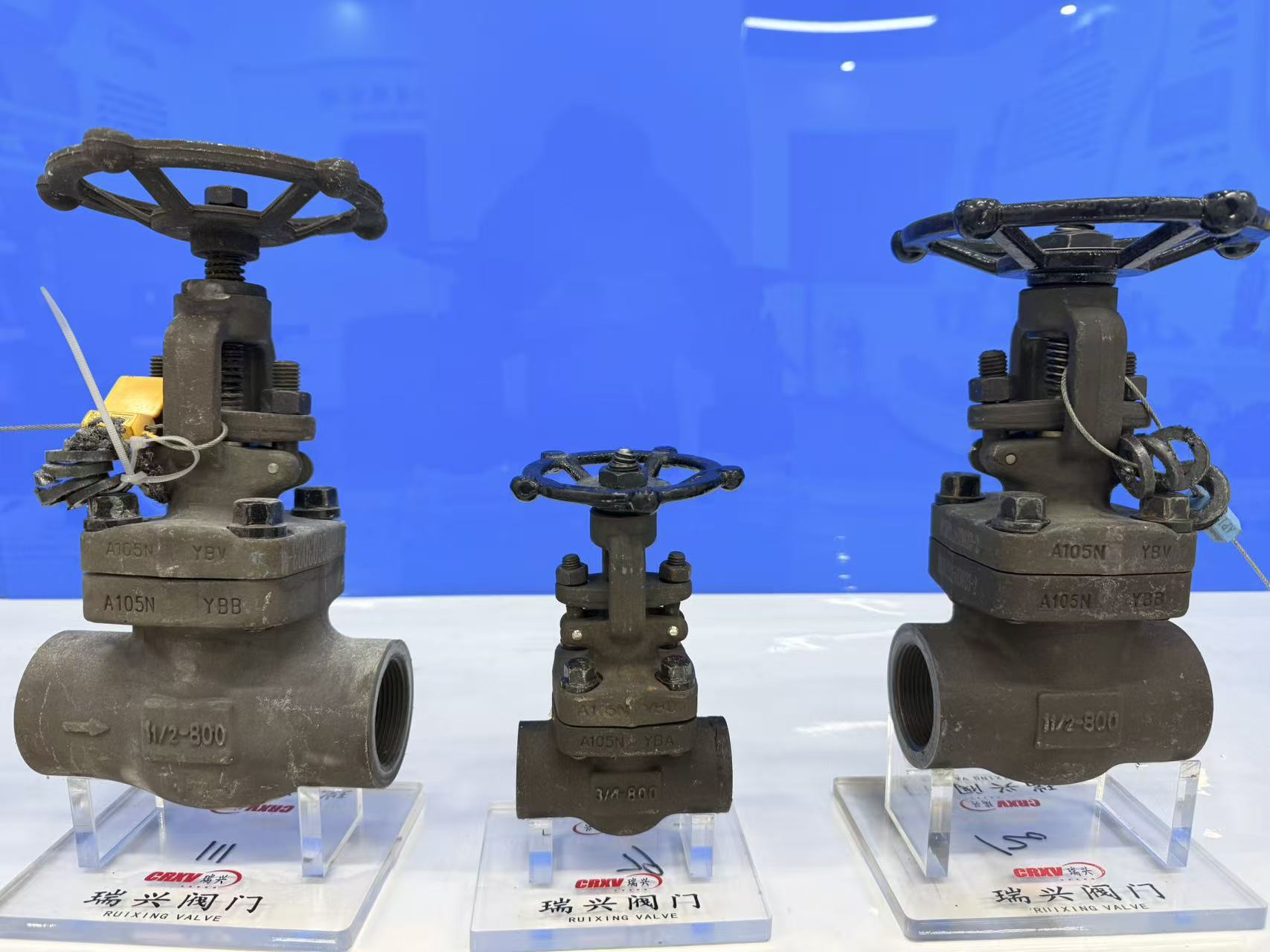
When a casting cracks under pressure, the root cause usually traces back to something you can't see with the naked eye—porosity, shrinkage cavities, and grain structures that formed unevenly during solidification. These microstructural irregularities act as stress risers, turning what looks like a solid component into a ticking clock. In contrast, forged steel carries a continuous grain flow that follows the shape of the part, so when load paths align with that flow, the material distributes stress rather than concentrating it.
The real danger surfaces in cyclic loading or corrosive environments. A cast component might handle a static load just fine on paper, but once there's vibration, thermal cycling, or exposure to hydrogen sulfide, the internal voids become initiation points for fatigue cracks. Forging closes up those micro-voids and refines the grain structure through deformation, giving the steel a margin of toughness that doesn't show up in a standard tensile test. It's the difference between surviving a single overload and enduring years of punishment without warning.
Service history tells the same story over and over: the metallurgical edge of forged steel isn't about a dramatic jump in strength numbers, but about predictability and resistance to the failure modes that castings can't escape. For critical applications—valve bodies, lifting lugs, high-pressure flanges—the choice often means opting for the material that fails gracefully instead of suddenly. That downstream processing through forging transforms a dendritic cast structure into something that actually remembers how to deform before it ruptures.
Navigating the Customization Maze: Key Design Dialogs You Must Have with Your ODM Partner
Most brands stumble into a customization trap by fixating on feature checklists. But what separates a product that merely ticks boxes from one that actually performs in the real world is the quality of the design conversations you have upstream. Before you even mention specifications, ask your ODM partner to walk you through their previous design failures—the thermal runaway in a sealed enclosure, the button that felt fine until it hit the 100,000-cycle mark, or the antenna placement that got killed by a metal frame. If they can't candidly discuss what went wrong and how they fixed it, you're not talking to a real engineering partner; you're talking to a sales channel.
The most pivotal dialogue often centers on what you shouldn't do. A capable ODM team will push back, openly debating the merits of your aesthetic choices against manufacturing realities. They'll tell you that the sleek tapered edge you love will create a parting line nightmare, or that the custom color you've sourced will shift under UV exposure months after delivery. Resist the urge to override them. Ask instead for physical proof: grayscale mockups, material swatches baked in an accelerated weathering chamber, sacrificial prototypes where the flaw is intentionally amplified. When an engineer hands you a warped housing and says, "This is what happens if we use that recycled resin blend," you're finally having the right conversation.
Finally, define the hidden thresholds that no spec sheet captures. How scratch-resistant does the touchscreen actually need to be after daily use inside a dusty warehouse? What ultrasonic welding seam strength prevents the case from popping open when dropped at the exact angle your returns data shows? These aren't standard test protocols—they get developed collaboratively when you bring field data and your ODM partner brings failure analysis labs. That shared language, built around real user abuse rather than generic ratings, is what turns an outsourced design into a product that will be around long after the first firmware update.
Quiet Threats in the Supply Chain: Vetting Raw Material Provenance for High-Stakes Valve Projects
When a valve destined for subsea gas extraction fails prematurely, the post-mortem rarely points to an obvious design flaw. More often, the fault snakes back through the supply chain to a single heat of steel whose mill certificates told a cleaner story than the truth. Carbon content may have drifted a few hundredths of a percent outside the specified range, or residual tramp elements like lead and tin turned up where they shouldn’t, quietly compromising fracture toughness at low temperatures. In high-stakes valve projects—think deepwater, hydrogen service, or nuclear isolation—these ghosts in the raw material become the difference between a controlled shut-in and an uncontrolled release.
Vetting raw material provenance goes well beyond reviewing a typed sheet of chemistry limits. It demands peeling back layers of documentation to confirm that the melt source, forging route, and heat treatment align with the physical reality inside the component. We’ve learned to distrust clean paper trails. Instead, we cross-reference supplier audit records, third-party witness reports, and elemental signatures from positive material identification. A spike in boron or a mismatched sulfur pattern can reveal that a batch of bar stock was inadvertently substituted at a subcontractor’s warehouse—something no paper-only review would catch.
The real quiet threat isn’t malice; it’s the normalization of shortcut thinking in long, fragmented supply chains. A mill buys billet from a trader who sourced it from a non-approved foundry. A machine shop mixes heats because “the grades were close enough.” Each small compromise accumulates, and by the time the finished valve reaches the project site, its material backbone may no longer match the engineering assumptions that justified its safety case. Rigorous provenance vetting turns that silent erosion of integrity into something loudly visible—and stoppable—long before the hydrotest.
Beyond the Pressure Test: Unveiling Invisible Quality Gates in Custom Valve Manufacturing
In custom valve manufacturing, the hydrostatic or pneumatic pressure test is often treated as the ultimate seal of approval. Yet anyone who has worked the floor knows that passing this final exam doesn’t guarantee a valve will survive a decade of cycling under corrosive media, thermal swings, or abrasive slurries. The real quality gates — the ones that don’t announce themselves with a gauge or a certificate — live in the folds of process discipline, material traceability, and the kind of judgment only experience can calibrate. They are invisible not because they lack importance, but because they dissolve into the routine of a shop that refuses to let a single shortcut become the norm.
One such gate sits inside the raw material receiving bay. A heat number on a test report is just ink until someone cross‑checks it against the alloy’s response to a simple spark test or a handheld XRF gun. For a custom valve spec’d with a niche duplex stainless steel, a single misplaced bar of 316L can hide in plain sight until it cracks in service. The invisible check isn’t the instrument — it’s the ingrained habit of the inspector who treats every delivery as guilty until proven trustworthy, and the system that empowers them to quarantine a full batch without a flinch. That same quiet scrutiny repeats itself during machining, when a machinist pauses a CNC program not because the drawing demands it, but because the chip formation feels wrong for the claimed alloy. It’s a quality gate built on tactile literacy, and no ISO checklist can fully replicate it.
Further downstream, after the body and trim have passed every dimensional audit, invisible gates guard the assembly cell. Here, the torque‑versus‑angle curve of a body‑bonnet bolting sequence tells a story that a final pressure test can’t: slight galling on a stud, a gasket that settled unevenly, a tiny misalignment that will fatigue seal welds months later. Experienced fitters don’t just follow a procedure; they listen to the tool and feel for the smooth, progressive climb of load. Similarly, the last invisible gate often swings shut during a no‑media functional stroke test where the valve is cycled under actual service differential pressure — not to prove it doesn’t leak, but to catch the faint hitch in stem movement that hints at an internal interference the drawing never predicted. These moments never make the final test report, but they outscream any red needle on a pressure chart when the valve is buried in a live plant with no shutdown window.
When Spec Sheets Lie: Real-World Performance Validation That Separates Top-Tier OEMs from the Rest
You’ve seen the glossy catalog pages: identical torque curves, the same ±0.5% accuracy claims, near-matching MTBF numbers. On paper, a dozen suppliers look interchangeable. Yet step onto a busy factory floor or a remote pumping station, and the cracks appear within weeks. Drift under thermal cycling that the lab never replicated. Signal dropout when EMI sources sit closer than the spec sheet assumed. Those spec sheets rarely lie outright—they just omit the messy, unpredictable edges of reality where most equipment actually operates.
What separates a handful of OEMs isn’t just a calibration certificate filed away in a drawer. It’s the willingness to stage validation tests that feel almost adversarial: rapid load swings that mirror a shift change, vibration profiles pulled from actual mounting brackets, humidity steps that condense on exposed terminals overnight. I’ve watched engineers purposely contaminate connectors with shop-floor dust just to see whether the device can still maintain loop integrity. Top-tier teams treat a passed test not as a victory, but as a starting cue to tighten the tolerance further.
When you strip away the marketing language, real-world validation comes down to a simple question: does the product behave predictably after things get uncomfortable? The data that matters isn’t on page three of a glossy PDF; it lives in log files from a pumping station at 2 a.m., or from a steel mill during a voltage sag. The OEMs worth remembering are the ones who chase that data before the customer ever asks for it.
FAQ
ODM stands for Original Design Manufacturer. In the valve world, this means the supplier doesn't just produce to your specs—they actively participate in the design, engineering, and prototyping stages. For a forged steel gate valve, the ODM partner uses their metallurgical know-how and manufacturing experience to optimize the body, seat, and wedge geometry for your specific pressure class and media requirements, often delivering a more reliable product than a simple build-to-print job.
Forging refines the grain structure of the steel, aligning it with the valve's contours. This means fewer internal voids or inclusions compared to cast parts. In high-pressure or cyclic thermal services where a cast steel body might slowly fail from fatigue, a properly heat-treated forged body holds up vastly better. It's the difference between a valve that survives a handful of pressure spikes and one that delivers decades of zero-leakage service.
Cast steel can develop micro-porosity that becomes prime territory for thermal fatigue cracks when the valve sees repeated heating and cooling. A forged gate valve, especially one made from a suitable chrome-moly alloy, brings a dense, homogeneous structure that withstands those thermal swings without distortion. The bonnet and body stretch together more evenly, keeping the packing chamber aligned and the wedge from galling under temperature excursions.
A capable partner can engineer non-standard trim materials like Stellite-overlaid seats and wedges for abrasive slurries, design a pressure-seal bonnet that performs at sub-zero cryogenic temperatures, or re-profile the gate wedge to reduce turbulence and pressure drop in certain flow-control duties. They can also integrate special end connections, live-load packing systems, or custom stroke lengths for actuation—details that transform a commodity valve into a purpose-built component.
Beyond paper certs, look for a manufacturer that conducts hyperbaric shell tests, low-pressure air seat tests, and separate high-pressure closure tests on each valve. The best shops go further by doing ultrasonic checks on the forged body and tracing heat numbers from the original billet all the way through final assembly. This traceability chain is what separates a valve that simply carries a stamp from one that has documented integrity for critical isolation points.
It can be significant. A solid wedge is rigid and unforgiving; if the body distorts slightly under pipe loads, the wedge may not seat evenly, leaving a leak path. A flexible wedge design allows the sealing faces to pivot minutely and conform to the body seats. For an ODM project, having the partner machine the wedge and body seat angles to a proprietary matching set rather than a generic standard slash can deliver zero visible leakage on both sides, even after thousands of cycles.
A genuine partner goes far beyond machining metal. They'll run computational fluid dynamics on your expected flow regime if required, offer in-house finite element analysis to validate bonnet gasket loads under your worst-case bending moment, and provide full material test reports with Charpy impact values at your minimum design temperature. After shipment, they should stand behind a clear warranty process that doesn't involve endless finger-pointing when a field issue arises.
The quoted price often hides huge variation in what's actually included. One quote may assume a simple ASTM A105 body without any impact testing, while another includes low-temperature A350 LF2 forgings with Charpy tests per heat lot. Differences in wall thickness or stem diameter requested by the spec sheet, the choice between bolted-bonnet and pressure-seal designs, and whether full NDE as per ASME B16.34 is applied all move the needle far more than the base material cost. The real risk is picking the cheapest option that inadvertently shortchanges a critical specification you simply didn't spot in the fine print.
Conclusion
The journey from a raw concept to a fully customized forged steel gate valve demands far more than machining proficiency. It begins with a meticulous blueprint-to-bespoke dialogue where engineering intent meets the forging die. Unlike their cast counterparts, forged valves possess a grain flow that follows the contours of the body, eliminating the porosity and inclusions that often lead to catastrophic failures in high-pressure, high-temperature service. This metallurgical edge becomes non-negotiable when discussing critical applications, making early-stage conversations with your ODM partner about wall thickness, trim materials, and end connections the foundation of a resilient design.
Yet, even a flawless design collapses if the supply chain harbors quiet threats. Rigorously vetting raw material provenance—tracing melt origins and certifying billet integrity—is what separates a reliable asset from a ticking clock. The true measure of a top-tier ODM extends beyond a simple hydrostatic test; it involves invisible quality gates like post-weld heat treatment verification, deep-dive NDE on sealing surfaces, and operational torque mapping. When spec sheets look alike, it is the real-world validation under cycling pressures, corrosive mediums, and thermal shocks that reveals whether a manufacturer truly masters the art of custom valve production.
Contact Us
Contact Person: TIM
Email: [email protected]
Tel/WhatsApp: 8615857807381
Website: https://www.crxv.com/en/