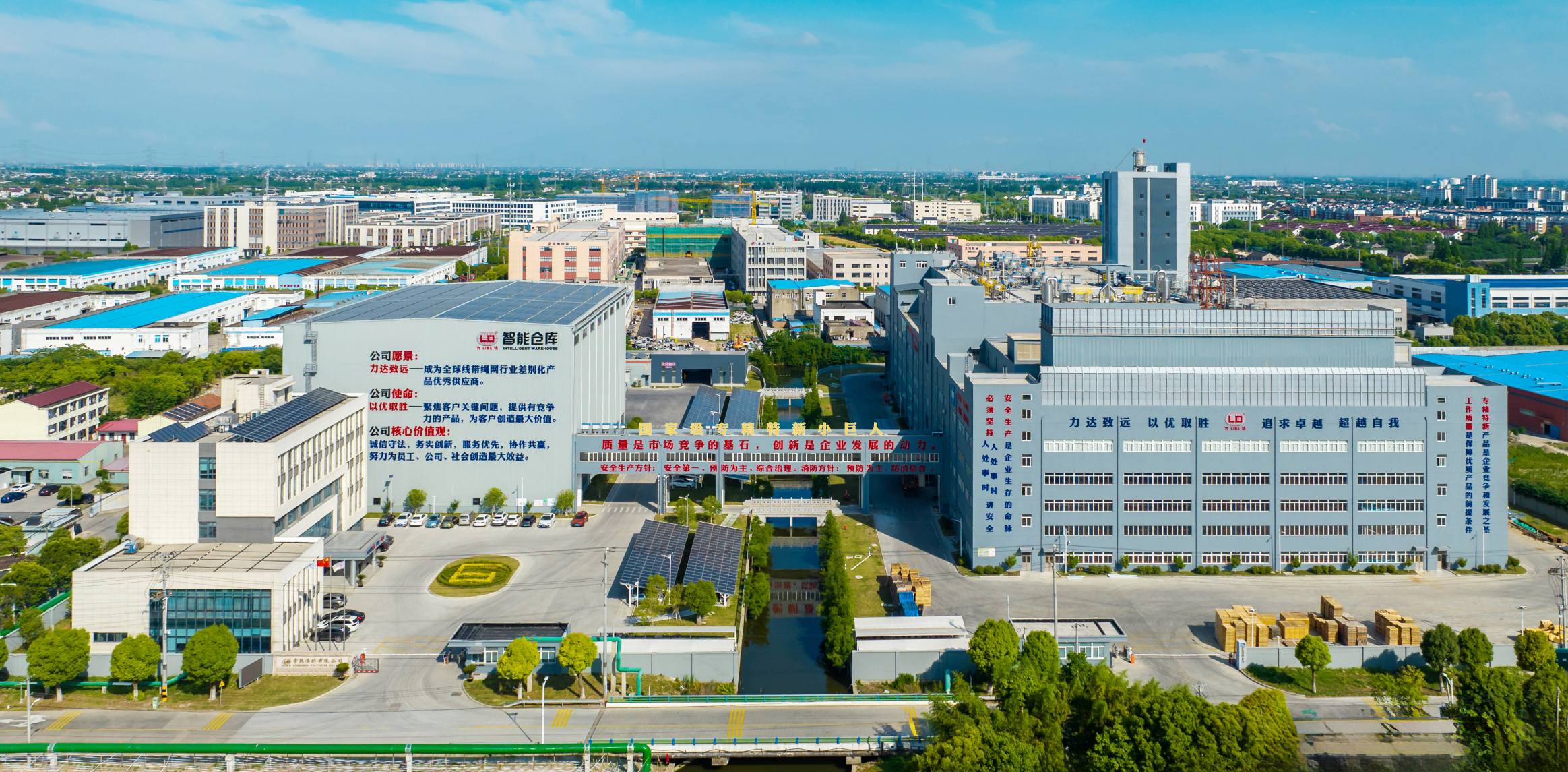

High Tenacity Polyester Filament Yarn: China's Key Innovations and Market Trends
2026-07-09
From automotive safety fabrics to heavy-duty industrial slings, high-tenacity polyester filament yarn is quietly powering the world's most demanding applications. China's relentless push in polymer science and spinning technology has turned this once-commodity fiber into a hotbed of breakthrough innovations—think lighter, stronger, and more sustainable than ever before. At the heart of this transformation is Changshu Polyester, a trailblazer redefining quality benchmarks and fueling market shifts. Curious about the forces driving this evolution? Read on as we decode the key trends and pioneering advancements shaping the future of high-tenacity polyester yarn.
Unveiling the Strength: How Chinese Producers Redefine High Tenacity Polyester Filament Yarn
Walk into any modern textile facility, and you'll notice a quiet revolution in the spools of yarn lining the shelves. Chinese manufacturers have taken high tenacity polyester filament yarn—once a straightforward industrial workhorse—and turned it into a material that shrugs off stress in ways that even seasoned engineers find surprising. Through precise polymer blending and advanced spinning techniques, these producers have pushed tensile strength beyond traditional benchmarks. The result is a yarn that doesn't just carry weight; it endures relentless tension cycle after cycle without compromising its structure, making it a go-to choice for demanding applications from heavy-duty lifting slings to high-speed sewing threads.
What sets this new generation apart isn't a single breakthrough but a dogged attention to the entire production ecosystem. Chinese mills have fine-tuned the quenching and drawing stages to control orientation and crystallinity with uncommon accuracy. This granular control minimizes weak points along the filament, delivering consistency that many legacy suppliers struggle to replicate. It's not uncommon to see test reports showing minimal variation in tenacity from bobbin to bobbin, which for downstream product makers means fewer failures, predictable performance, and the confidence to design lighter, more efficient reinforcements.
Beyond raw strength, there's an evolving focus on how these yarns behave under extreme conditions. A newer wave of high-tenacity polyester filaments from China incorporates UV inhibitors and hydrolysis-resistant additives right into the polymer matrix, rather than relying on surface treatments that wash out over time. Imagine a maritime rope retaining its integrity season after season in salt spray and blazing sun, or a geotextile holding firm in damp soil without rotting. That's the direction Chinese producers are heading—not by reimagining polyester, but by pushing every lever of chemistry and processing to craft a humble yarn that outperforms expectations, project after project.
From Lab to Loom: Breakthroughs in Polymer Science Driving Superior Yarn Performance
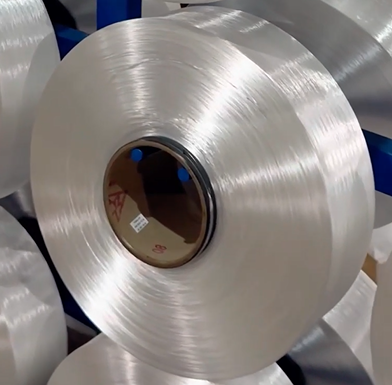
The journey from a lab-scale polymer discovery to actual yarn spinning often stalls at the pilot stage, but recent strides are closing that gap with precision. Tailored molecular weight distributions and catalyst systems now allow for polyesters and nylons that flow more evenly during extrusion, slashing filament breakage rates on high-speed draw-twisting machines. This isn't just incremental improvement—new random copolymer compositions are yielding yarns that combine cotton-like moisture wicking with the resilience of industrial synthetics, all without the need for topical finishes that wash away.
At the loom, these engineered polymers translate directly into fabrics that defy typical trade-offs. Take the case of polypropylene yarns once dismissed as too waxy for comfort: metallocene catalysis has unlocked isotactic chains that can be spun into sub-denier fibers with a thermal conductivity rivaling cool-touch cellulosics, yet they retain the toughness to withstand high-speed air-jet weaving. Meanwhile, biodegradable polyester-polyamide hybrids are hitting shuttle looms with enough elasticity to replace spandex in activewear, offering full stretch recovery without the microplastic shedding that haunts traditional elastanes.
Perhaps the quietest revolution is happening in the dye bath and finishing stenter, where new molecular-level modifications eliminate steps that once compromised yarn integrity. Built-in dye sites along the polymer backbone accept pigment at lower temperatures, preserving the yarn's tenacity that might otherwise degrade during aggressive pre-treatment. The result is a fabric with a deeper, faster color uptake and a softer hand, straight from the weaving shed, proving that the right polymer design can rewrite the rulebook on what a yarn can do before it ever touches a needle.
Beyond Standard Polyester: The Rise of Specialized High Tenacity Variants in China
In recent years, China's polyester industry has shifted noticeably away from volume-driven production of commodity fibers toward niche, performance-oriented segments. Standard polyester, while still dominant, is no longer the sole focus as domestic manufacturers invest heavily in specialized high tenacity variants. This transition is partly a response to maturing conventional markets and rising demand for materials that can withstand extreme stress, abrasion, and environmental exposure. The result is a growing portfolio of high tenacity polyester yarns and fabrics that deliver far beyond the modest tensile strength of their everyday counterparts, opening doors to applications where standard polyester simply falls short.
What sets these high tenacity variants apart is not just incremental improvement but a fundamental redesign of polymer chemistry and spinning processes. By optimizing intrinsic viscosity, carefully controlling molecular orientation during drawing, and in many cases incorporating solid-state polymerization, Chinese producers have achieved tenacity values exceeding 8 cN/dtex—significantly higher than regular polyester's typical 4–5 cN/dtex. Importantly, these gains are realized without sacrificing key attributes such as low elongation, thermal stability, and resistance to chemicals. The manufacturing landscape itself has evolved: once reliant on imported technology, Chinese firms now develop and refine their own proprietary spinning lines and additive formulations. This technical self-sufficiency, combined with large-scale production capacity, has allowed them to supply high tenacity polyester at consistently competitive prices, narrowing the gap with long-established European and Japanese suppliers.
The practical impact of this rise is most visible in sectors where material failure is not an option. High tenacity polyester reinforcements are now standard in heavy-duty conveyor belts, geo-textiles for soil stabilization, and automotive tire cords. The marine and outdoor gear industries have also embraced these fibers for ropes, webbing, and sailcloth that must endure constant UV exposure and dynamic loads. Even personal protective equipment has seen a shift: cut-resistant gloves and safety harnesses increasingly rely on high tenacity polyester blends. Looking ahead, the trend points toward further specialization—flame-retardant, low-shrinkage, and marine-degradable variants are already moving from pilot lines to commercial availability. For global buyers, this development means a broader, more reliable supply of technical yarns that combine high performance with the cost advantages of China's mature textile ecosystem.
Global Demand Shifts: China’s Strategic Role in High Tenacity Yarn Supply Chains
The landscape of high tenacity yarn demand is undergoing a profound transformation, driven by accelerating shifts in global manufacturing and infrastructure priorities. As advanced economies renew their focus on domestic industrial capacity and sustainable construction, the appetite for durable, high-performance materials has surged. China, with its deeply integrated production networks, has not only scaled output but also refined the consistency and specialized properties of high tenacity yarns. This has positioned the country not merely as a supplier of volume, but as a critical node in a supply chain where quality, logistical reliability, and adaptive R&D are becoming paramount. The result is a market less centered on spot price alone and more attuned to long-term value partnerships.
Beyond standard industrial applications, the most telling pattern is the quiet diversification of end-use sectors. High tenacity yarns are now essential in geotextiles for flood defense systems, lightweight composites for next-generation electric vehicles, and even in the reinforcement of submarine cables for offshore wind farms. Chinese manufacturers have responded by moving away from commodity-grade output, investing instead in proprietary finishes and hybrid yarn technologies that meet exacting European and North American standards. This capability leap has effectively dismantled the old narrative of a one-size-fits-all supply model, making the country a strategic collaborator for firms seeking to de-risk their innovation pipelines while managing costs.
Looking ahead, geopolitical trends and environmental regulations are redrawing trade corridors, but the centrality of Chinese production in this niche is likely to deepen rather than fade. The rationale lies not just in scale advantages, but in the agglomeration of auxiliary industries—specialty chemical providers, precision machinery builders, and technical textile clusters—that form an ecosystem few regions can replicate quickly. For global procurement managers, the question is shifting from "Why China?" to "How to integrate China more intelligently into a resilient supply architecture." The strategic role is thus one of co-development, where demand signals from Western markets increasingly shape the innovation trajectory of Chinese mills, creating a less transactional and more symbiotic global supply dynamic.
Sustainable Strands: Eco-Friendly Manufacturing Trends in Chinese Yarn Production
Chinese yarn manufacturers are increasingly adopting closed-loop water systems that recycle up to 95% of process water, dramatically cutting waste and preventing pollution. These systems filter and reuse water from dyeing and finishing, reducing the strain on local water resources and setting a new standard for responsible production.
Another significant shift is the use of organic and recycled fibers, such as certified organic cotton, hemp, and recycled polyester made from post-consumer plastic bottles. Producers are blending these materials with innovative spinning techniques to create high-quality yarns that meet global eco-certifications without compromising on softness or durability.
Energy-efficient machinery and renewable energy integration are also reshaping factory floors. Solar panels now power spinning frames, and intelligent automation monitors energy use in real time, minimizing carbon footprints. These advancements reflect a broader commitment to sustainable manufacturing that appeals to environmentally conscious brands worldwide.
Innovation at Scale: Smart Factories and Automation in China’s Polyester Yarn Sector
Across China's polyester yarn sector, the push toward smart manufacturing has reshaped production floors into highly orchestrated environments where minimal human intervention is the norm. Automated guided vehicles navigate winding corridors to deliver raw pellets directly to spinning machines, while robotic arms deftly handle doffing and packaging with speed and accuracy that manual labor could never match. These integrated systems rely on a web of sensors and real‑time data analytics to adjust parameters such as temperature, tension, and humidity on the fly, ensuring consistent yarn quality across millions of meters of output.
The real leap, however, lies in the digital thread that connects every stage—from polymerization to finished cones. Centralized control rooms visualize the entire value chain, allowing engineers to pinpoint bottlenecks or anomalies before they cascade into costly downtime. Machine learning models trained on historical defect patterns now preemptively flag equipment that needs maintenance, shifting the paradigm from reactive fixes to proactive prevention. In some pioneering facilities, digital twins simulate process changes before they are implemented, slashing trial‑and‑error and accelerating the ramp‑up of new yarn types tailored to shifting fashion demands.
What sets these smart factories apart is not just the technology but the cultural re‑orientation toward continuous improvement. Operators, once tasked with repetitive manual checks, have evolved into data‑literate supervisors who interpret dashboards and fine‑tune algorithms. This fusion of domain expertise with artificial intelligence has unlocked flexibility that was previously unthinkable—rapid changeovers between different deniers and filament counts now occur in minutes rather than hours, enabling producers to chase smaller, customized orders profitably. As the sector moves closer to lights‑out operations, the competitive divide between early adopters and traditional mills widens, proving that scale and speed are no longer enough without intelligence woven into every spindle.
FAQ
High tenacity polyester filament yarn is valued for its superior strength-to-weight ratio, excellent dimensional stability, and resistance to abrasion, chemicals, and UV degradation. These properties make it ideal for demanding uses such as ropes, seat belts, geotextiles, and coated fabrics.
Chinese manufacturers have pushed innovation by adopting advanced polymerization techniques, fine-tuning spinning and drawing processes, and integrating automation. This has resulted in yarns with higher uniformity, better tenacity, and enhanced dye uptake, while reducing energy consumption and waste.
The automotive industry, especially for tire cord and airbags, along with growing needs in construction, packaging, and sports equipment, are major demand drivers. Additionally, the expansion of renewable energy infrastructure has increased the use of these yarns in wind turbine blade manufacturing.
There is a notable shift towards sustainable and recycled polyester variants, as international buyers increasingly demand eco-friendly materials. Pricing pressures from overcapacity and raw material fluctuations are also influencing trade flows, pushing Chinese suppliers to focus on specialty and high-end products to maintain competitiveness.
Producing high tenacity yarn requires higher molecular weight polymers and more controlled drawing ratios, leading to significantly enhanced tensile strength. Chinese plants now often use one-step spin-draw processes that streamline production and improve the molecular orientation, unlike conventional two-step methods.
Many leading firms are investing in bottle-to-yarn recycling technologies and bio-based monomers. They are also adopting cleaner production methods, such as waterless dyeing and solar-powered plants, to reduce the environmental footprint and cater to global sustainability standards.
Intense domestic competition has led to price wars, while rising labor costs and stricter environmental regulations add pressure. To stay ahead, manufacturers are increasingly focusing on R&D for differentiated products, such as low-shrinkage or fire-resistant yarns, and expanding into niche markets overseas.
By engineering the surface properties and improving inter-fiber adhesion, new variants offer better resin compatibility, leading to stronger and lighter composites. This has opened up applications in aerospace interiors, lightweight automotive parts, and high-performance sports gear.
Conclusion
China has emerged as a global powerhouse in high tenacity polyester filament yarn, driven by relentless innovation across material science and manufacturing. Researchers have unlocked new polymer formulations and spinning techniques that deliver yarns with exceptional tensile strength, abrasion resistance, and durability—far surpassing standard polyester. These breakthroughs are not confined to labs; they are seamlessly transitioning from lab to loom, enabling the production of specialized variants tailored for demanding applications such as automotive safety belts, geotextiles, ropes, and coated fabrics. Chinese producers have moved beyond commodity filaments, engineering yarns with customized deniers, tenacities, and surface finishes that precisely meet the evolving technical requirements of global buyers.
This technological leap is complemented by strategic shifts in global supply chains, where China’s massive production scale, cost efficiency, and reliability have made it an indispensable link. The country’s strategic role is further solidified by the adoption of smart factory systems and automation, which ensure consistent quality and lower lead times. At the same time, sustainability has become a core pillar, with manufacturers investing in recycling technologies, energy-efficient processes, and bio-based feedstocks to reduce the environmental footprint. As market demand grows for both performance and eco-consciousness, China’s high tenacity polyester filament yarn sector is uniquely positioned to lead, combining strength, versatility, and greener manufacturing in one dynamic package.
Contact Us
Contact Person: CONNIE
Email: [email protected]
Tel/WhatsApp: 86-0512-53671634
Website: https://www.lida-yarn.com/