
Leading Semiconductor Air Compressor Supplier for Ultra-Clean Manufacturing
2026-08-04
In the world of ultra-clean manufacturing, every particle of contamination is a threat to product quality and yield. Semiconductor fabs, pharmaceutical plants, and advanced electronics rely on compressed air systems that deliver not just power, but purity. That’s where Seize Air comes in—a leading supplier engineering air compressors that meet the strictest cleanliness standards without compromising efficiency. From oil-free designs to advanced filtration, their solutions are built to keep your operations contamination-free. So, what does it really take to achieve true ultra-clean compressed air, and why are more manufacturers turning to Seize Air for the answer? Let’s explore the technology, the challenges, and the innovations driving this critical industry forward.
Precision Air Delivery for Contaminant-Free Chip Production
Modern chip fabrication demands an environment where even a single airborne particle can ruin an entire wafer. Precision air delivery systems are engineered to maintain an ultra-clean atmosphere, directing laminar flows of rigorously filtered air across sensitive work areas. These systems control temperature, humidity, and pressure differentials with pinpoint accuracy to isolate clean zones from potential contaminants.
The architecture of such delivery goes beyond simple filtration. It involves strategically placed air showers, high-efficiency particulate arrestance (HEPA) and ultra-low penetration air (ULPA) filters, and advanced computational fluid dynamics modeling to eliminate turbulence and dead spots. By ensuring that every cubic meter of air is replaced multiple times per minute and moves in a predictable, non-disturbing path, manufacturers virtually eliminate the risk of defect-causing particulates settling on critical surfaces.
Engineering Compressed Air Systems Beyond Cleanroom Standards
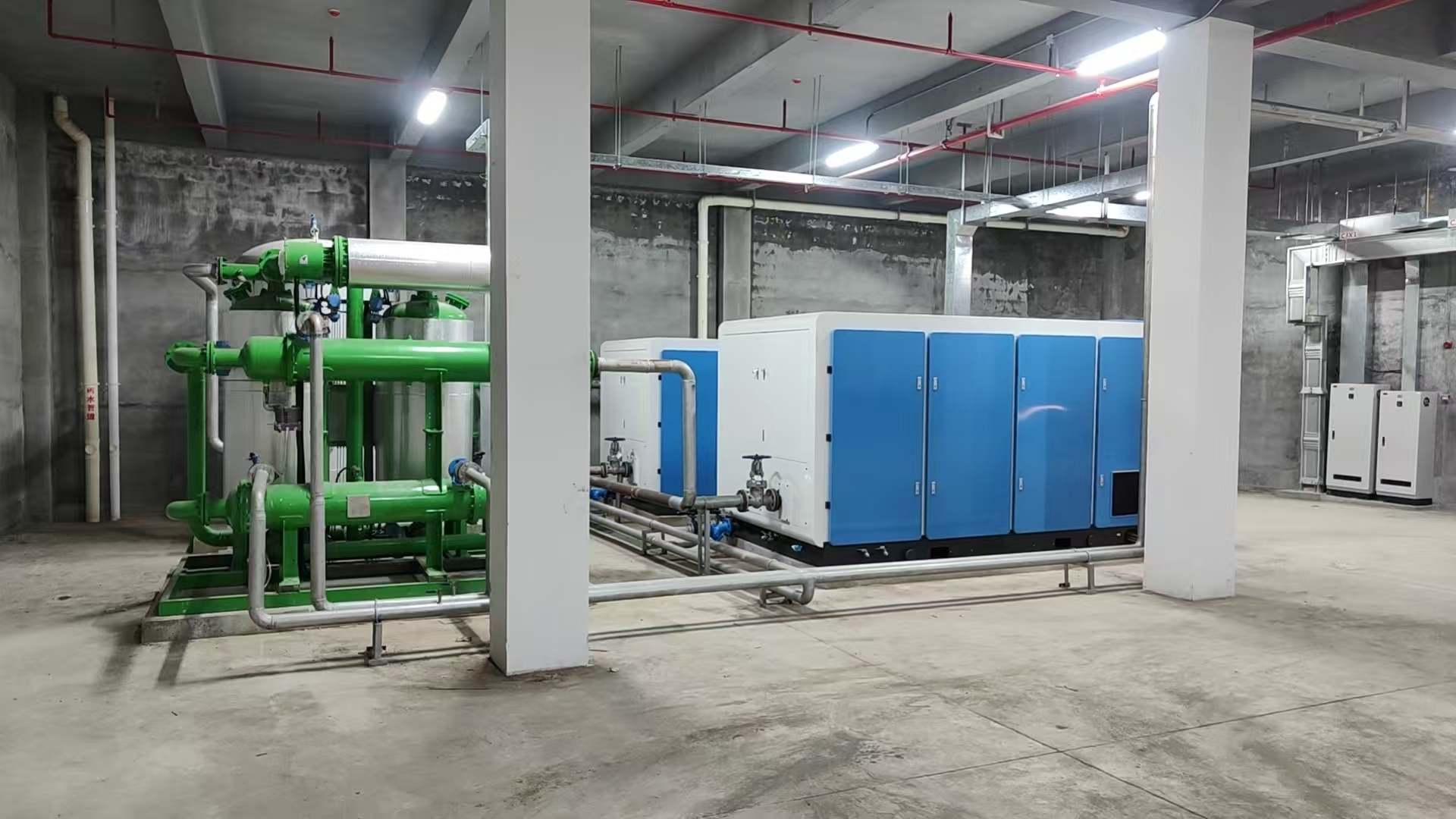
Compressed air systems in cleanroom environments often adhere to rigorous standards like ISO 8573-1 to control particulate, moisture, and oil contamination. However, truly engineering these systems goes beyond mere compliance, demanding a holistic approach that considers the entire lifecycle of compressed air generation, treatment, and distribution. This involves selecting components not just for their contaminant removal efficiency but for their ability to maintain performance under fluctuating demand, integrate seamlessly with existing infrastructure, and minimize energy consumption over time. By focusing on system dynamics and long-term operational resilience, engineers can create compressed air systems that deliver exceptional purity while remaining adaptable to future process changes.
Beyond the filter housings and dryers lies the critical task of designing distribution networks that prevent recontamination and pressure drops. High-grade materials such as electropolished stainless steel piping, coupled with orbital welding techniques, eliminate dead legs and crevices where microbes or particles can accumulate. Slope configurations, strategic drain points, and careful valve selection become part of a contamination prevention strategy that extends well beyond the cleanroom boundary. Moreover, incorporating advanced monitoring with dew point sensors, particle counters, and oil vapor analyzers at key usage points provides real-time assurance, enabling predictive maintenance and immediate response to any air quality deviation. This proactive layer of protection ensures that the system not only meets but sustains the required purity levels under real-world operating conditions.
Ultimately, engineering compressed air systems that surpass cleanroom standards is about anticipating future challenges. It means designing for scalability, whether that involves modular treatment components that can be added as production scales or smart controls that learn usage patterns and optimize energy consumption. It also entails bridging the gap between facility management and process engineering, ensuring that air quality parameters align precisely with product sensitivity risks. Such systems are not static installations but living utilities that evolve alongside the facility, continuously supporting innovation without compromising on cleanliness or efficiency.
Relentless Purity in Every Cubic Meter for Wafer Fabrication
Achieving the ultra-clean environment essential for wafer fabrication demands an uncompromising approach to air quality. Every cubic meter of air within the cleanroom is continuously scrubbed of particulates, chemical vapors, and biological contaminants. Advanced filtration systems, including HEPA and ULPA filters, work in concert with precise pressurization and laminar airflow to minimize any risk of contamination. Real-time monitoring ensures that particle counts remain below the stringent thresholds required for sub-10nm nodes, where even a single microscopic impurity can render a die defective. The relentless pursuit of purity extends to the structural design, with materials outgassing controlled and personnel protocols rigorously enforced, creating a space where the air itself is an active component of the fabrication process.
Maintaining this level of cleanliness is not a one-time achievement but a dynamic, ongoing battle against invisible intruders. Air handling units operate with redundancy, and vibration isolation platforms prevent microscopic disruptions from affecting lithography. The purity of each cubic meter is validated through comprehensive particle and molecular contamination sampling, often tied to predictive analytics that anticipate filter degradation or facility drift. This data-driven vigilance means the cleanroom environment is in a state of perpetual perfection, adapting instantly to any deviation. The goal is to make the air as inert and invisible as possible, allowing the silicon wafers to transition through each intricate step without encountering a pollution-related flaw.
In this context, purity becomes a measurable asset, directly tied to yield and device performance. The relentless dedication ensures that the atmosphere inside the fab is orders of magnitude cleaner than the most pristine outdoor air, creating a bubble of absolute control. From the chemical filters that neutralize volatile organic compounds to the ionization bars that eliminate static charges attracting particles, every system is layered to provide overlapping defense. The result is a manufacturing ecosystem where the metrics of clean air—particles per cubic meter, airborne molecular contamination levels, and temperature/humidity stability—are pushed to their fundamental limits. This unwavering commitment transforms the simple concept of fresh air into a sophisticated, engineered resource that forms the foundation of modern semiconductor production.
Smart Compression Technology Safeguarding Your Process Integrity
Our smart compression technology monitors critical process parameters in real time, automatically adjusting force and speed to match material variations. This proactive control prevents over-compression and under-compression, maintaining consistency even with raw material fluctuations. By sensing density changes and adapting instantly, it shields your product from structural damage and ensures uniform output without operator intervention.
Unlike rigid systems that follow preset cycles, this intelligent approach learns from each stroke, refining the compression profile to protect sensitive ingredients. Delicate granules and brittle particles are handled with precision, preserving their integrity while achieving target hardness. The result is fewer defects, less waste, and extended tooling life, all while upholding the strictest quality standards for downstream processing.
Integrated diagnostics further safeguard your process by flagging anomalies before they escalate. Wear and tear, as well as environmental shifts, are compensated for automatically, so your line runs with minimal downtime. This self-optimizing capability not only protects product quality but also enhances overall equipment effectiveness, future-proofing your operation against variability.
Partnering with Fabs to Eliminate Airborne Threats in Manufacturing
Every fabrication facility knows the constant battle against invisible contaminants. A single speck can compromise yield, reliability, and ultimately, the bottom line. That’s why we don’t just sell filtration systems; we embed ourselves within your process, working side by side with your engineers to map airflow patterns, identify leak sources, and customize solutions that integrate seamlessly into your existing infrastructure. It’s a partnership rooted in protecting not just wafers, but the long-term viability of your operation.
The difference comes down to how we respond when conditions shift. Traditional suppliers hand over a spec sheet and walk away. We stay. When a new tool set is installed or the cleanroom layout changes, our teams are already on the floor, recalculating pressure differentials and adjusting filtration capacity before the risk materializes. This proactive mind-set turns airborne threat management from a fixed checklist item into a dynamic, evolving defense—one that actually gets sharper as your fab expands.
What often gets overlooked is the collective knowledge that grows from these collaborations. Fab technicians and our field specialists routinely exchange real-world data—not just about particle counts, but about unexpected interactions between chemicals, temperature shifts, and filter media performance. That informal troubleshooting, refined over years, means fixes happen before alarms trigger. The result isn’t just cleaner air; it’s a factory floor where people trust that the air they’re working in is consistently, measurably safe.”
Why Traditional Compressors Fall Short in Sub-10nm Environments
As semiconductor nodes shrink below 10nm, the tolerance for contamination and process variability becomes almost unforgiving. Traditional compressors, often designed for broader industrial use, introduce microscopic particles, oil vapors, and moisture that can devastate wafer yields. Even with extensive filtration, the inherent design of these older systems—relying on lubricated moving parts and seals—generates particulates that are simply too large and too numerous for today's ultra-clean fabrication steps.
Vibration and pulsation, common in conventional reciprocating or screw compressors, create another layer of trouble. At sub-10nm scales, even nanometer-level jitter during lithography or etching can cause pattern defects that kill entire dies. The mechanical churn and pressure ripples from legacy compression hardware directly counteract the nanometer precision required, forcing fab operators to invest in costly isolation and damping solutions that only partially mitigate the problem.
Moreover, the chemical and thermal stability of compressed gases becomes critical in advanced processes. Traditional compressors often suffer from internal corrosion or outgassing of elastomers, introducing trace metals and volatile organic compounds that poison sensitive reactions like ALD or EUV lithography. The push for higher purity and tighter control has simply outpaced what these older technologies can deliver without a fundamental redesign of their core architectures.
FAQ
In chip manufacturing, even microscopic contaminants can ruin wafers, so compressed air must be absolutely clean and stable. It powers pneumatic controls, wafer handling robots, and process tools while maintaining ultra-low moisture and particle levels.
Oil-free designs eliminate the risk of lubricant carryover into the airstream. Combined with multi-stage filtration and dryers, they deliver air that meets Class 0 standards, preventing defects caused by hydrocarbons or particulates settling on sensitive surfaces.
Compressors can account for a large slice of a fab's total energy use. Advanced variable-speed drives and heat recovery systems dramatically cut power consumption, which not only lowers operating costs but also supports corporate sustainability targets.
Predictive monitoring with IoT sensors tracks vibration, temperature, and pressure trends. This allows preemptive service scheduling, reducing unplanned downtime. Regular filter changes and dryer checks are automated where possible to avoid human error in critical environments.
Yes, leading providers engineer complete packaged systems that integrate high-volume process air with precision instrument air. This ensures consistent pressure dew points and purity across all usage points without separate infrastructure.
Specialists understand the unique interplay of molecular contamination, pressure stability, and facility integration. They offer customized solutions like all-stainless piping, low-vibration configurations, and compliance with SEMI standards, which generic vendors often overlook.
Modular compressor networks with intelligent sequencing ramp up or down seamlessly. By combining centrifugal and rotary screw technologies, the system maintains ±0.1 bar stability even when multiple tools start simultaneously.
Conclusion
In the unforgiving realm of sub-10nm semiconductor fabrication, even microscopic airborne contaminants can cripple yield and erase millions in value. Traditional compressors, with their inherent oil carryover, particulate shedding, and moisture inconsistency, simply cannot meet the molecular-level purity these processes demand. That's why our compressed air systems are engineered beyond conventional cleanroom standards, delivering precision air with relentless purity in every cubic meter. From the first stage of compression to the point of use, we eliminate risks of hydrocarbons, volatile organic compounds, and nanoscale particulates that threaten wafer integrity. Our technology is purpose-built for contaminant-free chip production, ensuring that the air touches the process is as pristine as the chips themselves.
But hardware alone isn't enough. We partner directly with fabs to tailor air systems that integrate seamlessly into their workflows, safeguarding process integrity at every step. Our smart compression platforms incorporate real-time purity monitoring, adaptive dew point control, and predictive maintenance analytics, transforming compressed air from a utility into a strategic defense against airborne threats. By working alongside facility teams, we help identify and neutralize contamination vectors before they can impact production. In an industry where a single particle can render a chip worthless, our approach doesn't just supply air—it delivers certainty. This fusion of advanced engineering and collaborative partnership is what makes us a leading semiconductor air compressor supplier for ultra-clean manufacturing.
Contact Us
Contact Person: Mia
Email: [email protected]
Tel/WhatsApp: +86 19821985894
Website: https://www.seize-air.com