

Log Saw Cutting Machine Solutions for Efficient and Accurate Wood Cutting
2026-09-23
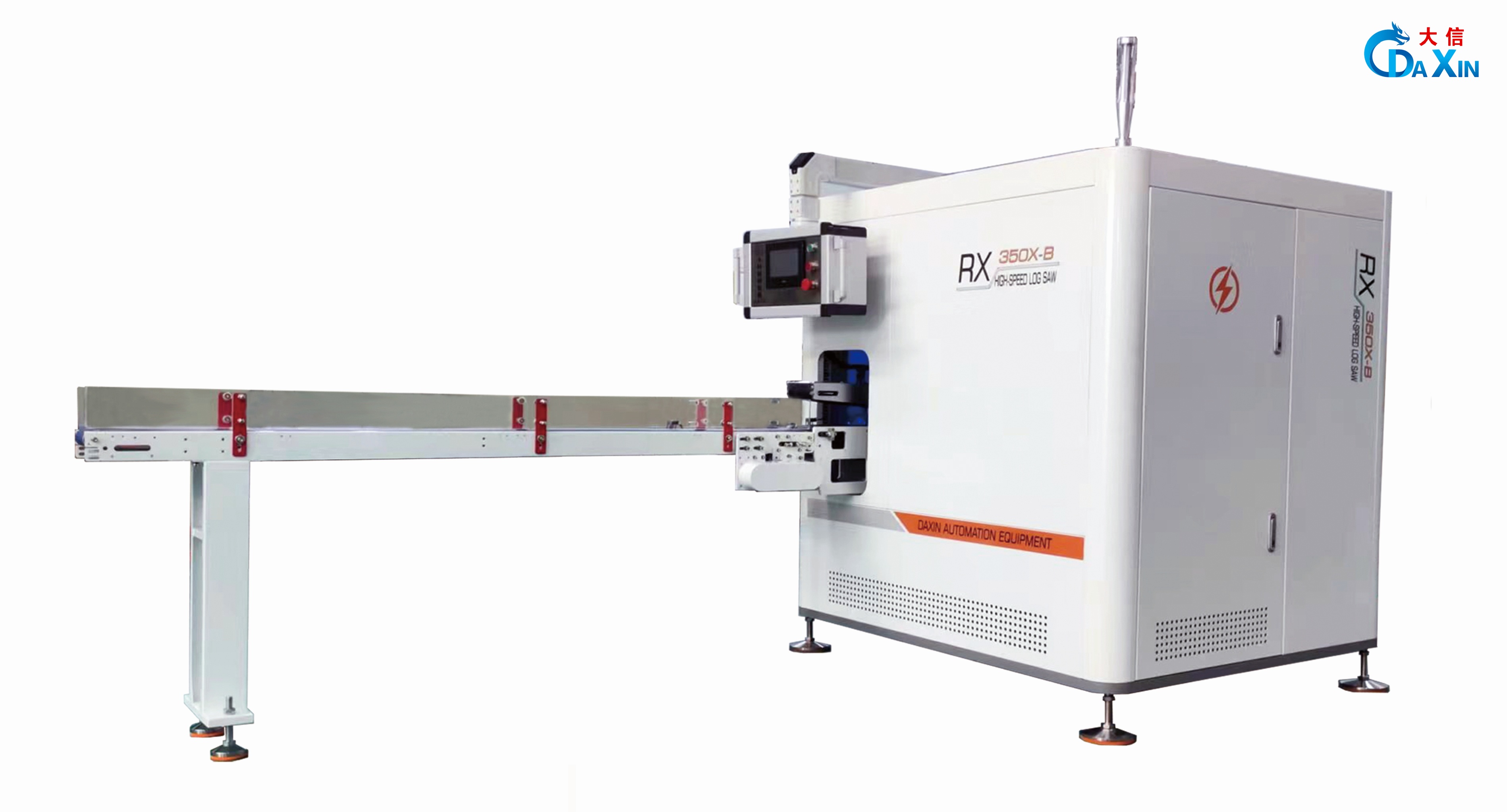
Uneven cuts, wasted timber, and hours lost to manual adjustments—these are the silent profit killers in any wood processing operation. The right log saw cutting machine changes that equation, turning raw logs into clean, accurate boards with minimal effort. At the heart of this shift is DAXIN, a name trusted for machines that deliver both speed and repeatable precision. In this post, we’ll explore how DAXIN’s solutions handle the tough jobs while keeping your workflow efficient.
Why blade tension matters more than motor power
Most woodworkers obsess over horsepower when picking a bandsaw, but that's a trap. Blade tension is the real workhorse. A properly tensioned blade stays rigid in the cut, resists deflection, and tracks straight through dense hardwood. Without it, even a 3-horsepower motor can't overcome the wandering and vibration that ruin accuracy.
Think of tension as the blade's backbone. When you tension correctly, the blade becomes a taut band of steel that cuts cleanly with minimal pressure. Motor power only determines how fast you can feed the stock. If the blade flexes or drifts, extra power just makes the problem worse—faster cuts with more burning, rougher surfaces, and a wider kerf.
Next time your saw struggles, check the tension before blaming the motor. A simple tension gauge or the flutter test can reveal a loose blade. Tightening it properly often transforms a mediocre saw into a precise one. That's why experienced woodworkers invest in a good tension spring and learn to read the blade, not the horsepower rating.
Getting consistent cuts from crooked logs
Crooked logs are a fact of life for anyone who mills their own lumber or builds with rough timber. The trick isn't to fight the curve but to read it before you make the first cut. Look for the straightest face and use that as your reference, even if it means rotating the log a few times. Once you find a stable plane, shim or wedge the log so it doesn't rock while you work. Small adjustments at this stage save you from tapered boards and wasted wood later.
When you start cutting, resist the urge to follow the pith or the bark line. Instead, snap a chalk line along the flattest section and cut to that line, allowing the waste to fall where the curve lies. If the log has a severe sweep, consider breaking it into shorter sections before milling. Shorter pieces are easier to control and often yield more usable stock from a crooked log than trying to force one long, straight board.
After the first face is flat, use it as your reference for all subsequent cuts. Flip the log or cant so the flat face rides against the fence or bed, and make your next cut perpendicular. Repeat this process and you'll end up with square, consistent boards even from wood that looked hopeless at first. Consistency comes from patience and a solid reference face, not from finding perfect logs.
The feed rate sweet spot for clean edges
Most chatter about edge quality focuses on spindle speed or bit sharpness, but feed rate quietly does the heavy lifting. If you push the tool through the material too slowly, the cutting edge rubs instead of shears. That friction generates heat, which can burn wood, melt plastic, or work-harden metal—all of which leave a ragged finish. Too fast, and the flutes can't clear chips quickly enough; the edge tears rather than cuts, and you'll likely see fuzzy grain on timber or burrs on aluminum.
The sweet spot sits between those two failure modes. It's usually a narrow band where each tooth takes a consistent bite—enough to peel away a clean chip but not so much that the tool deflects or vibrates. Listen for the sound of a steady hiss or low rumble, not a high-pitched scream or an irregular clatter. On wood, well-formed chips that look like tiny curls are a good sign; dust or powder means you're moving too slowly.
Finding that rate isn't about hitting a magic number from a chart. Start slightly below what you think is right, then creep upward in 5–10 percent increments until the edge turns glassy. Different materials shift the range dramatically: acrylic wants a fast, deliberate pass to avoid melting, while oak may demand a slower feed to prevent tear-out around knots. Once you've locked in the sweet spot for a given bit and material, note it down—your ears and fingertips will remember it long before any spreadsheet does.
Dust and chip management that keeps sensors clear
In any cutting or milling environment, fine particles don’t just settle on surfaces—they drift into sensor lenses, block optical paths, and gradually degrade detection reliability. A well-placed vacuum shroud or air curtain around each sensor housing creates a constant low-pressure zone that pulls debris away before it can accumulate. This isn’t a periodic cleaning fix; it’s a running condition of the machine, so proximity switches, laser micrometers, and tool touch probes stay readable hour after hour.
Chip behavior matters just as much as dust. Hot, curly chips can deflect off guards and land exactly where a sensor needs a clear line of sight. By routing chip flow with angled deflectors and placing extraction ports near the source—not just at the cabinet walls—you keep the worst of the debris from ever reaching the sensing zone. Combined with a brief air pulse on each sensor at the start of a cycle, the result is fewer false trips, fewer manual wipe-downs, and less unplanned downtime chasing a dirty lens.
One operator, two machines: layouts that work
A U-shaped cell often beats a straight-line arrangement when one person must tend two machines. The operator stands in the opening of the U, with the load/unload zones of both machines angled toward that same central point. That cuts walking distance to a step or two, keeps tooling and gauges within arm's reach, and lets the operator track both cycles without turning away from the work. For parts with similar cycle times, this layout removes most of the waiting and walking that quietly eat up a shift.
If floor space is tight or the machines cannot move, a slightly offset face-to-face layout works almost as well. Position the two machines so their controls face each other but leave a shared aisle of about four to five feet. The operator can pivot from one control panel to the other, run a quick visual check on the second machine's status lights, and still have room for a small workbench or parts cart. The key is to load and unload from the same side, so the operator never has to walk around a machine just to swap a part.
For mixed-part production, stagger the machines by half a machine length rather than aligning them perfectly. That gives the operator a clear line of sight to both spindles or fixtures and creates a natural in-and-out lane for material without building a full aisle. It also prevents one machine's chip tray or coolant splash from interfering with the other. Pair this with a simple visual signal, such as a light or a flag, so the operator knows which machine finishes first and can reset the sequence without checking each panel.
When to swap blades: signs beyond the obvious
A dull blade doesn't always announce itself with ragged cuts or torn paper. Sometimes the first clue is a change in sound: a higher-pitched whine, a subtle chattering, or a loss of that clean, slicing whisper you used to take for granted. If you find yourself pushing harder than normal, or if the tool starts to wander off the line despite your steady hand, the edge has likely degraded past the point of simple touch-ups.
Another overlooked sign is heat. A sharp edge parts material with minimal friction; a dull one grinds and rubs, generating warmth that can alter adhesives, warp thin plastics, or scorch wood fibers. Run your thumb lightly near the cut line after a pass—if it feels unpleasantly warm, the blade is working against you, not with you. The same goes for residue buildup: melted tape, gummy deposits, or tiny metal burrs clinging to the edge are all quiet warnings.
Finally, watch for inconsistency that isn't tied to your technique. A blade that cuts cleanly on the pull stroke but tears on the push, or one that leaves a polished finish in one spot and a fuzzy edge in another, has developed micro-serrations or uneven wear. Rather than compensating with extra pressure or angle adjustments, swap it out. The few seconds you save by stretching a tired blade will cost you in rework, damaged stock, and frustration long before the edge finally gives up.
FAQ
Accuracy usually comes down to the carriage guide system and blade tension. Machines with linear rails or hardened steel guides hold the blade steady, while adjustable blade guides let you fine-tune for different wood densities. A rigid frame also prevents flex when you're cutting dense hardwoods.
It depends on the blade and feed system. A unit with variable speed control and a blade you can swap between rip and crosscut profiles works well. For firewood you'd use a coarser tooth and faster feed, for lumber you'd slow the feed and switch to a finer tooth blade to reduce tear-out.
Use a blade with fewer teeth per inch and keep the drive belt tensioned properly. Hydraulic feed models let you ease pressure on knots and frozen spots. Also, a sharp blade with a slight hook angle clears chips faster, which prevents the motor from stalling.
Look for a blade guard that retracts only when the log passes, an emergency stop bar you can hit with your knee, and a low-voltage control circuit. A foot-operated clamp is also useful because it keeps both hands free to guide the log.
For high-volume work, a circular saw with a carbide-tipped blade usually outpaces a bandsaw and needs less blade maintenance. However, a bandsaw wastes less wood with a thinner kerf and is quieter. If you process mostly uniform logs, circular is faster; if you handle odd sizes, a bandsaw's flexibility helps.
Check it at the start of every shift and after any blade change. Misalignment of even 1/16 inch causes wavy cuts and extra wear on the guides. Use a dial indicator on the blade near the gullet line, and adjust the guide blocks until the reading is consistent across the full travel.
Knock off loose bark and dirt before loading the log. A quick pass with a stiff brush or a pressure washer for muddy logs reduces grit that dulls teeth. Keep the blade speed moderate rather than maximum and use a light cutting oil on the blade body to prevent pitch buildup.
It can, if the portable unit has a sturdy bed and outfeed rollers to support the log. The biggest factor is setup: take time to level the machine on uneven ground and lock the wheels. A slight twist in the frame will throw off square cuts, so use shims or adjustable feet before you start.
Conclusion
On a production log saw line, blade tension often gets overlooked next to horsepower, but it is the real gatekeeper of clean, straight cuts. A properly tensioned band or circular blade resists deflection when entering knots or irregular grain, keeping the kerf true even when the motor is not working at full load. Conversely, a loose blade wanders, wastes wood, and forces the operator to compensate with slower feeds. For crooked or tapered logs, the same principle applies: tension combined with a well-adjusted guide system lets the saw follow a steady line while a slight rotation of the log by the operator aligns the natural curve. Many crews find that lowering feed rate by just ten to fifteen percent on awkward pieces produces edges that need almost no planing, hitting the sweet spot where the blade clears chips without rubbing. That brings up the second point: sawdust and resin build-up can blind laser guides and proximity sensors, so a combination of air nozzles and a brush wiper mounted near the blade entry keeps the cutting zone visible and reliable.
For shops running two machines with one operator, the layout matters more than raw speed. Placing the saws at a slight angle to each other, with a shared log deck between them, lets the worker stage the next cut while the first saw finishes. A simple foot switch or knee bar to stop the second saw saves steps. Blade changes should not wait until the edge is visibly dull: a drop in cut quality, higher feed pressure, or a change in the sound of the motor under load all signal that a swap is due. Rotating between two or three blades per shift, rather than using one until it fails, spreads wear and reduces downtime. These small adjustments, from tension checks to sensor cleaning and blade rotation, add up to a log saw operation that stays accurate through long runs and dirty wood, without relying on constant operator correction or oversized motors.
Contact Us
Contact Person: Sam Xie
Email: [email protected]
Tel/WhatsApp: 86-18938538530
Website: https://www.daxin321.com/