

M12 Connector Company Expertise: How to Choose a Reliable Manufacturing Partner
2026-11-16
Finding a dependable M12 connector manufacturing partner is rarely just about price or delivery dates. It comes down to material choices, contact design, molding consistency, and whether a supplier can back up its claims with real process control. That gap between datasheet promises and field performance is where most sourcing decisions go wrong. This article lays out a practical, engineer-focused way to vet potential partners—and highlights why REUNION has become a trusted name for teams that need M12 connectors built to last, not just to spec.
Tolerance Calls Made Before Tooling Starts
Nailing down tolerance expectations early prevents costly surprises once steel is cut. Rather than assuming standard machining tolerances will hold across every feature, teams review critical interfaces, material behavior under stress, and assembly sequences before any tooling is ordered. This often means flagging areas where a ±0.005 inch tolerance adds unnecessary cost, or where a tighter band on a bore or locating pin actually matters for function. The result is a drawing that reflects real manufacturing capability instead of a wish list.
The conversation typically moves through three questions: which features control fit and alignment, what measurement method will verify them, and how much variation the downstream process can absorb. Suppliers may push back on overly tight callouts, and that pushback is useful. It forces the design team to separate cosmetic surfaces from functional ones. Sometimes a looser tolerance with a controlled datum scheme outperforms a tight one placed on an ambiguous feature.
When tolerance decisions happen before tooling begins, the machining strategy stays flexible. Fixture designers can plan locating points around the features that actually drive performance. Quoting becomes more accurate because the shop knows whether to plan for grinding, honing, or simply a clean mill pass. In short, the upfront call saves both schedule and budget by removing guesswork from the shop floor.
Material Proof That Goes Past the Datasheet
Most suppliers stop at a table of tensile strength and elongation numbers. We keep a small library of physical swatches that have been folded, scuffed, and left outdoors for months, because a spec sheet won't show how a surface dulls after repeated handling.
Ask us for a sample pack and we will include a piece that has already been run through an accelerated weathering cycle next to a fresh cut from the same lot. You can feel the difference in texture, check edge fraying, and see whether the color shift matters for your application.
If your team needs more than a visual check, we can send matched test coupons from the exact production batch under consideration, along with the machine settings used. That way the numbers on the page get tied to something you have held in your hand.
Approvals That Match Your Export Map
Export maps tend to capture the messy realities of trade lanes, license determinations, and restricted-party screening triggers. Approvals work best when they plug directly into that same picture instead of sitting in a separate spreadsheet. A license or exception that matches your export map should point to the exact country, product classification, end use, or consignee node it covers, so the compliance team does not have to guess whether a transaction falls inside its boundaries.
The matching works across several layers. One approval may apply only to a narrow band of items destined for a specific facility, while another might cover a broader region but exclude certain end uses. When those conditions mirror the structure of the export map, updates become easier: a change in a product's classification or a new sanctions rule can be traced to the approvals that need review, rather than forcing a manual sweep through every active record.
In practice, that alignment turns approval checks into a quicker, more defensible step. Reviewers see why a particular authorization was selected, where it applies, and which limits still hold. It also reduces the risk of releasing goods under an approval that looks valid on paper but no longer matches the current routing or counterparty picture.
Custom M12 Builds Without the Usual Ping-Pong
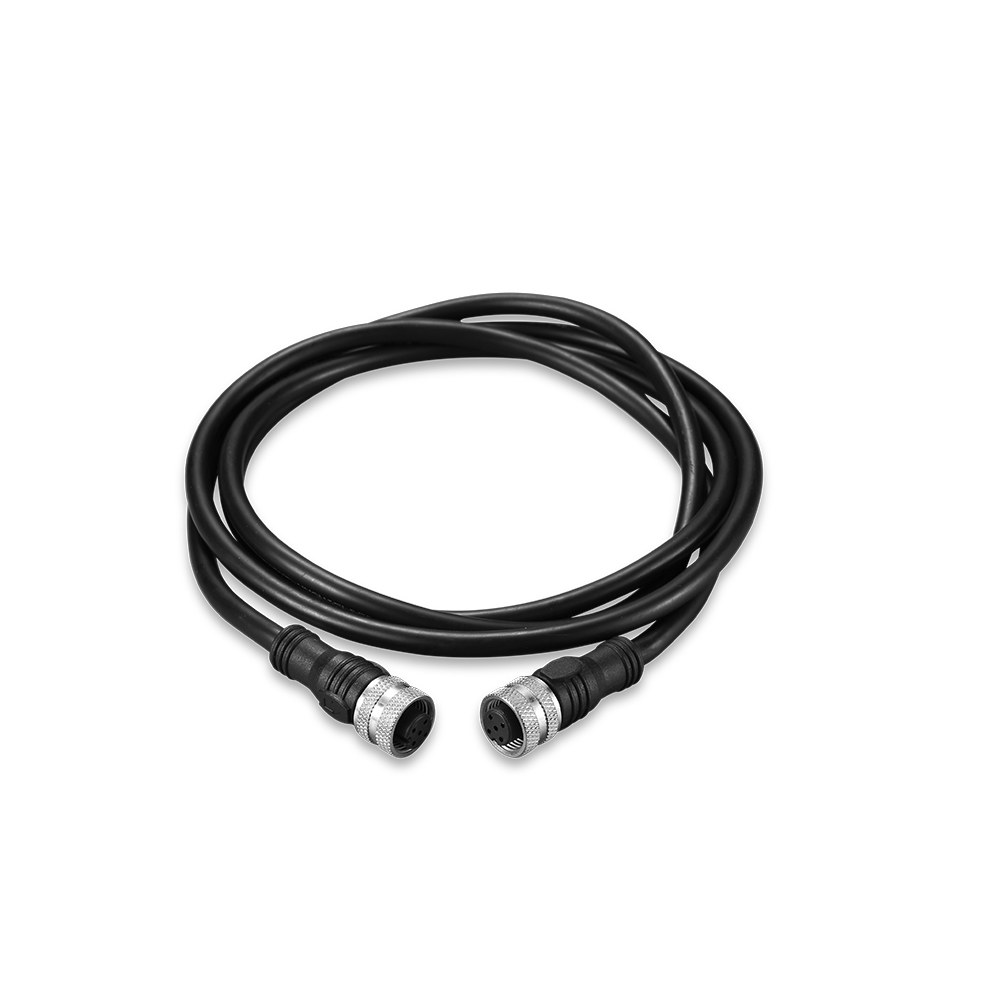
Most M12 retrofit jobs spend their first week bouncing between pinout charts, adapter drawings, and half-wired test harnesses. This build dropped that loop early. The insert was seated directly into a machined housing, and the gland position came from one marked-up photo of the machine port. No spare harness, no breadboard, no final-final revision.
The payoff shows up in the cable path and the service routine. Shield termination lands at the shell instead of a junction box, and the bend radius is dictated by the overmold rather than zip ties. With fewer inline connectors in the chain, the signal stays cleaner and the whole assembly can be opened with one hex key and a pair of flush cutters.
Supply Cushion for When Forecasts Slip
Forecast misses rarely arrive as one big surprise; they show up as small gaps between what was planned and what customers actually order. A supply cushion gives your team room to absorb those gaps without turning every variance into an emergency. The point is not to pile up excess stock, but to hold a deliberate buffer where demand uncertainty is highest and replenishment is slowest.
Placement matters more than total volume. A modest extra quantity of a long-lead component can prevent a late shipment from stalling an entire production schedule, while an oversized finished-goods buffer might just tie up cash and warehouse space. Look at lead times, order frequency, and the pattern of past forecast errors, then add slack where a shortage would cause the most disruption.
The cushion should also earn its place over time. If forecast accuracy improves or suppliers become more reliable, trim it back. If demand swings wider, widen it. Treating this buffer as a living part of the supply plan keeps it from becoming forgotten inventory and turns it into a practical tool for managing uncertainty.
Direct Access to the Engineers Who Own the BOM
When a component goes end-of-life or a datasheet parameter drifts out of spec, the conversation usually gets routed through layers that add time and soft edges. Getting straight to the engineer who owns the bill of materials removes that filter. You are not asking a sales contact to rephrase a technical question; you are reading from the same revision and the same constraints as the person who made the trade-offs.
That direct line matters most when the BOM is still moving. The owner knows why a specific capacitor was chosen over a cheaper alternative, which second-source parts have already been tested, and where a footprint was left deliberately flexible. Instead of waiting for a formal response that has been cleaned up for customer consumption, you get the actual reasoning, including the caveats.
It also shifts the relationship from vendor-to-customer into something closer to peer review. Questions get shorter because context does not have to be rebuilt each time. A quick note about a tolerance issue, an alternate package, or a compliance flag can be resolved with the person who can actually update the BOM, not someone who has to go ask for permission to find them.
FAQ
Look beyond the basic ISO 9001. For M12 work, IATF 16949 matters if they touch automotive, and UL or cUL listings help when products go to North America. Ask whether they can share recent test reports for ingress protection, vibration, and temperature cycling instead of just showing certificates on a wall.
Ask them to walk through what happens at the mating face and cable entry under pressure wash or thermal shock. A partner with real experience will mention seal materials, crimp stability, and how the housing tolerances are controlled rather than giving generic promises about IP67.
Factories that own contact resistance, insulation resistance, high-voltage, and leak test equipment can catch issues before products leave. If they outsource every test, you get slower feedback and less accountability when something drifts out of spec.
A solid partner should help you avoid mistakes in pin assignment, overmolding geometry, and PCB clearance. They should be able to review a drawing and point out where a standard part can be used or where a small modification will improve assembly reliability.
It matters more than people expect. You want to know the source of the brass or copper alloy, the plating bath records, and the plastic resin batch. Traceability makes it possible to isolate a lot when field returns appear instead of suspecting the whole production line.
Watch for long delays on sample revisions, vague answers about tooling ownership, and no clear process for handling batch failures. If a supplier cannot say exactly how they control the critical dimensions on the threaded body or insert, that gap will usually show up later in the field.
Yes, if they specialize in custom or low-to-mid volume work and have the right equipment. Smaller firms can often adjust tooling and testing faster than large factories. The key is to confirm they have enough capacity and internal quality discipline before committing.
Conclusion
A dependable M12 connector supplier shows its hand long before any metal is cut. They raise tolerance questions while the design is still on the screen, flagging where stack-ups will drift and locking down acceptable ranges before tooling starts. That early discipline avoids the usual spiral of reworked inserts and delayed samples. Material claims get the same scrutiny: they share actual lot test results, plating adhesion data, and resin flow records instead of pointing at a generic datasheet. If your product ships to multiple regions, their certification file should line up with that export map rather than forcing you to chase down missing marks later.
Custom builds should not feel like a game of ping-pong between sales and some distant factory floor. The better partners put you in front of the engineers who own the bill of materials, so pin changes, shielding tweaks, or overmold adjustments are settled in one conversation instead of endless email loops. They also hold a sensible buffer of finished connectors or common subcomponents for the weeks when your forecast slips or demand spikes. That kind of supply cushion is not extra inventory for its own sake; it is a sign the manufacturer understands production rhythm and does not expect your planning to be perfect.
Contact Us
Contact Person: Hayley Liang
Email: [email protected]
Tel/WhatsApp: +86 13480625451
Website: https://www.reunion-china.com/