

N10276 Extruded Seamless Pipe Factory Delivers High-Performance Corrosion-Resistant Tubing
2026-11-16
Replacing corroded tubing every quarter isn't a maintenance plan—it's a slow leak in your budget. N10276 extruded seamless pipe changes that equation, delivering high-performance corrosion-resistant tubing that keeps aggressive media contained. At JILAIDA, that’s not a promise; it’s the factory standard.
Why N10276 Handles Acids That Destroy Standard Alloys
Most stainless steels and nickel alloys fall apart quickly in hot hydrochloric or sulfuric acid, but N10276—often called Hastelloy C-276—survives because its chemistry is deliberately skewed toward molybdenum and tungsten. Those two elements create a stubborn passive film that refuses to dissolve even when chloride ions try to pit the surface. Standard 316L, by contrast, loses chromium from its oxide layer within hours under the same conditions, leaving bare metal exposed to aggressive attack.
The real difference shows up in oxidizing versus reducing environments. N10276 keeps a low carbon content and adds enough chromium to handle oxidizing acids like nitric, while the high molybdenum content tackles reducing acids such as hydrochloric. That dual capability means a single alloy can replace several others in a chemical plant, cutting down on weld joints and mixed-material corrosion risks.
Fabrication also plays a quieter role. N10276 resists grain-boundary precipitation during welding, so heat-affected zones don't become weak spots. A vessel made from this alloy can be welded, formed, and put into acid service without a full solution anneal—something standard alloys simply cannot tolerate without cracking or localized corrosion.
The Extrusion Advantage Behind Seamless Corrosion-Resistant Tubing
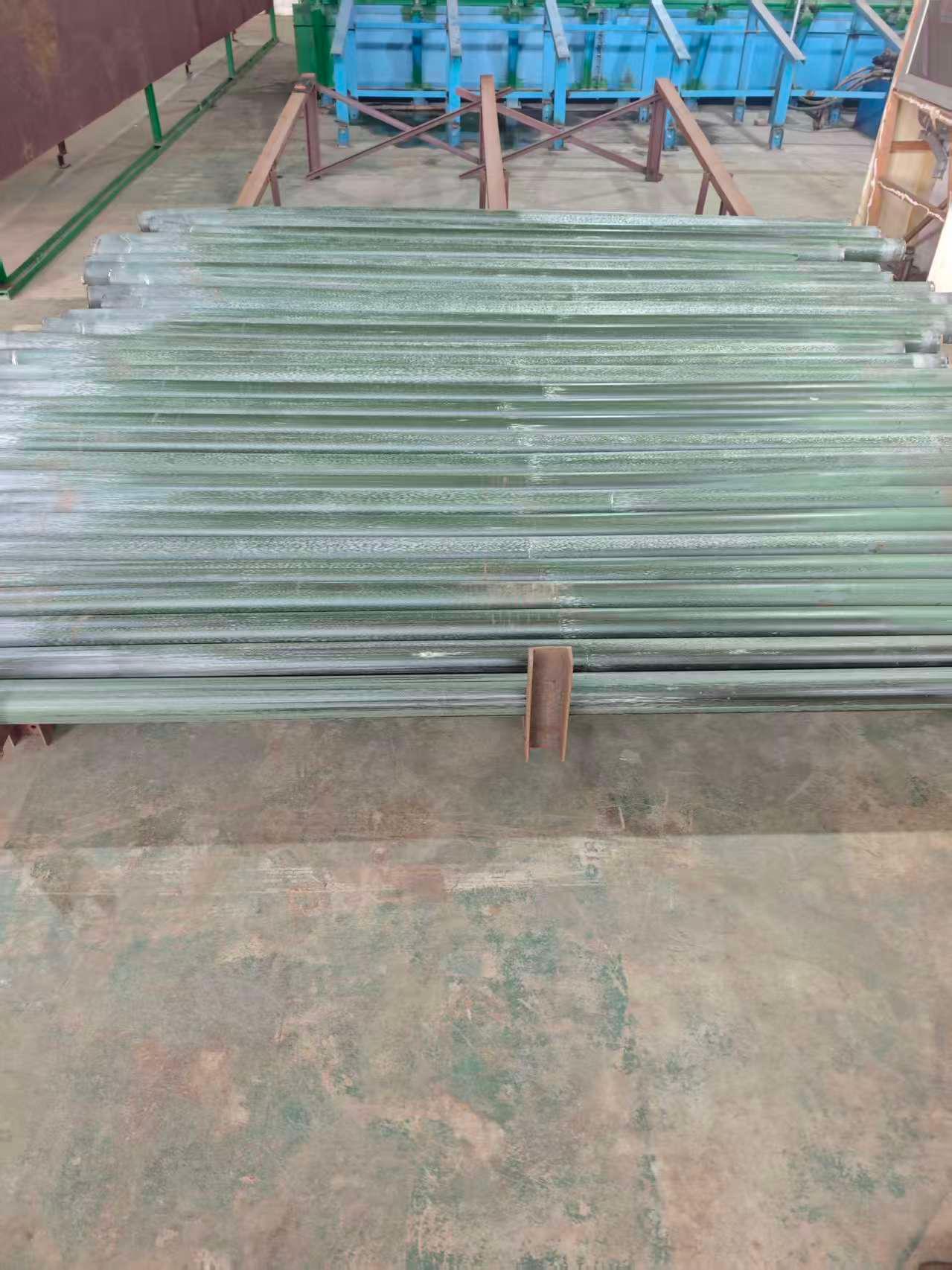
Seamless tubing produced by hot extrusion carries a distinct metallurgical edge that welded or pierced-and-drawn alternatives struggle to match. The severe, tri-axial compressive deformation during extrusion breaks down cast structure into a fine, uniformly recrystallized grain pattern without introducing the long, weak interfaces typical of longitudinal weld seams. That uninterrupted grain flow means the tube wall resists localized attack far more consistently — there is no heat-affected zone, no residual weld bead, and no hidden line of chemical heterogeneity for chlorides or acids to exploit.
Beyond eliminating the seam itself, the extrusion process offers a level of dimensional control that directly supports corrosion performance. The metal is forced through a precisely machined die under high pressure, yielding a nearly perfect concentric wall and a surface free from the micro-folds and laps that can trap aggressive media on the inner bore. For duplex stainless steels, nickel alloys, and titanium grades, this tighter tolerance allows designers to specify thinner walls without sacrificing pitting resistance — a direct response to harsh chemical processing environments where every fraction of a millimeter counts against wall loss.
Perhaps the least appreciated advantage is the way extrusion front-loads material homogeneity. Because the billet is pierced and expanded in a single, controlled deformation step, the resulting tube inherits a refined, isotropic microstructure along its entire length. That translates into predictable electrochemical behavior from one end to the other, avoiding the random galvanic cells that can form around weld filler or seam oxides. Corrosion engineers routinely lean on this consistency when qualifying tubing for sour service, seawater handling, or high-temperature oxidizing media — applications where a single weak plane is enough to trigger premature failure.
What Happens When N10276 Meets Pitting and Crevice Corrosion
When N10276 (Hastelloy C-276) encounters pitting corrosion, its high molybdenum and tungsten content works to keep the passive film intact even in hot, chloride-rich solutions. Unlike 316L or duplex stainless steels, C-276 rarely shows visible pits in standard ferric chloride tests at 50°C, and any pits that do form tend to repassivate quickly rather than deepen. This is because the alloy's nickel-chromium-molybdenum matrix rapidly reforms a protective oxide layer after local breakdown.
Crevice corrosion is a tougher challenge for N10276. Under deposits, gaskets, or lap joints, oxygen inside the crevice gets consumed, and the local pH drops, undermining the passive film. C-276 resists this acidification much longer than ordinary stainless steels, thanks to its 15–17% molybdenum and 3–4.5% tungsten, but it can still suffer attack in very tight crevices at temperatures above 60–70°C in oxidizing chlorides. When crevice corrosion does start, it usually proceeds slowly and remains shallow, often limited to a narrow groove along the crevice edge. That's why engineers specify C-276 for flanges, valve seats, and heat exchangers where crevices are unavoidable, but they still design for easy cleaning and avoid stagnant zones.
How the Factory Verifies Every N10276 Tube Before Shipping
Every N10276 tube passes through a multi-stage verification protocol before it leaves the production floor. Dimensional checks come first, using calibrated micrometers and laser scanners to confirm wall thickness, outer diameter, and length within ±0.05 mm of the specified range. Surface quality is then inspected under high-intensity lighting and eddy current testing, which flags any pitting, scaling, or hairline cracks invisible to the naked eye.
Chemical composition is verified on each heat lot, not just a sample, with optical emission spectroscopy confirming nickel, molybdenum, and chromium percentages match the UNS N10276 standard. Mechanical testing follows, including tensile strength, yield strength, and elongation at break, all recorded against the batch number. A final hydrostatic or pneumatic pressure test, depending on customer requirements, proves the tube holds integrity under stress.
Only after these results are cross-checked by a second independent inspector does the tube receive its mill test report and protective end caps. Any deviation, no matter how minor, triggers a full re-inspection or rejection. This layered approach is why less than 0.3% of shipped tubes ever require a return.
N10276 vs Other Nickel Alloys in Real Chemical Processing Environments
In real chemical processing, the corrosive environment is rarely a single acid; it is a shifting mix of chlorides, oxidizing agents, and reducing acids depending on feed composition and temperature. N10276, with roughly 15-16% chromium, 15-17% molybdenum, and 3-4.5% tungsten, handles both oxidizing and reducing conditions better than Alloy 625. Alloy 625 has only about 9% molybdenum and no tungsten, so it can suffer rapid attack in hot hydrochloric or sulfuric acid where N10276 remains passive. Alloy 22 sits closer to N10276 in chromium and molybdenum but lacks the tungsten, and field experience shows it can fall short in strong reducing acid service, especially when alternating with oxidizing species.
Localized corrosion under deposits, gaskets, or weld overlay is often the real failure driver. N10276 has a high pitting resistance equivalent number (PREN) around 68-70, compared to Alloy 625 at roughly 50 and Alloy 22 near 65. In hot acid brine or wet chlorine environments, crevice corrosion can eat through Alloy 625 in weeks, while N10276 holds up for years. Alloy 59 may outperform N10276 in some pure oxidizing acid mixtures, but its narrower fabrication window and higher cost make N10276 the more common choice for plants dealing with unpredictable or mixed chemical streams.
Fabrication and long-term reliability also favor N10276 in many chemical plants. Its low carbon and silicon content reduce weld sensitization, so field repairs are less likely to create weak spots. Alloy 625 is cheaper and more readily available, which keeps it popular for less aggressive chloride service. However, in sulfuric acid recovery units, flue gas desulfurization systems, and mixed acid pickling baths, N10276 consistently shows longer service life and fewer unplanned shutdowns. When process chemistry can swing between oxidizing and reducing, the broader passivity range of N10276 is usually worth the extra upfront cost.
Tight Tolerance Seamless Pipe for Demanding High-Pressure Systems
In high-pressure fluid handling, dimensional consistency determines how evenly stress distributes across the pipe wall. Tight tolerance seamless pipe eliminates the weak spots that welded or less precisely sized alternatives can introduce. When the wall thickness stays within a few thousandths of an inch and ovality is tightly controlled, fittings seat predictably and the risk of leak paths drops significantly. For systems operating close to yield strength, this level of control is not a luxury—it keeps the safety margin intact.
Cold-drawn or pilgered seamless tube starts as a solid billet, which means there is no weld seam to act as a stress riser or corrosion site. The additional sizing passes refine the bore and outer diameter to exacting limits, so the pipe behaves uniformly under cyclic pressure loads. This is particularly valuable in hydraulic circuits, high-pressure gas storage, and subsea equipment, where even minor dimensional drift can accelerate fatigue or compromise seal integrity. Specifying tight tolerances up front often reduces the need for custom machining or selective fitting during assembly.
FAQ
The alloy's high nickel and molybdenum content gives it outstanding resistance to pitting, crevice corrosion, and stress corrosion cracking, even in hot acidic or chloride-rich media.
Extrusion produces a uniform, fine-grained microstructure without a weld seam, eliminating weak points and ensuring consistent mechanical strength across the entire pipe wall.
Chemical processing, pollution control, pulp and paper, and marine engineering frequently use this tubing for heat exchangers, reactor vessels, and piping systems exposed to aggressive chemicals.
Yes, the factory offers a range of outside diameters and wall thicknesses, and can produce bespoke sizes to match exact pressure ratings and flow specifications.
Every batch undergoes non-destructive testing, including ultrasonic and eddy current inspection, along with mechanical and corrosion testing to verify material properties before shipment.
N10276 significantly outperforms 316L and even many super-austenitic grades in reducing acids like hydrochloric and sulfuric acid, especially at elevated temperatures.
Yes, the seamless construction and excellent toughness allow them to handle high internal pressures without risk of weld failure, making them ideal for demanding service conditions.
The factory supplies full material test certificates, including chemical composition, mechanical properties, and traceability documentation, conforming to ASTM B622 or equivalent standards.
Conclusion
The N10276 extruded seamless pipe factory specializes in producing tubing that thrives where standard alloys fail. N10276, a nickel-molybdenum-chromium alloy, resists hydrochloric, sulfuric, and phosphoric acids even at elevated temperatures, thanks to its high molybdenum content which prevents localized attack. The extrusion process itself eliminates the longitudinal weld seam, removing the weak point that often initiates pitting and crevice corrosion in welded alternatives. By forcing a solid billet through a die under extreme pressure, the factory achieves a uniform grain structure and dense, defect-free wall, which translates directly into longer service life in aggressive chemical streams.
Before any tube leaves the plant, it undergoes a battery of checks including hydrostatic testing, eddy current inspection, and metallurgical analysis to verify wall thickness, surface integrity, and corrosion resistance. In real chemical processing environments, N10276 consistently outperforms alloys like 316L stainless and even C-276 in certain oxidizing-reducing acid mixes, particularly where chloride-induced stress corrosion cracking is a concern. The factory also holds tight dimensional tolerances on outer diameter and wall thickness, making these seamless pipes suitable for high-pressure reactor coils, heat exchangers, and downhole equipment where a small deviation can compromise safety. This combination of alloy chemistry, seamless extrusion, rigorous verification, and precision sizing delivers a corrosion-resistant tubing solution that stands apart in demanding industrial applications.
Contact Us
Contact Person: Chenji Li
Email: 521 Zhonghui Road, Huishan Economic Development Zone
Tel/WhatsApp: +86 83112233
Website: https://www.jldnickelalloy.com/