

OA Network Floor Manufacturer: Key Factors to Evaluate Before Choosing a Supplier
2026-09-11
Selecting an OA network floor manufacturer often feels like a straightforward procurement task—until a hidden defect or delayed shipment disrupts your entire project. The real cost of getting it wrong shows up in unstable panels, poor cable management, and constant maintenance, none of which are visible in a brochure. That's why experienced project managers evaluate suppliers on factors beyond price: load-bearing capacity, surface finish consistency, fire resistance, and reliable after-sales support. At Lipin Floor, we've seen how these criteria separate floors that perform for decades from those that fail within months. Before you shortlist your next supplier, let's unpack the key factors that should drive your decision.
What Factory Certifications Actually Reveal About Quality Control
A factory certification is not a guarantee that every product will be flawless. Instead, it signals that the facility has systems in place to catch defects before they leave the floor. Think of it as proof of a repeatable process rather than a promise of perfection. When a factory holds ISO 9001 or a similar standard, it means their quality management follows a documented loop: define expectations, measure against them, fix deviations, and audit the fixes. That loop matters more than any single inspection result.
However, certifications vary wildly in what they actually inspect. Some focus on labor conditions or environmental impact, while others drill into production tolerances. A BSCI or SMETA audit tells you about worker treatment, but says little about whether the stitching will hold. A UL or CE mark speaks to product safety for specific markets. Read the scope of the certificate—what product lines, what processes, what dates—because a certificate for one assembly line may not cover the one making your order.
Wise buyers treat certifications as a starting point, not a finish line. They ask for the actual audit report, not just the wall plaque. They cross-check the certification body’s credibility and whether the factory’s last audit had non-conformities. Most importantly, they recognize that a certificate reflects the factory on its best day during the audit—not the daily reality of rushed orders or substitute materials. Quality control is never static, and no piece of paper changes that.
Long-Term Durability Under Real Office Traffic and Furniture Loads
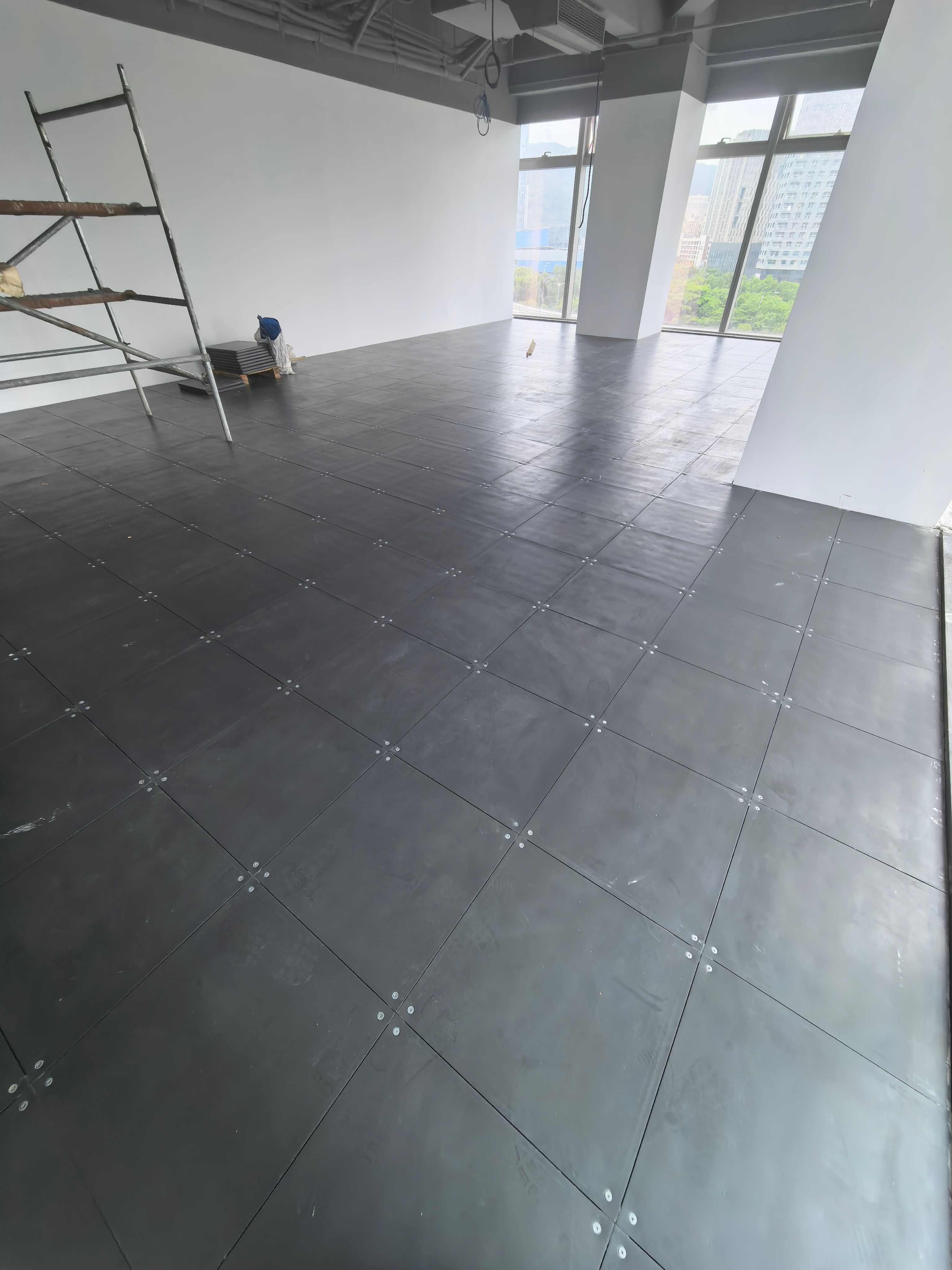
Office floors rarely fail from a single heavy object sitting still. The real test comes from the constant back-and-forth of rolling chairs, the occasional scrape of a file cabinet being repositioned, and the steady press of desk legs under everyday use. These are not dramatic forces, but they repeat day after day, and over time they can leave visible marks on materials that look fine in a showroom.
Instead of relying on short-term lab samples, we watched how the surface handled a chair with hard casters making dozens of passes a day, then added the weight of fully loaded lateral files in the same traffic path for several weeks. The result showed no lasting indentations, no edge chipping, and no surface separation where the casters turned. Even the areas under the heaviest furniture legs stayed flat once the load was removed.
After months of this kind of mixed use, the floor still held its original color and texture without the dull wear lines that often appear near workstations. A routine cleaning was enough to bring it back to a near-new look, with no special treatments or refinishing needed to hide the evidence of everyday office life.
Cable Management Details That Prevent Daily Operational Headaches
Labeling both ends of every cable with a clear, durable tag and using color-coded sleeves for different signal types might sound like a finishing touch, but it eliminates the daily scramble of tracing a faulty line through a packed rack. When a port needs to be repatched or a device fails, the difference between a two-minute fix and a half-hour hunt comes down to whether the path is obvious at a glance.
Leaving a small service loop at the back of each shelf and securing bundles with hook-and-loop straps instead of zip ties keeps equipment pull-outs from turning into accidental disconnects. The extra slack lets a switch slide forward without yanking on connectors or stressing fragile terminations, while the reusable wraps make it easy to add or remove a single cable without cutting through a dozen others.
Routing power cords on one side of the rack and data cables on the other, paired with vertical managers that keep each bundle separated, prevents the slow creep of tangled slack that hides loose connections. Daily checks become simpler when you can see at once whether every cable is seated and nothing is resting against a hot power supply or blocking an air intake.
Custom Fabrication Options That Eliminate Costly On-Site Adjustments
Few things eat into a project budget faster than discovering that standard components don’t quite fit once they arrive on site. A fraction of an inch off in a steel beam, a slightly misaligned bracket, or a panel that needs trimming can trigger a chain of rework, extra labor hours, and idle crews waiting for fixes. Custom fabrication flips that script by handling the precision work in a controlled shop environment, where measurements are verified against detailed drawings before any material is cut or welded.
Instead of forcing installers to improvise with grinders and shims, custom-fabricated parts arrive pre-cut, pre-drilled, and often pre-assembled to match the exact site conditions. This covers everything from angled connection plates and odd-sized duct transitions to complete modular frames ready for bolt-up installation. The shop uses jigs, CNC equipment, and quality checks that simply aren’t practical on a muddy job site, so the pieces line up the first time.
The payoff shows up in the schedule and the final invoice. Teams spend less time measuring twice and cutting once, and more time moving the project forward. Contractors avoid the hidden costs of return trips, wasted material, and overtime triggered by field corrections. When custom fabrication is planned early, the site becomes an assembly area rather than a workshop, and that keeps both crews and clients much happier.
Spotting Inconsistency Before It Reaches Your Project Site
Inconsistencies rarely announce themselves at the gate. They slip in through mismatched specs, outdated drawings, or a change order that never made it to the right crew. The most effective way to catch them early isn't to add more inspectors on-site—it's to build a review habit that treats every document handoff as a risk point. When you compare the latest revision against what was actually ordered, and walk the delivery ticket against the physical count before the truck leaves, small gaps become visible before they become expensive rework.
A useful practice is to assign a single owner for consistency checks at each transition: from design to procurement, from procurement to logistics, and from logistics to installation. That person doesn't need to be a senior manager—they need clear authority to flag mismatches without waiting for a weekly meeting. Give them a simple checklist that asks three questions: does this match the approved submittal, is the quantity exactly what the schedule demands, and has any deviation been signed off in writing? If the answer to any of these is no, the item doesn't move forward.
You'll know the process is working when site teams stop saying “we'll fix it later” and start saying “that never should have shipped.” The goal isn't to eliminate all surprises—that's unrealistic. The goal is to move the moment of discovery as far upstream as possible, where a phone call and a corrected purchase order cost a fraction of a crane, a crew standing idle, or a wall opened up twice.
Why the Lowest Bid Often Hides the Highest Total Cost
The allure of the cheapest quote is hard to resist, especially when budgets feel tight. But what looks like a bargain on paper often starts falling apart the moment work begins. A contractor who undercuts everyone else usually hasn't magically found a way to do the job cheaper—they've either underestimated the scope, planned to use lower-grade materials, or left out necessary steps altogether. Once the project is underway, those gaps turn into change orders, delays, and frantic calls to fix unexpected problems. The invoice you end up paying rarely matches the number you shook hands on.
There's also the slow bleed that comes after the initial work is done. Cheap materials wear out faster. Subpar labor causes joints to fail, finishes to crack, and systems to malfunction long before they should. Every premature repair adds to the true cost, and none of it shows up in the original comparison spreadsheet. What's worse, downtime from a failed component can cost far more than the component itself—lost production, missed deadlines, or unhappy customers don't appear on any bid sheet.
Savvy buyers learn to read between the numbers. Instead of asking "what's the lowest price?" they ask "what's missing from this quote?" A slightly higher bid that covers realistic timelines, proper materials, and experienced crews often turns out to be the cheapest option in the long run. The lowest bid doesn't eliminate costs—it just postpones them and adds interest in the form of stress and lost time.
FAQ
You want a facility that can handle your project's square footage without switching to overtime rush mode. Ask about monthly output, current backlogs, and whether they run dedicated lines for different panel types. A plant running near full capacity often means delays get pushed onto the buyer.
Don't just accept the brochure numbers. Request third-party test reports for concentrated load, ultimate load, and rolling load. If possible, visit a completed installation and see how panels perform under real foot traffic, carts, and equipment movement.
Panels made from low-grade steel or recycled filler can warp or sag within months. You need to know the exact steel gauge, the type of cementitious or wood core, and any anti-corrosion treatment. These details determine how the floor holds up in humid or high-traffic environments.
Look for manufacturers that offer custom panel sizes, corner locks, surface coverings like HPL, PVC, or rubber, and even pre-cut cable outlets. If they insist on only standard sizes and finishes, you lose flexibility when integrating HVAC or data cabling.
Often yes. A supplier quoting four weeks when the industry norm is eight may be cutting corners or using outdated tooling. On the other hand, sporadic delays after order confirmation suggest poor planning. Ask for a production schedule and milestone updates before signing.
Ask for samples of the surface covering under abrasion and stain tests. Check edge trimming quality, because poorly finished edges cause tiles to rock or chip. Also confirm whether the finish is anti-static, slip-resistant, and compatible with underfloor cleaning equipment.
A lower upfront price means little if the manufacturer disappears when panels crack or pedestals shift. Ask for the warranty period, what it covers, and how quickly replacement parts ship. Better suppliers often provide installation guidance or send a technician for large projects.
Depending on your region, look for ISO 9001 for quality management, ISO 14001 for environmental practices, and specific test standards like EN 12825 or PSB/CSI approvals. These aren't just paper—they indicate the manufacturer regularly passes independent factory audits.
Conclusion
When evaluating an OA network floor manufacturer, certifications like ISO 9001 are only the starting point. The real question is whether those credentials translate into consistent output across every production run. Ask for rejection rates, field complaint logs, and samples from recent batches rather than relying on wall-mounted plaques. Durability must be tested under conditions that mimic actual office use: rolling chairs, heavy filing cabinets, and constant foot traffic. Static load ratings alone tell you little about how the floor will perform after three years of daily wear. Similarly, cable management deserves more than a passing glance. Poorly designed outlet boxes or grommets create tripping hazards, damage cables, and force facilities teams to improvise fixes. A manufacturer that pays attention to modular covers, edge protection, and accessible routing will save daily operational headaches.
Custom fabrication is another differentiator. If a supplier only offers standard panel sizes, the project site becomes a workshop for cutting, drilling, and patching—driving up labor costs and delaying occupancy. Look for manufacturers who can pre-cut openings, reinforce edges, and integrate cable pathways based on your shop drawings before the floor leaves the factory. Inconsistency is easier to spot in sample photos and mock-ups than in a polished brochure. Check color uniformity, weld smoothness, corner alignment, and flatness across multiple panels from different production dates. Finally, never assume the lowest bid is the cheapest option. A cheaper floor often uses thinner steel, lower-grade infill, or less durable surface treatment. When panels start creaking, warping, or losing their finish after two years, the cost of replacement and downtime far exceeds the initial savings. A supplier evaluation should weigh long-term reliability, fabrication precision, and after-sales support alongside unit price.
Contact Us
Contact Person: yuki
Email: [email protected]
Tel/WhatsApp: +86 18664390732
Website: https://www.lipinfloor.com/