

Snap Hook Manufacturer Tips for Choosing Durable Hardware
2026-11-16
Most snap hooks look strong in a product photo. Put them under real load, weather, or daily wear, and the differences show up quickly. Choosing durable hardware isn’t about guessing—it’s about knowing which details actually predict long-term performance. In this guide, we break down the key factors to check before you buy, with practical insight from Kingming as a snap hook manufacturer.
Look Beyond the Shine: Materials That Outlast the Job Site
A mirror finish often disappears the first time a scaffold brace rides in the back of a pickup. Job sites punish materials with grit, water, impacts, and sun, so the real test is what happens under the surface. Instead of judging by how bright a part looks on arrival, check whether the base metal has a galvanized layer, whether corners are reinforced, and whether moving parts are sealed against dust. That kind of construction keeps hardware useful long after the packaging has been thrown away.
Materials that outlast the job site tend to move from one project to the next without needing constant replacement. Solid aluminum and glass-filled nylon survive cold-weather drops that crack cheaper plastics, while powder-coated steel with stainless fasteners resists the scratches and moisture that leave wet-painted parts rusting in storage. The goal is not a showroom shine but equipment that can be hosed down, loaded wet, and still operate the next morning.
Before choosing, look past the polished housing and read the less glamorous details: continuous welds instead of tack welds, rounded edges instead of sharp stamped corners, and UV-stable seals instead of raw foam. These quiet choices are what separate a tool or fixture that lasts five years from one that gets written off after a single season. A dull but well-built component will usually outwork a shiny one that was never meant to leave the display shelf.
Why Forged Bodies Beat Cast Every Time
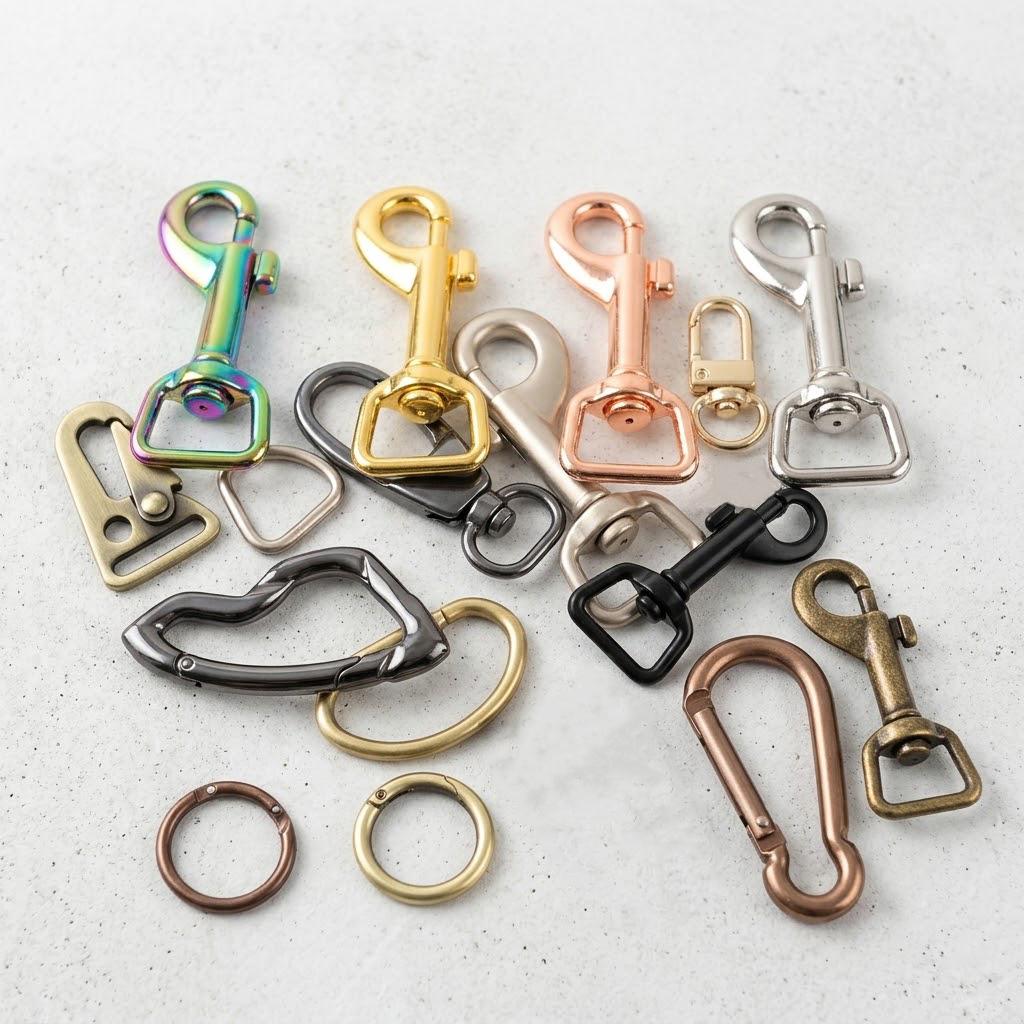
A forged body starts as a solid piece of metal that gets pressed and shaped under extreme force, forcing the internal grain to follow the contours of the part instead of leaving it random. That aligned structure gives the finished component a level of toughness and fatigue resistance that a cast body rarely approaches once pressure starts cycling and stress concentrates at the sharp corners or thin walls.
Casting leaves room for trouble because molten metal cools unevenly, creating porosity, shrinkage cavities, and tiny inclusions that act as weak points. Even with tight process controls, those hidden flaws can open up under thermal shock or aggressive media. Forgings avoid most of that by working the metal in a solid state, squeezing out voids and compacting the structure until it becomes denser and more uniform.
The difference shows up in the field. Forged bodies hold higher working pressures, handle repeated load cycles without cracking, and survive longer in corrosive service where a cast part would start weeping at a flange or fitting. When a failure means shutting down the line, the stronger starting material is not an upgrade. It is the baseline.
Coatings That Survive Salt, Sweat, and Scrapes
Salt spray chews through ordinary finishes in a matter of months, leaving behind blistered edges and rust blooms that spread beneath the surface. The coatings here take a different approach: they seal the substrate with a tightly cross-linked barrier that shrugs off chloride attack before it can find a foothold. From coastal railings to boat deck hardware, the result is a surface that keeps its color and adhesion long after conventional paints have started to fail.
Sweat is quieter than saltwater but no less destructive. Gym grips, bicycle frames, and wearable electronics live in constant contact with skin oils and perspiration, which gradually soften weaker topcoats and invite corrosion. These formulas are built for that kind of intimacy—they resist hydrolytic breakdown, maintain gloss under repeated handling, and wipe clean without turning tacky or hazy.
Then there are the scrapes: dropped tools, dragged cases, gravel spray, and daily abrasion. A coating that survives chemically but scratches off physically still leaves the base material exposed. That's why this line pairs chemical resistance with a hard, flexible finish that deforms instead of chipping. It takes the punishment in stride, so the protection underneath stays intact.
Load Ratings Are Not a Suggestion
Load ratings exist because materials and components fail in predictable ways once a threshold is crossed. A truck rated for 1,200 pounds is not hiding extra capacity for occasional overloads; the frame, suspension, and tires are all sized around that figure. Pushing past it may not cause immediate collapse, but it shifts every stress point into a range the manufacturer never validated.
The real trouble shows up over time. Extra weight accelerates wear on bushings, bearings, and brake systems, and it changes how the vehicle behaves during emergency maneuvers. Heat buildup in tires becomes harder to manage, and stopping distances stretch in ways that feel normal until the moment they are not.
Treating the number as a guideline rather than a boundary also creates liability and warranty problems after a failure. If a component gives out under a load it was never meant to carry, the paperwork often matters less than the physics. Respecting the rating is not about being cautious for its own sake; it is about keeping the equipment within the conditions where it can actually protect you.
Small Geometry, Big Difference: Gate Design and Throat Opening
Most runners fixate on horsepower, cam profiles, or boost pressure—yet the smallest contour of a cylinder head can undo all of it. The gate, the short section where the port floor transitions into the valve seat, and the throat opening just above the valve, act as the narrowest restriction in the intake tract. A few tenths of a millimeter here changes not just peak flow but the entire velocity profile. Get it wrong, and a promising head becomes a collection of expensive parts fighting each other.
Throat diameter sets the baseline for how much air can physically pass the valve at a given lift. Too small, and the engine chokes early no matter how wild the cam timing gets. Too large for the valve size or port shape, and velocity collapses, killing low-lift cylinder filling and throttle response. The magic lies in the blending radius around the gate—where the machined seat transitions into the cast or CNC port. A sharp edge there creates separation, turbulence, and a loss in effective area that a flow bench will happily punish. Smooth, gradual blending keeps the air column attached to the wall, turning the throat into a venturi rather than a wall.
Builders who measure every angle here often find the same pattern: the smallest geometric change yields the largest change in drivability. A subtle layback of the gate, a slightly shallower seat angle, or a wider radius at the short-side turn can add torque where a street engine actually lives. It is not glamorous work, but it is where the difference between a number that looks good on a printout and an engine that feels strong in every gear gets decided.
Ask for Batch Testing Before You Commit
Prototypes and pre-production samples can look flawless while the real production line behaves differently. Before you sign off on a large order or agree to a tight delivery schedule, ask the supplier to run a batch under normal production conditions and share the test data. That single request often reveals the gaps between a carefully prepared sample and what actually ships.
Batch testing is not about doubting the supplier; it is about catching variation early. Material lots change, equipment shifts after running for hours, and different operators introduce small differences that add up. A proper batch test shows how the process performs when nobody is hand-picking parts or slowing down to impress you.
Set the rules before the test starts. Agree on the sample size, the specific measurements, and the pass/fail limits you will both accept. Also decide what happens if the batch fails, whether that means reworking, replacing, or renegotiating the order. Having that clarity now prevents a much harder conversation after payment has been made.
FAQ
Start with the environment it will live in. For saltwater or outdoor exposure, 316 stainless is hard to beat because it resists pitting and rust without relying on a coating. Carbon steel can offer more raw strength, but only if the plating or coating stays intact. Zinc alloy bodies are lighter and cheap, yet they rarely hold up under repeated shock loads or rough handling.
Look past the word heavy duty and ask for numbers. A trustworthy manufacturer should give you a working load limit, breaking strength, or proof load supported by test records. Batch testing matters more than a generic catalog claim, because it shows the factory is checking real parts rather than copying a spec sheet.
Finish does a lot of the quiet work. Zinc-nickel plating, passivation, or powder coating can keep moisture away from the base metal and reduce wear on the gate pivot. In a damp or coastal setting, the wrong finish can shorten the life of an otherwise well-made hook, even if it looks fine on day one.
Check the gate spring, the pivot pin, and the edges. A forged or properly cast body tends to handle shock better than a thin stamped shell. The gate should close firmly without binding, the pin should not wobble, and all edges that touch rope, webbing, or fingers should be smooth enough not to cut or fray.
Yes. A stainless spring resists corrosion and keeps its tension longer than a plain steel spring in humid conditions. Gates with a shielded or recessed spring are less likely to collect dirt and grit. Anti-snag noses and self-closing hinges also reduce the small impacts and twisting that gradually kill weaker hardware.
Think about load direction, gate opening, weight, and corrosion. Marine rigging usually needs 316 stainless, a secure latch, and enough throat clearance for thick line or chain. A pet leash hook can be lighter, but it should have a smooth gate action and no sharp edges that catch fur or skin. Different uses put stress on different parts of the hook.
Ask how they verify each batch. Useful answers include salt spray hours for corrosion resistance, cycle testing on the gate spring, hardness checks on the body, and traceability back to the raw material lot. If they can walk you through their reject criteria and testing frequency, that is a better sign than a wall of generic badges.
Custom makes sense when standard geometry causes real problems: a gate opening that is slightly too small, a shape that chafes webbing, or a finish that fails too early in your specific use. It also helps when you need a consistent look across a product line. The extra cost should buy longer service life, fewer returns, or a better fit, not just a logo.
Conclusion
A shiny finish rarely tells you anything about how a snap hook will hold up when it is dragged across concrete, left in the back of a truck, or used in salt air. The first thing worth checking is the base material and the process behind it. Forged bodies consistently outperform cast alternatives because forging aligns the grain structure and removes the porosity that leads to sudden cracks. After that, look at the coating: a well-chosen treatment should resist corrosion from sweat and salt, but it should also survive abrasion without flaking off in thin sheets. Load ratings deserve the same scrutiny as the rest of the hardware. A stamped number means very little if the manufacturer cannot tell you how it was tested and what safety margin was built into the design.
Geometry often separates hooks that are easy to live with from ones that fight you on every connection. A wider throat opening and a gate that snaps back cleanly reduce the chance of a missed clip or a jammed line, especially with gloves on. Small changes in the gate pivot and latch shape can extend service life more than a heavier body ever will. Before committing to a supplier, ask for batch testing records. You want evidence that the units from a given production run were pulled and tested, not just a certificate that gets copied and reused. Durable hardware is rarely the result of one good feature; it comes from a manufacturer that pays attention to material, forming method, coating, load verification, and the details you can only notice after the first few weeks on site.
Contact Us
Contact Person: Jamie Zeng
Email: [email protected]
Tel/WhatsApp: +86 13728219269
Website: https://www.kmhardware.com