

Stainless Steel Self Tapping Screws Supplier: Why Quality Matters for Your Next Build
2026-11-16
You've probably never lost sleep over a screw—until one fails. When sourcing stainless steel self tapping screws for your next build, the supplier you choose can make or break the project's longevity. Wanluo has spent years earning a reputation for fasteners that don't just look the part but perform when it counts. Here's why quality matters more than you think.
The True Cost of Cheap Stainless Steel Fasteners
A box of bargain stainless bolts might look identical to a pricier option on the shelf, but that shiny surface often hides a metallurgical lottery. Low-cost fasteners frequently skip proper solution annealing or use recycled scrap with unpredictable nickel and chromium content. The result is a part that can pass a quick visual check yet start showing tea staining or pitting within weeks, especially around coastal or industrial exposure.
The real expense shows up later, in ways a purchase order never captures. A single seized or snapped fastener can stop an assembly line, force a service call, or require drilling out a broken stud in a finished product. Those labor hours and downtime costs routinely exceed whatever was saved on the fastener itself. Cheap 304 or 316 substitutes also tend to have inconsistent head markings and thread tolerances, which means more cross-threading and more rework on the shop floor.
Then there's the quieter risk: liability. When a railing, bracket, or piece of food-processing equipment is held together by fasteners that don't meet the claimed grade, a failure is not just an inconvenience. It can lead to injury claims, recall costs, or a damaged reputation that no discount can offset. Paying a little more per piece for traceable material certifications and consistent mechanical properties is usually the cheapest decision in the long run.
Decoding 304 vs. 316: Which Grade Holds Up?
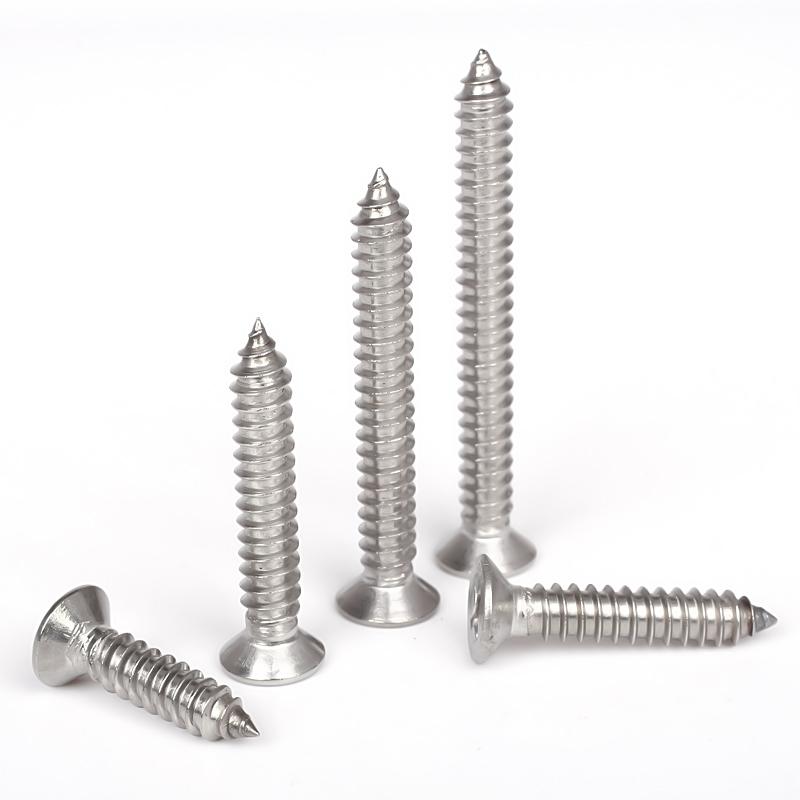
Stainless steel grades 304 and 316 look nearly identical on a warehouse shelf, but their differences become painfully clear once they face real-world punishment. The short version: 316 adds molybdenum to the mix, which gives it a serious edge against chlorides and salt spray. So if your parts will live near the ocean, sit in a chemical bath, or get hosed down with de-icing salts every winter, 304 will start pitting long before 316 even notices. Think of 304 as the dependable all-rounder that handles kitchens and indoor railings without complaint, while 316 is the specialist you call when corrosion isn't just possible but guaranteed.
That said, 304 isn't a weakling—it just has a narrower comfort zone. In freshwater, mild atmospheric conditions, or standard food processing, it shrugs off rust and keeps its shine for decades. But run a coastal handrail or a swimming pool ladder in 304, and you'll see tiny brown freckles within a year or two. Machinists often notice the difference on the shop floor too: 316 tends to work-harden faster and feels slightly gummier under a drill bit, while 304 cuts cleaner and costs noticeably less per pound. The price gap narrows when you factor in replacement labor or downtime, which is why marine fabricators rarely argue about the upgrade.
The real question isn't which grade is "better" but which failure mode you can live with. If a little surface staining is acceptable and the budget is tight, 304 won't let you down in most inland applications. But if your project involves saltwater, bleach, acidic fumes, or anything that eats chromium oxide for breakfast, stepping up to 316 is cheaper than redoing the job twice. Check the fine print on your spec sheet: if it says "marine environment" or "chemical exposure," save yourself the headache and go straight for the molybdenum.
Why Thread Design Determines How Long Your Build Stays Tight
Most people blame a loose bolt on bad luck or a weak wrench, but the real culprit usually sits in the thread geometry. Coarse threads bite hard in soft materials because the wider pitch gives each flank more material to grab, yet that same design can back off under vibration once the joint loses a fraction of preload. Fine threads, on the other hand, spread the load across more engaged teeth and resist loosening better in hard metals—but they demand cleaner holes and more precise torque. The thread’s helix angle and flank angle quietly decide how much clamping force actually survives over time.
If the thread profile is too shallow, even a properly torqued fastener can shed tension when temperatures shift or the mating parts settle. A steep flank converts more of the applied torque into stretch, which sounds efficient until micro-slippage turns that stretch into gradual relaxation. Asymmetrical or rolled threads with a controlled root radius reduce stress concentrations that lead to fatigue cracks, so the joint holds its preload instead of creeping toward a rattle. The difference between a build that stays tight for years and one that needs re-torquing every month often comes down to whether the thread was chosen for the actual load, not just for convenience.
Thread fit matters just as much as shape. A sloppy class 2 fit may assemble faster, but the extra clearance lets the fastener pivot under side loads, wearing the flanks and inviting self-loosening. Tighter classes or thread-locking features—like wedged roots or patches—don’t eliminate the need for correct preload, but they change how the joint responds to vibration. In short, thread design sets the ceiling for clamping force retention; everything else is just trying to stay under it.
What a Reliable Supplier's Quality Checks Actually Look Like
A dependable supplier never treats inspection as a final-step formality. Instead, their quality checks run parallel with production, catching deviations early. You'll see inline monitoring at each machining station, where operators verify dimensions against the drawing every few cycles, not just when a batch is complete.
The real difference shows in how they handle borderline parts. Rather than pushing questionable pieces through to meet a deadline, a trustworthy partner will quarantine the entire lot, re-verify the fixture setup, and only release goods after a full re-run of the critical characteristics. That level of caution can't be faked with a polished QC report.
What you won't see is equally telling: no last-minute rushing to fill inspection forms, no missing material certificates, and no hesitation when you ask for raw data from their measuring equipment. A supplier with genuine control over their process shares that information openly, because they know the numbers will match what's on the shelf.
Beyond Shine: Understanding Real Corrosion Resistance
A polished surface catches the eye, but gloss has little to do with how well a material survives aggressive environments. Real corrosion resistance depends on the alloy's chemical composition and the stability of the oxide film that forms on its surface. For stainless steel, chromium content above about 10.5% allows a self-healing passive layer to develop, yet that layer can be compromised by chlorides, temperature swings, and mechanical damage. Shine, in contrast, is only a reflection of surface smoothness—not a guarantee of longevity.
Many buyers assume a mirror finish means better protection. In practice, a rough or matte surface can sometimes outperform a high-gloss one if the underlying alloy and passivation treatment are correct. Surface roughness affects how easily contaminants and moisture collect in microscopic valleys, and crevices formed by poor design or finish overlap can become starting points for pitting. The real question is whether the material forms a continuous, adherent oxide barrier under service conditions—not how brightly it reflects light.
Accelerated lab tests like neutral salt spray provide a rough comparison, but they rarely mimic actual exposure cycles, wet-dry transitions, or chemical mixtures found outdoors or in industrial settings. Field data, corrosion coupons, and electrochemical measurements tell a more honest story. A component that looks dull and unremarkable may outlast a shiny counterpart by years if it was chosen for the right alloy, proper passivation, and careful avoidance of crevice and galvanic couples. That is the difference between decorative shine and engineered corrosion resistance.
Matching Screw Types to Your Specific Building Conditions
Picking the right screw isn't just about grabbing whatever is on the shelf—it starts with the materials you're joining. Wood studs call for coarse threads that bite into soft fibers, while metal framing demands fine threads and a self-drilling point to cut through without snapping. If you're anchoring into concrete or masonry, skip the standard screws entirely and look for hardened steel with a special tapping thread designed to grind its own path into the aggregate.
Beyond the base material, your local environment dictates the finish and coating. Coastal areas with salt spray will chew through zinc-plated screws in a season, so you need a hot-dipped galvanized or ceramic-coated option that can shrug off corrosion. For indoor spaces with extreme temperature swings—like an unheated garage or attic—consider screws with a flexible core that won't shear when wood expands and contracts. And if you're working in a damp basement, stainless steel isn't a luxury; it's the difference between a joint that holds for decades and one that rusts out from the inside.
Don't overlook load direction and vibration. A deck ledger board under constant downward stress needs structural screws with high shear strength, while a railing subject to lateral pushes demands screws with better pull-out resistance. For equipment that vibrates—like an HVAC unit or a garage door opener—use thread-locking screws or add a nylon patch to prevent backing out over time. By matching thread type, coating, and head style to the actual conditions on site, you turn a generic fastener into a precise piece of engineering.
FAQ
They resist rust and corrosion far better, especially in damp or outdoor environments, and they can cut their own threads without a pre-drilled pilot hole in softer materials. That combination often removes an entire step from assembly.
A supplier with solid quality control means fewer mixed batches, more consistent hardness, and tolerances that actually match the spec sheet. If the screw heads strip or threads snap mid-installation, you'll feel the difference immediately in wasted time and materials.
Look for clean, uniform thread cutting edges, no burrs or dull spots, and a consistent passivation finish. A quick test on a scrap piece of the same material you'll use can reveal more than any spec sheet.
Yes, but only in thinner gauge metals or softer alloys. For thicker steel plate, you might need self-drilling screws or a pilot hole. Knowing the exact substrate thickness before ordering saves a lot of frustration.
Often yes. Cheaper screws suffer from inconsistent hardening, which leads to snapped heads, cross-threaded holes, and callbacks. Replacing a few failed fasteners plus the labor can easily outweigh the upfront savings.
They focus only on unit price and ignore lead times, minimum order quantities, or whether the supplier provides material certifications. A supplier who communicates clearly about those details tends to be easier to work with when schedules get tight.
Yes, stainless steel is often the right choice there because of its corrosion resistance. Just make sure the specific grade matches the exposure—316 stainless holds up better around saltwater than 304.
Ask about lead time, tolerance standards, passivation or coating details, and whether they can supply test reports or mill certificates. Also confirm packaging options so the screws arrive without damage or mixed sizes.
Conclusion
When your project depends on stainless steel self tapping screws, the supplier you choose isn't a minor detail. Cheap fasteners often fail long before the structure does—stripped heads, snapped shanks, or rust blooming around the threads after a few seasons. The real cost isn't the per-box price; it's the labor to replace them, the damage to surrounding materials, and the risk of a joint letting go under load. Two common grades behave very differently: 304 works for general indoor and mild outdoor use, but 316 with molybdenum holds up far better against chlorides, coastal salt, and industrial fallout. Thread design also matters more than most people assume. A well-cut thread with proper pitch and sharp cutting edges lets the screw tap cleanly without excessive torque, so it seats tightly and stays that way instead of loosening as the building settles or vibrates.
A reliable supplier doesn't just sell you a shiny box. Their quality checks should include batch traceability, hardness testing, dimensional inspection, and salt spray tests to verify corrosion resistance, not just surface polish. Real corrosion resistance is about the alloy chemistry and passivation, not the mirror finish. Finally, match the screw type to the actual building conditions: indoor framing, exterior cladding, pressure-treated lumber, or marine environments each demand different head styles, drill points, and coatings. A supplier who asks about your substrate and exposure is the one worth keeping.
Contact Us
Contact Person: Shane
Email: [email protected]
Tel/WhatsApp: 8613357785029
Website: https://www.wanluohardware.com