

Substantial Current Sensing Resistor: Unlocking Precision in High-Current Designs
2026-07-02
When managing high-current circuits, even a milliohm of resistance can mean the difference between precision and drift. Yet, many designers overlook one critical component: the substantial current sensing resistor. At the heart of accurate power monitoring and control, this unassuming part must balance low resistance with thermal stability, all while withstanding demands that push basic shunts to their limits. Enter Milliohm—specializing in resistors that excel where generic solutions falter. In this post, we'll uncover how the right substantial current sensing resistor transforms high-current designs, from battery management to motor drives, and why the choices you make at the component level can unlock system-level performance.
Why High-Current Sensing Demands More Than a Standard Resistor
When current levels climb into the tens or hundreds of amps, the humble standard resistor quickly reveals its limitations. High-current sensing isn't just about scaling Ohm's law—it's a battle against heat, parasitic inductance, and thermal drift. A conventional thick-film chip resistor, for instance, may shift its resistance significantly as its temperature soars, introducing errors that make precise measurements impossible. Beyond that, the tiny voltage drop you're trying to capture can be swamped by noise or distorted by the resistor's own self-heating, turning a simple design into an exercise in frustration.
That's where purpose-built current sense resistors step in, often using advanced materials like metal foil or low-TCR alloys. These components are designed to dissipate heat efficiently and maintain rock-solid stability across a wide temperature range. Their construction minimizes inductance—a critical factor when sensing fast-changing currents—and ensures a linear, predictable resistance that doesn't wander with time or load. In practice, this means you can trust the millivolt signal coming out of your shunt, even when pushing 200 amps through a board with minimal margin for error.
But the choice of the right resistor is just half the story. High-current paths demand careful attention to PCB layout, terminal connections, and thermal management. Kelvin sensing, for example, becomes essential: dedicating separate sense lines right at the resistor pads eliminates voltage drops from the high-current traces themselves. It's the combination of a specialized resistor and thoughtful design that ultimately transforms a wild flow of electrons into clean, accurate data—something a standard off-the-shelf resistor could never deliver on its own.
The Hidden Thermal Challenges of Low-Resistance Shunts
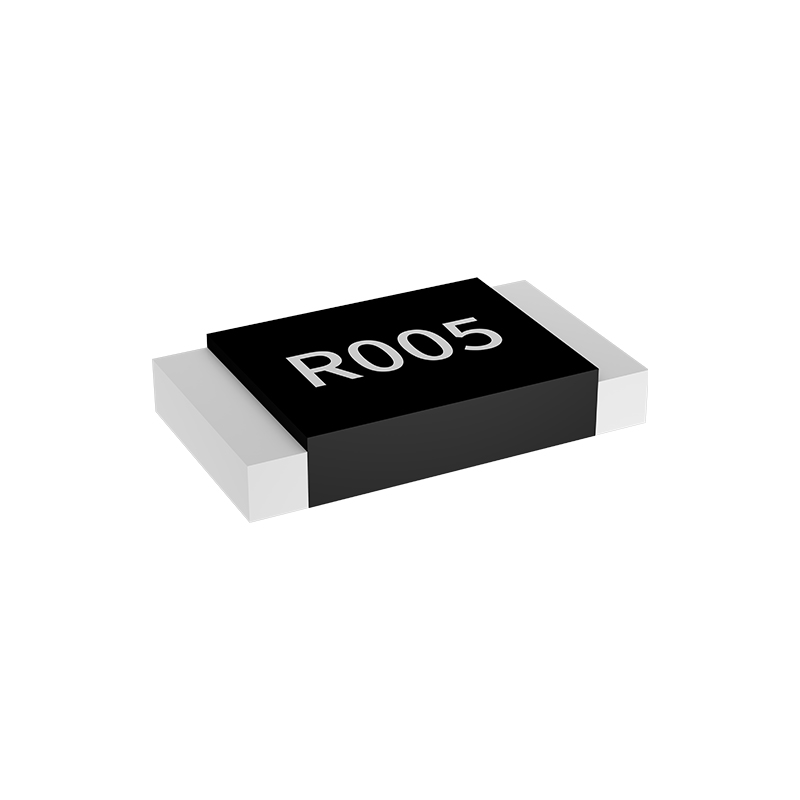
When current flows through even the most carefully designed low-resistance shunt, the interplay between electrical and thermal domains can't be taken for granted. A shunt's small resistance value might suggest trivial power dissipation, but at high currents, the I²R losses become significant—and far from uniform. Localized hotspots emerge where the current density is highest or where connection interfaces introduce additional resistance, creating temperature gradients that silently erode measurement accuracy.
What makes these thermal effects especially insidious is their dynamic nature. As the shunt heats up, its resistance drifts according to the material's temperature coefficient, introducing a time-varying error that simple calibration cannot capture. The surrounding PCB traces, solder joints, and even the enclosure airflow contribute to a complex thermal impedance network. Designers often overlook that the shunt's self-heating can couple into adjacent components, altering the very circuitry meant to read its voltage—a feedback loop that, in precision applications, turns milliseconds of high current into minutes of electrostatic tally.
Material Choices That Define Measurement Stability
The backbone of any precision measurement system lies in the materials selected for its construction. Thermal expansion coefficients, for instance, are rarely treated as an afterthought when ambient temperature swings can silently distort readings over time. Engineers often gravitate toward alloys like Invar or specialized ceramics that barely budge under thermal stress, but the real art is matching the material's response not just to the environment, but to the specific geometry of the component. A gage block made from tungsten carbide, for example, might resist wear magnificently, yet its mass could introduce deflection in a delicate setup—proving that stability is as much about mechanical sympathy as it is about low-expansion figures on a datasheet.
Beyond dimensional stability, the long-term microstructural fate of a material often separates a good instrument from a forgotten one. Metals can creep, polymers can outgas, and even the finest optical glass can slump over decades if its annealing wasn't meticulous enough. That's why some high-end goniometers still employ seasoned cast iron frames that have been stress-relieved through thermal cycling, essentially 'taught' to hold their shape. It's a quiet acknowledgment that material memory matters just as much as initial stiffness. Similarly, the contact points in electronic indicators might use sapphire-tipped plungers not merely for hardness, but because sapphire's chemical inertness prevents the tiny corrosive interactions that, over thousands of cycles, would turn a smooth surface into a source of stiction and erratic motion.
Then there's the dampening of vibrations—a property that rarely appears in simplified material checklists but dominates real-world stability. A granite surface plate is cherished not only for its flatness but for its sheer mass and internal friction, which swallow high-frequency vibrations before they reach the measurement loop. In contrast, modern carbon-fiber structures offer lightweight stiffness at the cost of almost no inherent damping, requiring clever sandwich constructions or viscoelastic layers to mimic what nature gives Stone for free. Choosing such composites means embracing the trade-off between portability and the silent, creeping noise that infiltrates submicron readings. Ultimately, these choices aren't just technical; they're a dialogue between the material’s personality and the level of stillness the measurement truly demands.
Layout Secrets for Minimizing Inductance and Signal Error
Loop area is the silent enemy of clean signals. Every conductor forms a loop with its return path, and inductance grows roughly with the area that loop encloses. The fix is almost too simple: bring the return path as close as physically possible, ideally by running a solid ground plane directly beneath the signal trace. When routing a differential pair, keep the two lines tightly coupled and maintain uniform spacing; this cancels magnetic fields and slashes effective inductance. Even a small gap in the return plane can force current to detour, ballooning loop area and injecting errors into sensitive nodes. So rework stackups to place power and ground planes adjacent, shrinking the vertical loop height to mere microns, and watch your signal edges sharpen.
Component placement can make or break a low-inductance layout. Cluster high-speed interfaces and their decoupling capacitors like a close-knit neighborhood short wires between the capacitor pads and IC pins cut series inductance dramatically. Orient the components so that the current doesn’t have to snake across the board; direct, short paths are king. When vias are unavoidable, use multiple stitching vias around signal transitions to reduce the inductance of the via itself, and flood the surrounding area with ground copper to give return currents a clear shortcut. And never split a ground plane under a critical component unless you enjoy hunting intermittent errors; instead, carve out small antipads when you must, but keep the overall reference continuous.
Calibration Techniques That Overcome Tolerance Drift
One effective approach to counteract tolerance drift is temperature-compensated calibration. By characterizing how component values shift with temperature and embedding correction algorithms, systems can maintain accuracy across a wide operating range. This involves collecting baseline data under controlled thermal conditions, then applying real-time adjustments based on sensor feedback. The result is a more stable output that doesn't rely on expensive ultra-stable parts.
Another technique is dual-slope integration, often used in analog-to-digital converters. It cancels out errors from component aging and noise by measuring the ratio of an input signal to a reference over the same integration cycle. Because the same components are used for both phases, drift in resistor or capacitor values affects both identically and is mathematically nullified. This method is especially valuable in precision instrumentation where long-term stability is paramount.
Real-World Performance Under Pulsed and Transient Loads
Pulsed and transient loads push power systems beyond steady-state expectations, revealing how quickly voltage and current can sag or surge when demand changes abruptly. In practice, even a well-rated supply can struggle with repetitive high-current spikes from motor inrush or the rapid switching of industrial lasers. The real challenge isn’t just surviving these peaks—it’s maintaining output regulation tight enough that sensitive downstream electronics never glitch, all while thermal inertia keeps components on the edge of their safe operating area.
Engineers tackle this by designing control loops that recover in microseconds and by selecting magnetics that don’t saturate when the load snaps from idle to full throttle. Bulk capacitance alone rarely suffices; instead, active transient compensation schemes and adaptive gate-drive techniques let converters ride through load steps without overshoot. Real-world validation often involves stacking multiple load transitions in quick succession, mimicking the chaotic pattern of a robot arm accelerating, braking, and grabbing—a far cry from clean lab pulses.
Seen on the factory floor or in data center racks, the difference between a resilient design and a marginal one becomes obvious only under these punishing conditions. A supply that passes static tests can still trip under a motor plugging event or a server cluster’s simultaneous reboot. That’s why manufacturers who embed extensive transient testing into their development cycles end up with gear that runs cooler, lasts longer, and avoids the mysterious resets that plague under-characterized systems.
FAQ
It's a specialized low-resistance component engineered to measure current by generating a proportional voltage drop, with emphasis on extremely low resistance values and high power handling. Unlike standard resistors, it uses materials like metal alloy or foil, has a four-terminal Kelvin connection to eliminate lead resistance errors, and is built to minimize self-heating and maintain stability under high-current surges.
Precision directly impacts system efficiency, safety, and control accuracy. Even tiny measurement errors can lead to incorrect current limiting, overcurrent protection failure, or inaccurate battery state-of-charge readings. In applications like motor drives or power converters, high accuracy ensures optimal performance and prevents thermal runaway or component damage.
The main considerations are power rating to handle the current without overheating, low temperature coefficient of resistance (TCR) for stable readings across temperature swings, small physical size constraints on the PCB, low thermal EMF to avoid voltage offset, and the ability to survive pulse currents without parameter drift. The trade-off between resistance value and sense voltage also matters—too low makes noise a problem, too high causes efficiency loss.
They provide direct, continuous analog measurement without the delay or bandwidth limits of current transformers or Hall-effect sensors, and offer excellent linearity. Because they produce a voltage proportional to current instantaneously, control loops can respond faster and more accurately. They're also immune to magnetic saturation and don't need auxiliary power, simplifying circuit design and improving reliability.
They're indispensable in electric vehicle battery management systems for accurate coulomb counting, in server power supplies for dynamic load sharing, in welding equipment for real-time current feedback, and in renewable energy inverters where maximum power point tracking relies on precise current monitoring. Anywhere that efficiency optimization or fast overcurrent detection is crucial, these resistors play a core role.
The biggest mistakes are connecting high-current paths through the sense terminals, ignoring Kelvin routing, and placing the resistor away from the measurement amplifier. This adds parasitic resistance and inductance, corrupting the sense voltage. Best practice is to use separate force and sense traces, keep the amplifier close, and implement a differential layout. Additionally, thermal management of the pad and surrounding copper is key to maintaining accuracy.
Conclusion
Precision in high-current sensing doesn't come from ordinary resistors; it demands a thoroughly engineered approach that tackles the subtle yet critical interplay of thermal management, material stability, and parasitic effects. When currents climb, seemingly minor resistances transform into significant heat sources, pushing low-ohmic shunts into nonlinear behavior if not meticulously designed. The thermal challenges go beyond simple wattage ratings—localized hotspots and thermal gradients can skew readings and degrade long-term stability. This is where deliberate material choices come into play. Alloys like manganin or zeranin, prized for their low temperature coefficients and minimal thermal EMF against copper, ensure that the sensed voltage faithfully tracks the current without drift caused by ambient swings or self-heating. Pairing these materials with robust construction techniques limits the mechanical stresses that further introduce error, forming a foundation where precision is built into the physical structure itself.
Yet a stable element is only half the story; real-world performance hinges on layout and calibration strategies that preserve signal integrity from shunt to amplifier. Careful PCB routing and Kelvin connections are non-negotiable—they slash inductance and common-mode noise, preventing high-frequency transients from masquerading as valid current data. Under pulsed loads, these parasitic factors become magnified, turning a quiet DC measurement into a ringing headache unless the physical loop area is minimized. But even a flawless layout can't compensate for manufacturing tolerances and aging effects, which is where adaptive calibration steps in. By characterizing each assembly across temperature and load, or employing ratiometric techniques that null out systematic offsets, designers lock in accuracy that holds over time and harsh operating conditions. The end result is a current sensing solution that doesn't just survive high-current environments—it delivers the unwavering precision needed for modern power systems, motor controls, and energy management.
Contact Us
Contact Person: Yuying Gao
Email: [email protected]
Tel/WhatsApp: +86 18926013721
Website: https://en.milliohm.net/