

Top Aluminum Cylinder Heads: Expert Picks for Maximum Power
2026-06-30
When it comes to squeezing every ounce of performance from your engine, the right aluminum cylinder heads can make all the difference. Whether you're building a street beast or a track monster, choosing wisely means more airflow, better combustion, and ultimately, jaw-dropping power gains. In this guide, we’ve handpicked the top options to match any build and budget, plus insights from the experts at DDR that could save you weeks of guesswork. Ready to see what separates the good from the legendary? Let’s tear into it.
What Makes Aluminum the Go-To Material for High-Performance Heads
Aluminum's lightweight nature is the first thing engineers rave about when designing high-performance cylinder heads. Compared to iron, it shaves off a significant chunk of weight from the engine, which immediately improves handling and acceleration. Less mass means the car can change direction more eagerly, and the suspension doesn’t have to work as hard. But it’s not just about shedding pounds—aluminum’s weight advantage also allows for thicker casting in critical areas without a penalty, so you get strength exactly where you need it without making the whole assembly cumbersome.
Then there’s the thermal conductivity. Aluminum is a heat-transfer champion, pulling heat out of the combustion chamber much faster than iron. This lets the engine run a higher compression ratio without detonation, unlocking more power from every drop of fuel. It’s why you’ll see aluminum heads on everything from track-focused sports cars to turbocharged monsters—when every degree counts, aluminum keeps things cool under pressure. And that heat-shedding ability also reduces hot spots that could lead to premature ignition, giving tuners a bigger safety margin when chasing big numbers.
Finally, aluminum’s real-world practicality seals the deal. It doesn’t rust, it’s easier to machine for intricate port shapes, and damaged heads can often be repaired rather than scrapped. For the modifier, this means spending money on a product that can evolve with the build—port it, weld it, resurface it—without the limitations of brittle cast iron. The material’s forgiving nature and adaptability keep it at the top of the list for anyone serious about performance.
How Cylinder Head Design Unlocks Hidden Horsepower
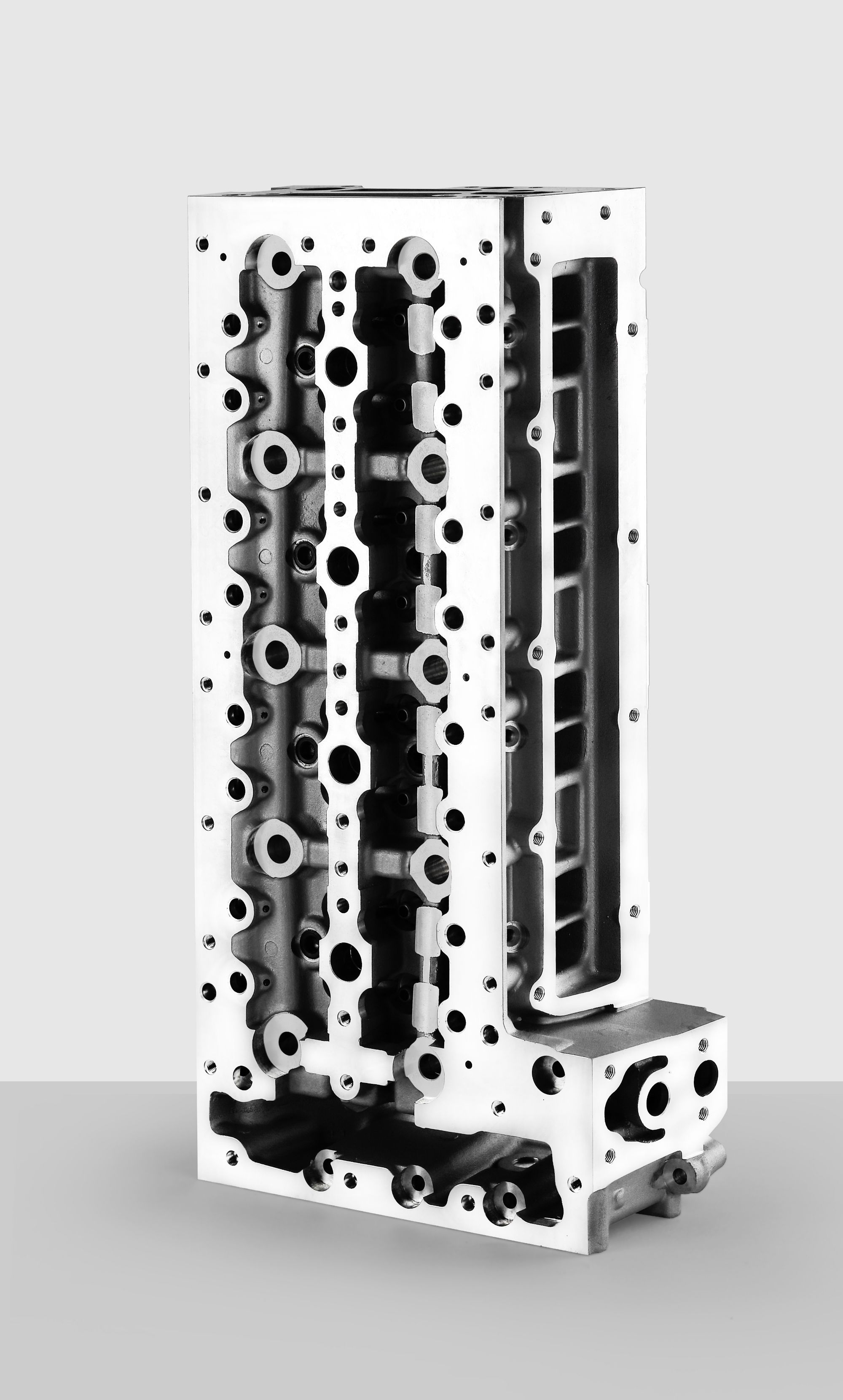
The shape of the intake and exhaust ports fundamentally changes how air fills the combustion chamber. A perfectly sculpted port uses a subtle taper and smooth radius to accelerate the incoming charge without creating turbulence that saps energy. Even a millimeter of poor alignment between the port and valve seat can shred airflow into chaotic eddies, robbing the engine of volumetric efficiency. Experienced head porters chase not just peak flow numbers on a bench, but the quality of that flow across the entire valve lift range, because a cylinder that breathes effortlessly at every rpm always makes more power than one that only shines at full lift.
Valve size, angle, seat profile, and placement are just as critical as the port itself. Bigger valves seem like an obvious upgrade, but without the right combustion chamber shape they can shroud the intake charge and create dead zones. Multi-angle valve jobs, subtle changes in seat width, and a careful back-cut on the valve margin all work together to reduce the pressure drop across the valve opening. The goal is to keep airflow attached to the surfaces and maintain velocity even at low lifts, so the cylinder fills aggressively right as the valve cracks open. This low-lift flow dramatically widens the powerband and makes a noticeably snappier throttle response.
The combustion chamber’s shape and surface finish control flame propagation and knock resistance. A compact chamber with a central spark plug shortens flame travel, allowing more aggressive ignition timing and a fuller burn before the pressure peak arrives. Quench areas built into the piston-to-head clearance create useful turbulence that homogenizes the mixture right before the spark fires, enabling higher compression without detonation. Careful smoothing of sharp edges and consistent surface roughness in the chamber also discourage hot spots that could trigger preignition, effectively unlocking horsepower that would otherwise be sacrificed to conservative engine tuning.
Port Shapes and Combustion Chamber Secrets That Dominate the Dyno
It's easy to get lost in cam specs and compression ratios, but the real magic often lives in the port shape. A carefully contoured intake runner isn't just about maximum flow numbers on a bench; it's about maintaining air speed and fuel suspension so the mixture stays atomized and ready to burn the moment the valve opens. Subtle changes in the throat area or a slight radius on the short-turn can make the difference between a lazy, turbulent charge and one that fills the cylinder with authority.
Over in the combustion chamber, the secrets are equally clandestine. The placement of the spark plug, the depth and angle of the squish pads, and even the small reliefs around the valves influence how the flame front develops and how resistant the engine is to knock. A chamber that looks unassuming can harbor just the right amount of turbulence to accelerate combustion without creating hot spots, allowing more timing and leaner mixtures than any rulebook would suggest.
When these two worlds meet on the dyno, the results can be astonishing. An engine that seems ordinary on paper suddenly punches far above its weight class because every drop of fuel is being burned precisely when and where it generates the most force. It's never just about one big trick—it’s the harmony between a well-shaped port and a chamber that burns quickly and cleanly that separates the top-tier builds from the ones that merely make noise.
A Closer Look at the Hardware That Handles Extreme Conditions
Hardware built for extreme environments isn't just rugged on the outside—it's engineered from the inside out. Every component, from the circuit boards to the connectors, is selected or designed to withstand temperature swings that would crack standard materials, relentless vibration that shakes loose ordinary fasteners, and exposure to moisture, dust, or corrosive chemicals. Conformal coatings shield sensitive electronics from humidity and contaminants, while specialized thermal management systems, often combining advanced heat sinks with sealed liquid cooling, keep processors stable in furnaces or subzero wastelands.
The real differentiator lies in materials science and redundancy. Instead of typical solder joints, you'll find high-reliability bonding techniques that resist thermal fatigue. Enclosures are machined from solid blocks of aircraft-grade aluminum or stainless steel, with gaskets that maintain an airtight seal even after decades of use. Power supplies are often potted in thermally conductive epoxy to eliminate air gaps and improve shock resistance, while connectors use military-spec bayonet locks rather than simple push-pins. It's a world where a single point of failure is unacceptable, so critical circuits are duplicated, and self-monitoring systems can bypass damaged sections without interrupting operation.
Field reliability is proven through testing that goes far beyond commercial standards. Devices are subjected to rapid thermal cycling, salt fog chambers that simulate years of maritime exposure, and vibration profiles mimicking helicopter transport. Some components are even tested under explosive decompression for aerospace use. This obsessive validation explains why the same hardware found in deep-sea ROVs might also control a mining truck in the Atacama Desert—the core design philosophy stays consistent, but adaptability is baked in through modular I/O and firmware that can be tuned for wildly different physical stresses without hardware changes.
Matching the Right Head to Your Build Without Overcomplicating It
Finding the right drumhead doesn’t have to be a science experiment. Start by considering the tone you already gravitate toward—warm and round, or crisp and cutting—and let that guide your choice more than any technical specification. The shell material and size will do a lot of the heavy lifting, so instead of trying to “fix” your drum’s natural voice, pick a head that lets its character shine while subtly nudging it in the direction you want.
A coated single-ply head is the safest starting point for most snares and toms because it balances attack, warmth, and sustain without painting you into a corner. If your playing leans aggressive or you hit hard, a two-ply option adds durability and a touch of low-end punch without killing the tone—just don’t assume thicker always means better. For bass drums, a pre-muffled head with a centered dot or ring can tame overtones right out of the box, sparing you from stuffing a pillow inside and chasing a sound that should already be there.
Give yourself permission to experiment, but keep it simple: swap one head at a time and tune it to a medium tension before you judge. The drum will tell you if the pairing works—usually within a few minutes of playing. Overthinking head selection often leads to unnecessary frustration, when what you really need is to trust your ears and remember that a good-sounding kit starts with heads that fit the music you’re actually making, not the ideal version in your head.
Real-World Gains That Translate to Faster Timeslips
You’ve probably seen the flashy numbers and bold promises, but what actually shaves seconds off your lap time isn’t always what you’d expect. It’s rarely a single magic mod; instead, it’s a collection of tweaks that work together in the messy, unpredictable world outside a wind tunnel. Think of it as dialing in your car’s reflexes for the street, so when you hit the circuit, it’s already speaking your language.
Start with the contact patches. A tire swap to something stickier—but not so extreme that it needs a warm-up lap every time you leave a stoplight—can transform how your car behaves. Real roads aren’t perfectly smooth, so pairing those tires with a damper setup that soaks up imperfections without giving up body control is where the real advantage lies. It’s about building confidence in the car’s reactions, letting you push harder because you know it won’t bite back when the surface gets rough.
Then there’s the driver’s seat. I’m not talking about a full race strip-down; just trimming the dead weight that you don’t need every day and getting a proper alignment that doesn’t fight your inputs on the highway. The best speed secrets come from spending time behind the wheel, learning where the engine wants to sing and the brakes like to bite. These aren’t spec-sheet upgrades—they’re the kind of gains that come from paying attention to how your machine actually moves through the world, and that’s exactly why they show up on the stopwatch.
FAQ
Aluminum heads shed heat faster, letting you run higher compression without detonation. They’re lighter too, cutting weight off the front end, which improves handling and weight transfer. Most aftermarket aluminum heads also come with better port designs and larger valves straight out of the box.
It can be worth it if you’re after extra power without sacrificing manners. Modern aluminum heads with moderate intake runner volumes keep velocity high, so low-end torque doesn’t suffer. Just match the cam and intake to the head flow, and you’ll have a responsive street engine that’s also a blast at the track.
Start with your target compression ratio and piston choice. A smaller chamber bumps compression, but you need enough piston-to-valve clearance. If you’re running pump gas, keep dynamic compression in check. Many head manufacturers offer multiple chamber options, so crunch the numbers with a compression calculator before ordering.
It’s hard to beat the value of a set of 195cc to 210cc intake runner heads from brands like AFR, Brodix, or Trick Flow. They flow enough to support 500+ hp on a 350 or 383 stroker without breaking the bank. Look for ones that come assembled with quality springs and stainless valves to keep the overall cost down.
Skipping the correct head gasket and fastener prep. Aluminum expands differently than iron, so you need a multi-layer steel gasket and proper torque sequence. Also, many overlook checking pushrod length and rocker geometry—a mismatch there can wipe out valve guides fast.
No. The heads need to work with the rest of the combo. Throwing top-tier heads on a stock bottom end with a mild cam and restrictive exhaust only uncorks half their potential. You’ll see gains, but maximizing the power requires matching induction, cam profile, compression, and exhaust flow.
Port velocity is what fills the cylinders at lower and mid rpm, so it’s crucial for throttle response and torque under the curve. Peak flow numbers sell heads, but a port that’s too large for the engine’s displacement and rpm range kills velocity and makes the engine feel lazy. Aim for the smallest port that achieves your power goals.
Conclusion
The relentless pursuit of maximum power always circles back to cylinder head performance, and aluminum stands alone as the foundation for serious builds. It isn't just about shedding pounds off the nose of the car—though that's a welcome bonus. Aluminum's thermal conductivity acts like a built-in intercooler, rapidly pulling heat from the combustion chamber and letting you run more aggressive timing and compression without stepping into detonation territory. This heat management advantage cascades through every part of a high-performance engine, keeping intake charges denser and the burn more controlled. Modern foundry techniques have pushed the boundaries of alloy strength, so today's aluminum heads laugh off the boost pressures and cylinder temperatures that would warp lesser castings, making them the default choice for anything from street brawlers to full-tilt race engines.
But the metal is just the starting line—the real power lives in the details of design. Port shapes aren't generic holes; they're carefully sculpted velocity tunnels that either fatten the mid-range or scream on the top end depending on their cross-section and short-turn radius. A combustion chamber that's been painstakingly unshrouded and blended encourages complete burn with minimal spark lead, and that directly translates to the kind of dyno number that grabs attention and the incremental drop in ET that wins rounds. Matching a head to your combo doesn't require a PhD, but it does demand honesty about your actual usage, cam profile, and what intake will sit on top. Get the hardware right—bronze guides, durable seat materials, and rocker studs that don't flex—and you have a head that stays stable run after run. The result isn't abstract theory; it's the concrete proof of a time slip that backs up the dyno sheet, where the right head choice turns a strong engine into a standout performer.
Contact Us
Contact Person: Shelly
Email: [email protected]
Tel/WhatsApp: 8613967667688
Website: https://www.yongyu.com/